F L A U N T


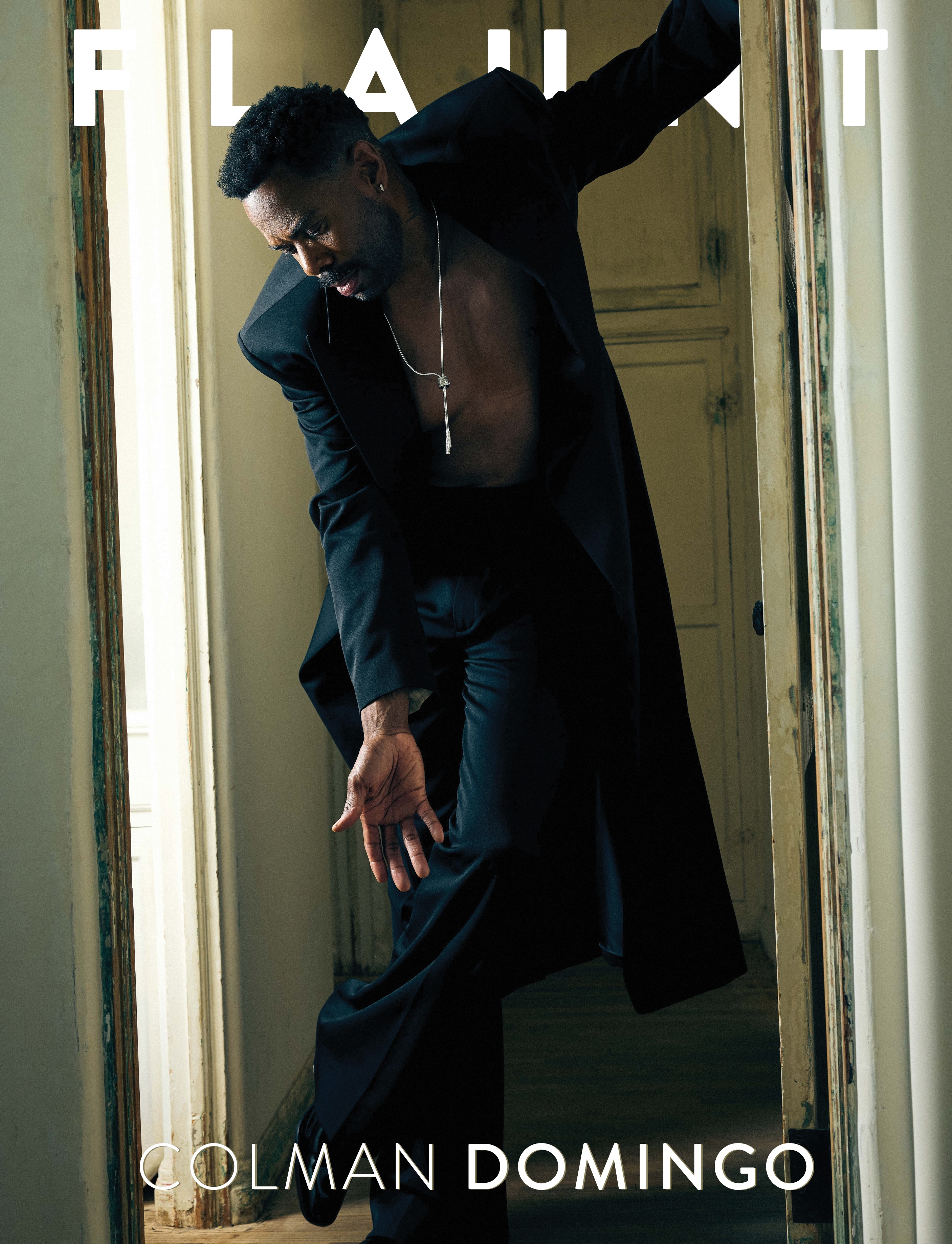
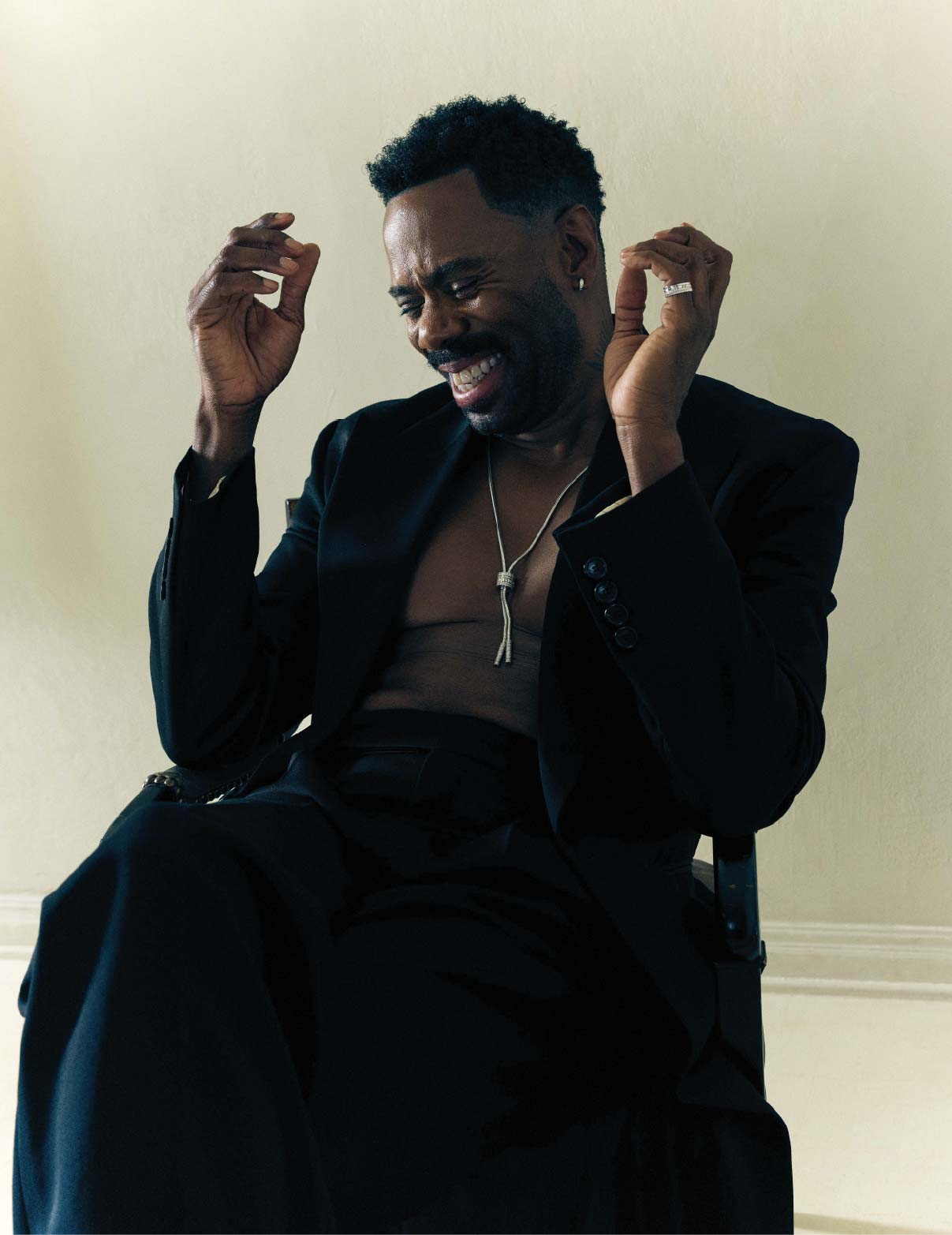
Scan through your streaming subscriptions, or turn up in person at the multi-plex, and it’s clear that actor Colman Domingo’s career is exploding every which way at once. But this is no overnight success story. Because charismatic, capable, and cool Domingo—now 56—wasn’t waiting to “hit his stride.” He came striding right out of the womb. The world just took a while to catch up. Before he reached millions, he’d already touched hundreds and thousands with his powers not only as an actor, writer, director, and producer but as an intuitive, sensitive and highly vibrational human being.
Appearing in a string of visceral recent hits, Domingo has proved to be the secret weapon that the American entertainment industry needed right damn now. You want a quality product? You want to illuminate the shadows of history, expose social issues with class, and throw in some great songs, too? Give Domingo a call. This year, you’ll find him as the anchor of Steven Spielberg’s alien encounter comeback, Disclosure Day, and as Euphoria’s avenging angel in the final season of HBO’s smash series. Also released in 2026 was Gus Van Sant’s Dead Man’s Wire, where Domingo is the guiding light—or rather voice—of the based-on-real events narrative as Indianapolis radio DJ Fred Temple who is drawn into negotiations in a gritty 1970s hostage situation. Already a recipient of a roll-call of awards, his first Oscar nomination in 2024 came in recognition of his star turn in Civil Rights biopic Rustin where he portrayed Bayard Rustin, an openly gay activist and advisor to Martin Luther King Jr. who was unjustly sidelined from the movement. His second nom, in 2025, came for Sing Sing for his turn as an innocent man who finds purpose in theater in the titular prison, inspiring others’ transformative participation as he does so.
The years between his first steps onto the acting path and the industry recognition Domingo enjoys today were spent enriching himself, allowing him to amass the emotional arsenal to build a repertoire of characters and performances of all kinds. Broadway: Spike Lee made a film of NYC stage musical Passing Strange in 2009, where Domingo excelled in multiple roles. Television: Surviving the post-apocalyptic wastelands as Victor Strand on eight seasons of AMC’s Fear the Walking Dead. The twists and turns of Netflix series The Madness, headlining as a political media analyst framed for a racially motivated murder. Animation: Domingo jumps into the MCU as the voice of Norman Osborn, who becomes Green Goblin, in the animated Your Friendly Neighbourhood Spider-Man Disney+ series. Film: Hit after hit, lining ‘em up, smacking ‘em out of the park…See Domingo run in as a beleaguered father in If Beale Street Could Talk, Barry Jenkins’ intense James Baldwin adaptation; a Camelot-era White House butler in Lee Daniels’ The Butler; the stalwart Reverend Ralph Abernathy in Ava DuVernay’s Selma, or as a terrifying Nigerian-accented pimp in Janicza Bravo’s Zola.
There’s truly something old-school romantic about Domingo; you’ll catch him sweeping into the Met Gala in a dramatic cape, or racing over the rails through Europe as guest of honor on the legendary Belmond Venice-Simplon-Orient-Express from Venice to Paris.
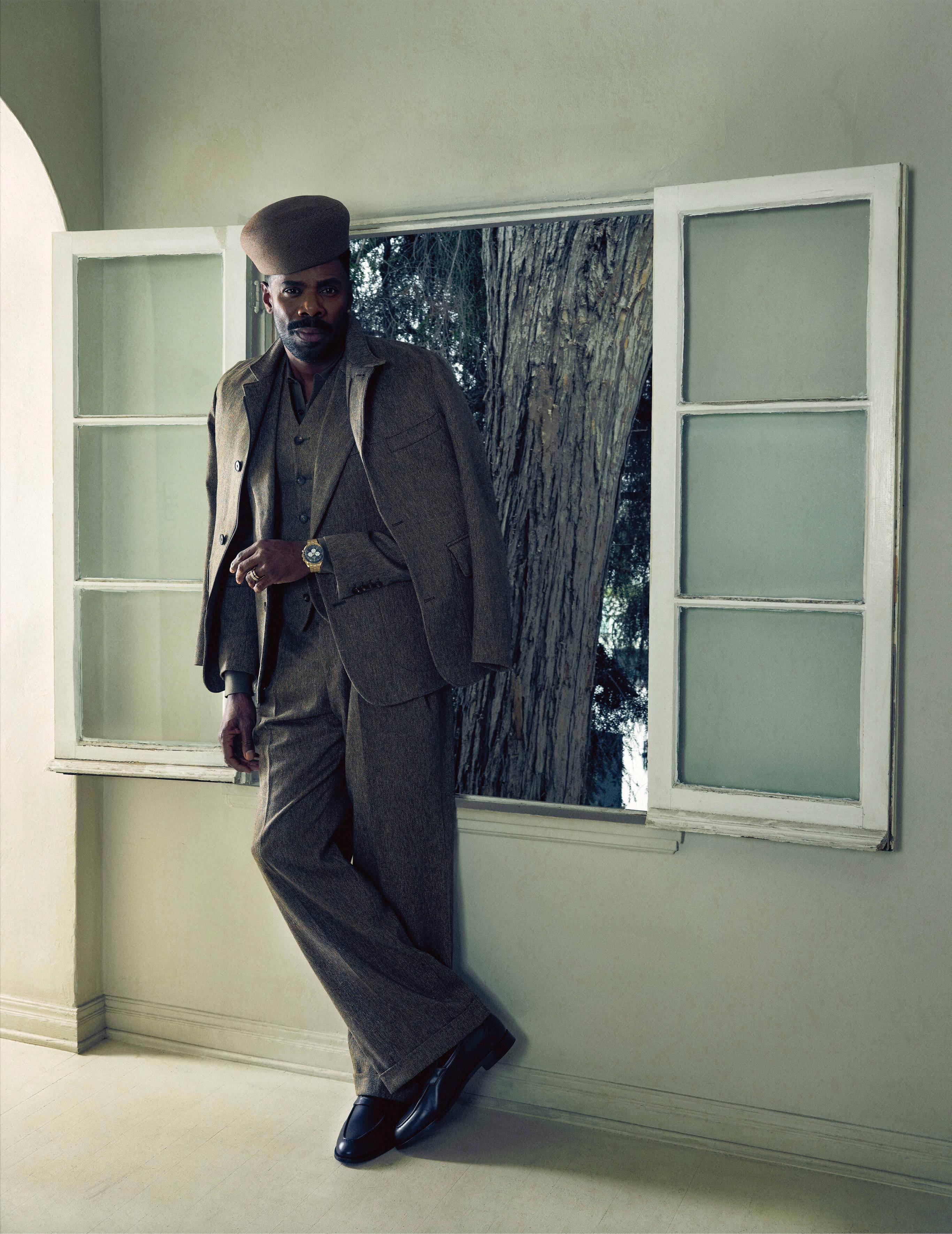
And one early summer morning, Colman Domingo signs in to talk to FLAUNT from his Malibu home. Art fills the frame behind him; I catch a wild red Basquiat next to the “I AM A MAN” protest placard—perhaps the Glenn Ligon version, or a print of the original graphic from 1988. (I want to ask about more of the artwork, but I forget to, because Domingo just sweeps me up and away with his story). He’s calm and chill. Mustache neat. Voice velvety. Encased in a thick grey hoodie, a green patterned scarf over his brow, even “casual Colman” has acres of panache.
***
Morning in Malibu. It’s heaven, right? Let’s rewind a little, talk about how we got here. It’s been a long route to Malibu.
I think so, yeah… A long road, as winding as Kanan Dume Road. I know that you, being a journalist, I feel like you understand this. I love the “why.” It’s always the overarching question that hangs over my head. “Why,” and “why now?” I love research. I love laying all that out, finding the humanity of it all, finding the connectivity of it all. All of that goes into every single project I do, whether as an actor or a writer or director or producer. That’s the part of me that’s always going to be a bit of an archivist, with a mission to really try to examine who we are right now. I do know that everything I do goes back to my journalistic roots. That spark that I had in the beginning as a journalism student never left me. It’s a curiosity, I guess.
You say you felt a “spark” for investigation, for the “why” while studying journalism. But when did you really get the itches or feelings that you wanted to be a thespian?
I’m originally from West Philadelphia, from a very working class neighborhood there. I don’t know if there was a real direct one itching. It felt like it was cumulative. In the fourth grade presentation of the 50 states, my mother made a costume of New Mexico for me, and I went on stage and I just said, “New Mexico,” and sat down. I was a very shy kid, but the idea of being connected to other people as they applauded or they clapped or they smiled…I felt something. I don’t know if that was a real “spark.” I feel like that was more just something inside me that was like, “Oh, that’s interesting.” And then you just move on in your life.
By the time I was about 15, Philadelphia had a work program for teenagers. I joined and was placed at the Society Hill Playhouse. We did plays, and we learned about speech and about breathing, and that began informing a lot of things inside me. I thought it was cool and interesting that you can learn how to breathe; how to project; how to use language. That was something new. At that time, I had a speech impediment—a lisp. “Ss” and “Zs” and things like that, so I had to learn to dentalize. I had to learn to get a hold of language. The result was that I learned that I love language, and I love speaking and using language to tell a story.
Then I studied journalism at Temple University. I only took an acting class as an elective. I remember it so clearly—I’m sitting at the dining room table with my mom, and I was going through which classes to take, and I was somewhat overwhelmed. I had two additional credits that I could use, and my mom said, “Is there a class you can just take for fun?” And she said, “Remember how you used to have fun when you were at the Society Hill Playhouse?” I said, “I did.” “See if they have a class like that.” They had an Acting 101 class.
So simple. So important.
That decision completely changed the trajectory I was on. One day my teacher, Chris, pulled me aside and said, “Have you ever thought of acting as a profession?” I’ve always been an observer…I’ve realized that’s part of the gift that I had, that I was observing humanity. I didn’t grow up going to the theater. I didn’t grow up even imagining that was a possibility for someone like me. When he said, “I believe you have a gift in this form,” it was the first time I was hearing that. I look back and I recognize that no one had ever said those words exactly. “You have a gift.” And then he laid down the gauntlet: “And I’d be very curious if you followed this path.” It was like a challenge. Now, speaking to my friends Tina Fey and Amy Poehler, that I’m an Enneagram 8, which is “The Challenger”—when they told me, “Oh, you accept a challenge when [it’s laid out],” I realized that’s exactly what Chris did. He laid out a challenge for me. I liked that challenge, whether I knew it or not.
The next step was San Francisco. I was doing too much in school—besides taking classes at Walnut Street Theatre, I was taking 16 to 18 units at Temple, was working two jobs because I couldn’t survive off of grants, and I didn’t have many scholarships ‘cause I didn’t have the grades for that. I had to work, and I started to struggle. So my mother—again, the divine nature of my mom— said, “Take off a semester. It’s okay, you can always go back to school.” She was always very free with me in that way. So I took a semester off, moved out to San Francisco, and I started my career in the theater in 1991.
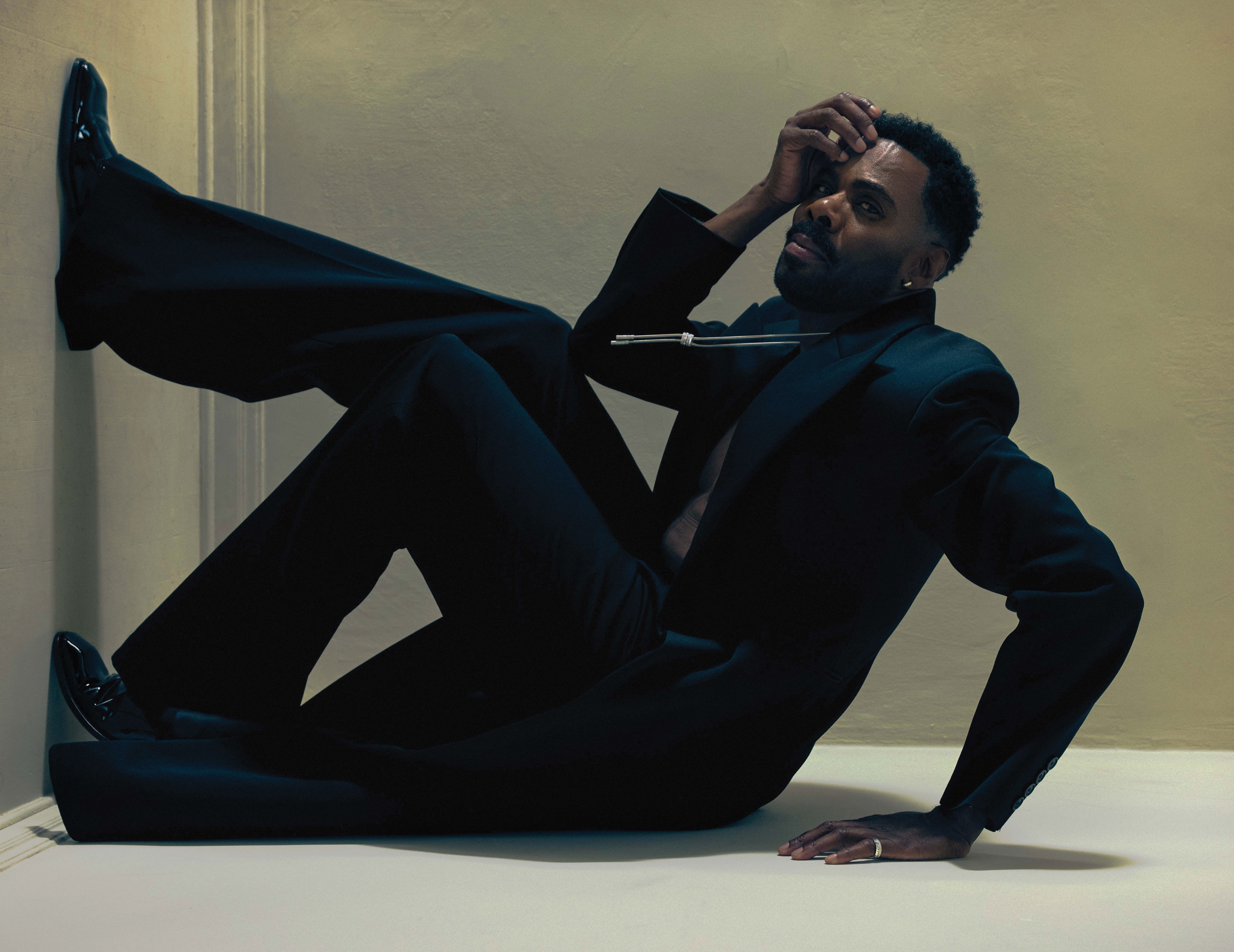
Ah, 90s California. I wish I was there. It seems like such a blast.
It was. It was ahead of the dot.com boom. It was still very grungy, and it still had the elements of the late 60s and 70s. You still felt the remnants of Beat and hippie culture. I don’t know if you feel it now, but then I felt it strongly: community, counterculture. I would say that’s where I really found myself as a man, and as an artist. I went out to clubs until six in the morning, and then the next club was actually called The EndUp and it opened at six AM…yet still, whether I had an acting class, or whether I had a job to do, I never let the partying get in the way of that. I was a total 90s club kid with baggy jeans and lots of chains…I knew it was all a part of it of living and exploring and expressing, of finding how story lives in my body.
And now you’re co-chairing the Met Gala [For the opulent 2025 Costume Institute event, the exhibition theme was “Superfine: Tailoring Black Style.” Domingo dominated in a regal blue plissé cape and a monochrome lattice suit, both from vintage-mix-match auteur Alessandro Michele’s Valentino]. So let’s talk about how those earlier themes and predilections have come through right now.
I think that, based on just that statement, San Francisco was the perfect place for me to learn about being a creative being. About expressing myself and getting a lot of the tools necessary to become an adult. I spent 10 years in San Francisco. I really feel that if I hadn’t had that, I don’t know where I’d be. I started out as an actor, but then I became a writer and a director and a producer because I was able to create work with my comrades, without it being about a New York Times review. I became much more social than I was when I was a shy kid. I’ve become more of a host, and I’m very gregarious. So I really owe San Francisco so much of me “becoming.” Being a co-chair of the Met Gala makes sense to me. Having a place within a fashion space makes sense to me.
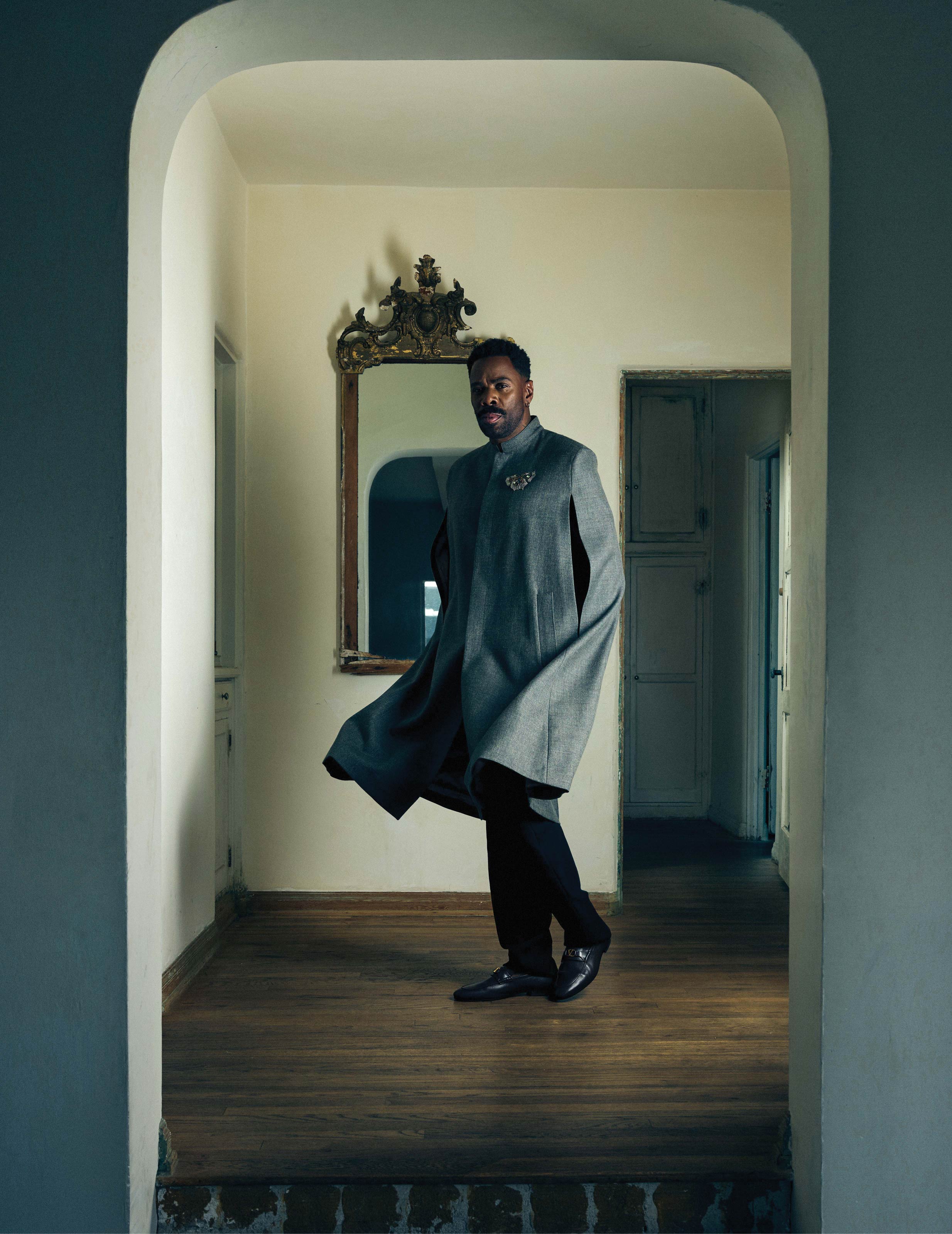
Let’s get into Disclosure Day—the summer’s Spielberg blockbuster. Your character, Hugo Wakefield, is a renegade scientist guiding the two leads [Emily Blunt and Josh O’Connor], through the obstacles they face from within and without. Some thoughts on your role in Disclosure Day and working with Steven Spielberg for the second time?
The beautiful thing is that this film is expressing something that is truly akin to what is inside Steven’s heart. I think he’s someone who believes in the possibilities of what humankind can be. And that is, that sometimes, we need to look to the stars. We need to look outside of ourselves in order to unite us. I think that Hugo’s whole purpose in the film and the gift that he’s been given, is about empathy. When he was at Wardex, he had these experiences with non-humans, which have opened up his heart and his mind more to empathy. And I think that he knows this; he says that’s revolutionary, actually, to have empathy right now in the world. If we all come to believe that it’s more about the “us” than the “I,” we’ll be better for it.
And I know you didn’t ask me this question yet, but I also do believe in UAPs, UFOs, and non-human entities. I believe that there has to be more than just us. That would be very egotistical for us to continue to believe that we’re the only things out here in the universe.
Do you think that the actual “Disclosure Day” will happen some time soon? That maybe one day “the powers that be” will allow us to see what in the film is actually disclosed, the evidence of alien life and contact?
I think it will happen. I don’t know when it will, but it will, and it’s been happening. In small doses, and in not just small doses… There were the Senate hearings in 2023, that I remember, they were hot news items for a week, and then it went away…But I’m one of those people, I’m a deeper thinker—like, “Why did it go away?”
The film kind of functions in lieu of that. It’s a prefiguring of what that day might look like.
I think the beautiful thing that Spielberg is telling us is to ask the questions. “Don’t sit back and settle for an unreliable answer.” Because you have towns and communities that have been ostracized and shouted down for what they’ve seen and what they’ve experienced. My character was based on a doctor of clinical psychology from Harvard University, John E. Mack. I did a lot of research, built up a brain trust to draw from to bring to Hugo. I found that John Mack was a prolific author, and very well regarded at Harvard. He won a Pulitzer for writing a biography of T.E. Lawrence. In the early 1990s he began to conduct psychological studies of emotionally traumatized people who described having abduction experiences in great detail. And he believed them. But the moment he began telling people about this, publishing his findings, Harvard [seemed to want to] shut him up, to denounce him. Isn’t that something?
Hopefully he’s still on the planet and hasn’t been erased in any way.
He’s not. He’s no longer with us. He passed away. He was unfortunately hit by a car in England in 2004.
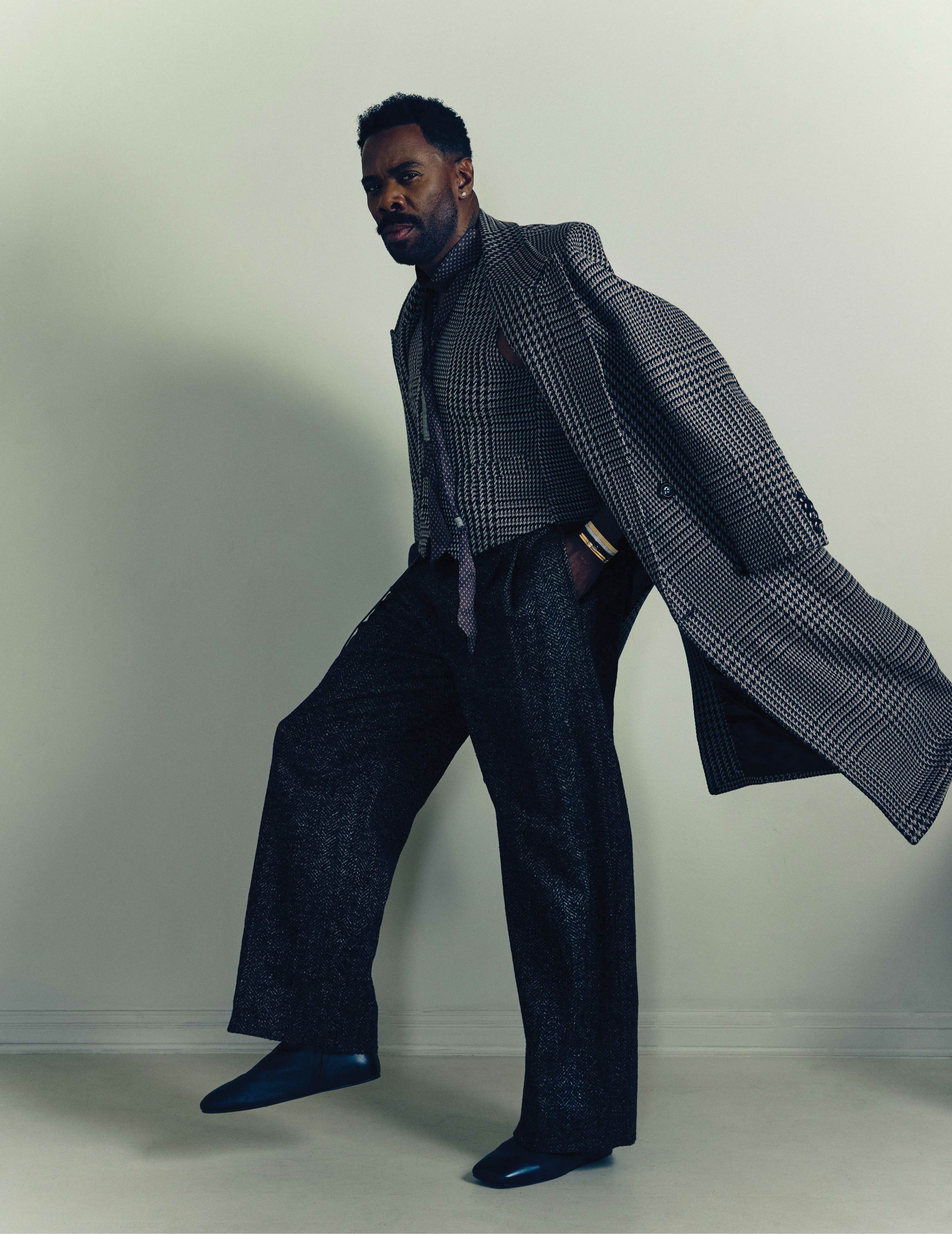
That’s so troubling, given the wave of scientists right now being taken out mysteriously… Since death has entered the chat, let’s take a look at another of your recent major roles. Which is of course, your reappearance in Sam Levinson’s Euphoria as the avenging angel of the entire arc of the drama, as Ali Muhammad/Martin McQueen. [Domingo won a Primetime Emmy as Outstanding Guest Actor in a Drama Series for his turn as the sober sponsor and Muslim revert in 2022]. Can you talk about receiving the script or how the idea came back around to your involvement in season three of Euphoria?
Sam’s one of my dearest friends, and even before he was writing season three, we would just talk about things that he was curious about. I would go to his house, and he had all his research material and ideas—whether it’s from the Bible, whether it’s Blaxploitation, whether it’s poetry. He’s someone who just has a vast mind. We were sat there, going over beats and ideas, and I’m like, “Oh, great. I’m all in. Awesome.” Then things kept happening. We had the loss of Angus, [Cloud, who played Fezco O’Neill] we had the loss of one of our producers Kevin, [Turen, passing from heart-related issues at only 44].
I think that the whole season became a real question of faith. Really examining it. He was like, “I’m going old school. We have to look at burning bushes. The stakes are so high. Where are we right now in our culture and in our world and humanity? How are we gonna have some grace in this?” Ali Muhammad is someone who was very much standing on faith. He is the only character in the series who was able to step back and help Rue, [played indelibly by Zendaya Coleman], to really examine what she’s doing, confront the truth of her life choices, and just to be honest about it.
We were sitting in his office at home, and Sam says, “Colman, I got something to pitch you.” The series [is usually] narrated by Zendaya. Then he says, “Then we get to episode seven,” and he just looks at me and he says—“It opens with Ali’s narration.” And I was like, “What? Oh my God. Why am I telling the story? What does that mean?” And he just looked at me: “We lose her.” I remember I was stunned. He said, “Because that’s the reality of what really happens. Not everyone can beat the disease of addiction. That’s the reality of where her character would be going.” He then explained Ali becomes conflicted over what he stands for, what he’s been speaking and preaching about for seasons. He also unpacked some of Ali’s backstory, which I thought was important. I’d been asking for that for a while, in that we’d heard about the things Ali’s done, but we never had a backstory moment.
When I got the script, I really was just floored by it. I thought it had beautiful grace. And it was even more vivid before. It was pretty wild in the first drafts— it’s a little toned down now. In the original version I also killed Laurie, and others. I was just killing anyone who had anything to do with propagating drugs. I think I went across the border. I did the most, over like two episodes. Then it got pared down because, I think editorially Sam is just magnificent—he knew what was really necessary.
It could be said that Euphoria is a cautionary parable about the extremes that youth today are pushing themselves toward.
It’s not even just “youth”—I think it’s about all of us in our culture, and what we’re digesting. What are we all addicted to? It’s not just specifically the disease of addiction, meaning drugs or alcohol. It could be sex. It could be being seen. It could be having agency over your body. The show examines all of that, and that’s why I think that Sam is such a wunderkind.
I also thought that it was brilliant that he framed this entire season as a Western, which gave it a cinematographic language all of its own. He’s using these incredible wides to examine how small we are or how epic the drama is.You go back to how Westerns are, at the end of the day, about what’s right and what’s wrong. There are good guys and bad guys, and it’s about who wins and who loses.
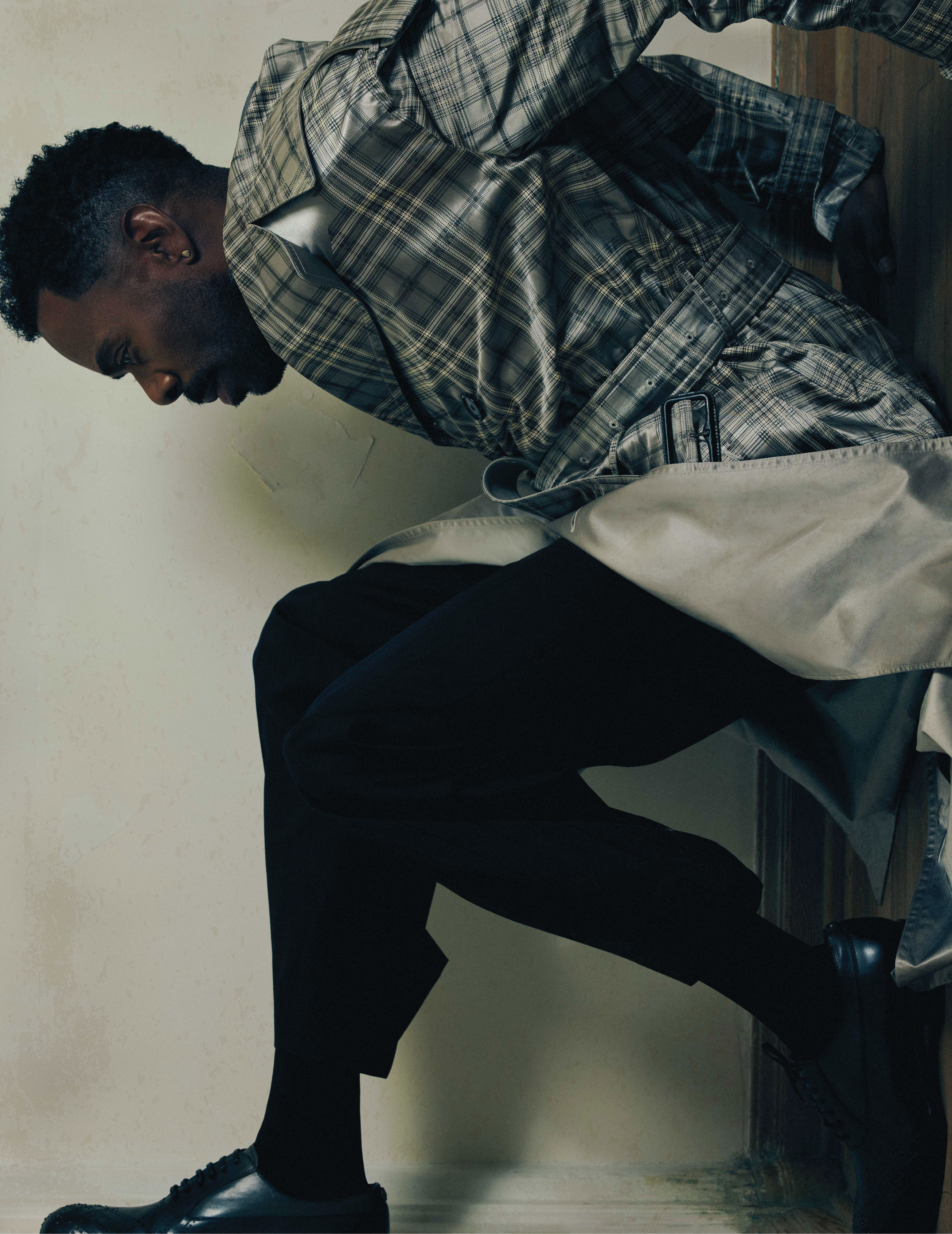
Now you’ve really established yourself as the busiest working actor in Hollywood. How does that feel to be out there, absolutely nonstop?
You know what? I guess I’ve been working now for 36 years, and I have to say that even when the lights were not on me, I’ve always had a robust work ethic with lots of things going on, always. Which is why, even when I’m not on a screen, I’m out there working on other aspects—developing, pitching series, pitching films with my husband who runs our production company, Edith Productions. We have a robust slate, which is run by my husband Raúl Domingo, and Colin MacKenzie, who’s my executive. The company is named after my mom because I want to be able to say my mother’s name every day; it’s on every email. So that keeps her memory and what she’s given to me alive. [Domingo’s mother Edith Bowles, passed in 2005.] That’s so important to me.
To answer your question, what feels good is that right now I’m being seen, and I’m being seen in the ways in which I’ve always wanted to be seen. I like to dance in very different fields…I was just on a Zoom call with Juilliard; I’m gonna going to help curate a Miles Davis event for them. As an artist I wanna keep expanding and trying new things.
What’s beautiful is I’m being seen the way I’ve always wanted to be seen, which is as a multi-hyphenate. I will say this—I know that my path has been my path. I didn’t have a North Star to really look towards, or someone else who sings and dances in musicals and does television and comedy and drama and writes and directs. But I’ve stayed true to my own roots. Especially when people were asking me, “What do you really love? What do you really wanna do?” I’m like, “All of it.” Everything. I love to tell a story. So to continue to work without limitation and to be seen in that way is extraordinary. I love that I can keep surprising people. They’ll see me play Mister in The Color Purple, and then they’ll see me in a Sabrina Carpenter video in drag. Or on Sesame Street with Elmo and Abby. I’m like, “Yes, exactly.” So I feel like right now, it’s a beautiful time ‘cause people, they can see me, whether it’s on SNL, or whether it’s as Joe Jackson in Michael, which has broken a billion dollars—it’s become the highest grossing biopic ever.
A significant proportion of your films are also incredible historical documents—Rustin, of course—that take you back in time to the molecular textures of what it would have felt to live then. So tell me something of becoming Joe Jackson, and going back in time for Michael.
Dovetailing into our original conversation, it all goes back to how much I love to research. From the moment I know that I’m about to go on a journey that has some historical context or to portray a person who is very much embedded in the framework of our culture, like Joe Jackson, I go on a research journey. That’s the part that I really love. I sit here and make collages, brain trusts, music, inspiration. For me, it’s not even about dialing into just the character. It’s everything around it. What were people wearing? What was being sold in stores? How did they work? What did people eat?...How did they have sex? All of that information helps shape a character. I unpack all of that.
That’s why I know someone can look at my portrayals of Rustin and look at Joe Jackson and see two completely different human beings. [I love] all those decisions, and that goes back to having a journalistic heart. I just like to interrogate and mine. [I like to] dig deeper. I am very aware that it’s a rare opportunity to play a hero like Bayard Rustin, and he’s one of my personal heroes, so I gave that characterization everything I had. Some of my personal heroes are the underdogs, like the people in Sing Sing. Just ordinary men in extraordinary circumstances, trying to fight for their humanity.
And then I can lean into something like Joe Jackson, a man who was doing what he had to do for his family. I wanted to center my Joe Jackson on being a father, being from a blue-collar background, and giving his children everything he could so they could survive in this world. I had to go to the interior life of the character of Joe Jackson to find his humanity. I think no one has really given [him] true credit for his contribution to the music industry. He delivered the most incredible legacy of music to all of us. But how he did that—it was his work ethic.
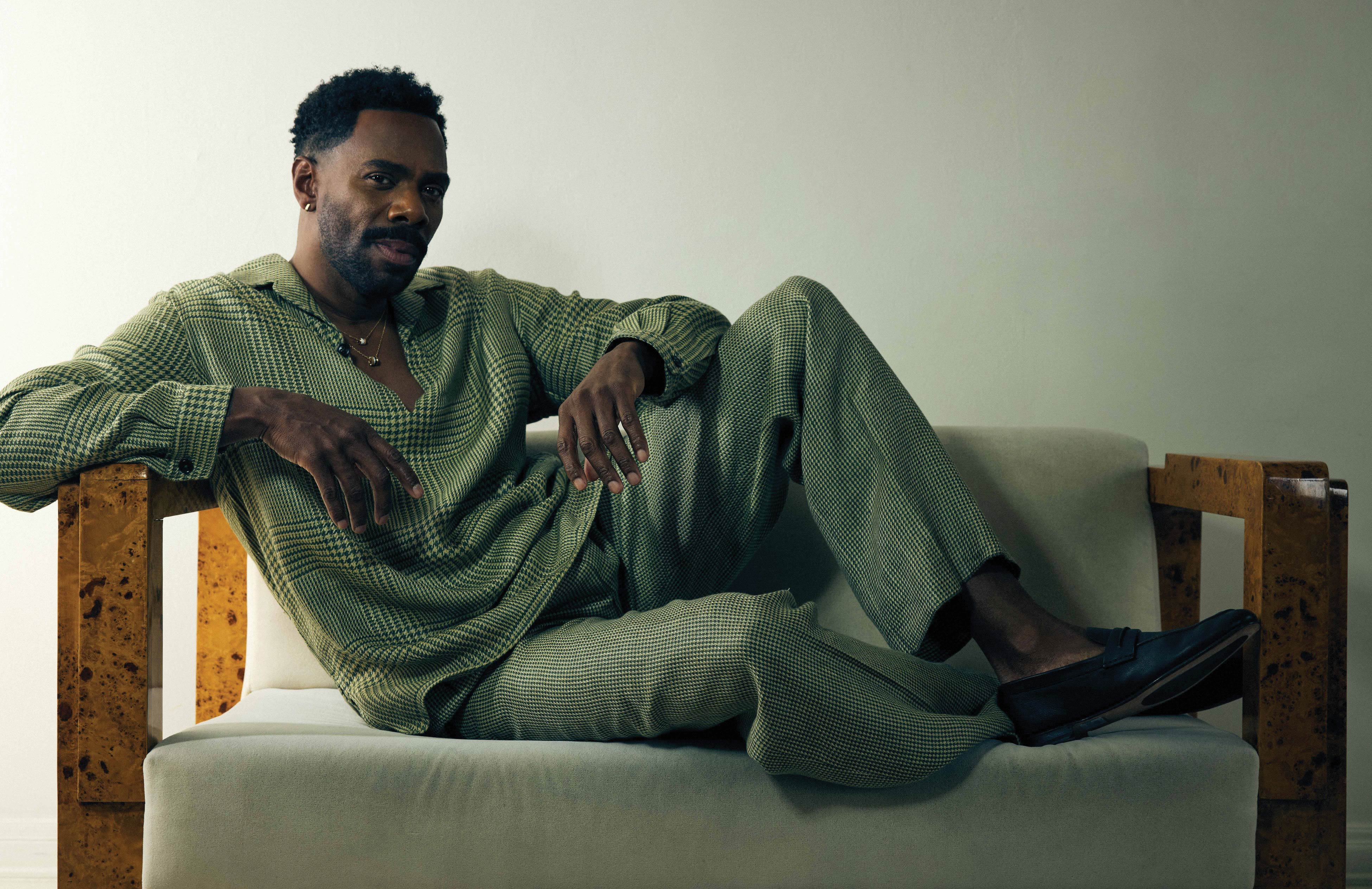
It’s out there that you’ve also been working on a biopic project on the legendary Nat King Cole. [Domingo premiered his stage play, Lights Out: Nat “King” Cole at the New York Theatre Workshop for the spring 2025 season].
Yes. That’s a film that I’ve been developing for some time. We’re actually going to put that off till next year, because I want the right time to prep it, the right time to make it happen, especially for my first feature as a director. In everything I do, I feel like I’m very patient. I’m very pragmatic, and I want things to be done in a very careful way to make sure that every ‘i’ is dotted and every ‘t’ is crossed. So with production starting next year, I would say give it two years, you’ll see us in theaters.
You will... You write, direct, and star?
Write, direct, star, and produce. Yes.
In the lead up to speaking with you, I found a story where you discussed a summer job with your stepfather in your teenage years, sanding floors. Then one summer he told you, you wouldn’t be doing that next year, that he wanted you to find something else, where you would “use your mind.” Which of course you have, to great success, now. But you did the work, first. And so just as you got down into the wood of those dusty floors, you now get into the grain of each role.
I am a blue-collar man in every single way because I come from blue-collar people. The people on my mother’s side who were, from generations before, formerly enslaved; were farmers; were craftsmen. My own natural father came to this country [from Belize, with Guatemalan heritage] not only as a preacher, but also as a carpenter. I’ve been given the gift of understanding hard work and how to achieve it, and knowing that nothing will come for free…This sounds so crazy when I say it, because I’m never trying to diminish anyone’s experience when it comes to “manifestation.” But I find that manifestation feels passive to me, and I think that hard work is more active. I know that what I’ve achieved is from hard work. I know that. Hard work, no one can take it away from you. You earned it. You understand the path that it’s taken.You understand the ethic that it takes. You understand the sacrifice…So I show up and I get to work. Yeah. And I know that is why I’m receiving the fruits of my labor right now, because of hard work. It’s dogged, dogged hard work.
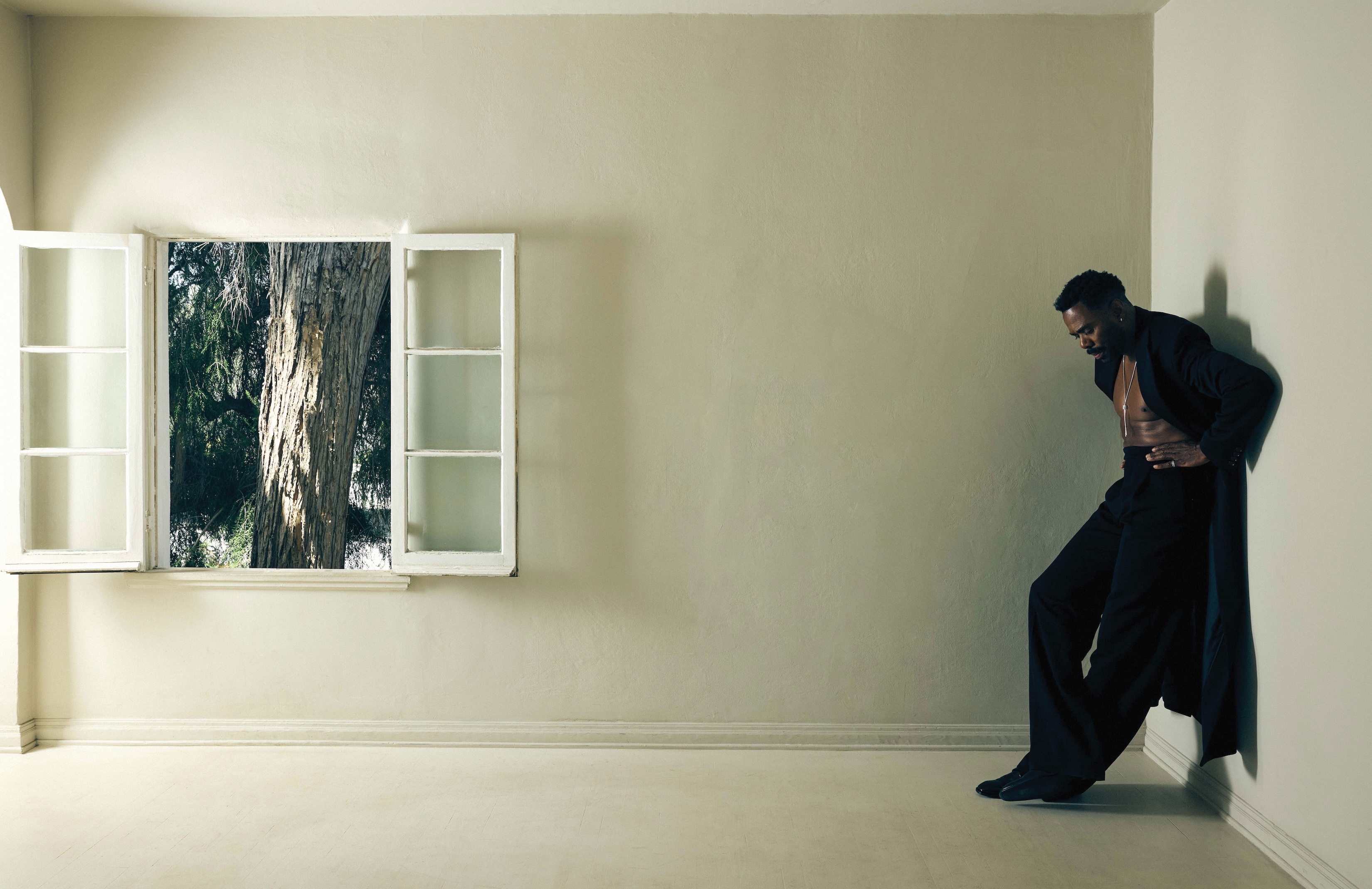
During a recent commencement speech [at Temple University] you shared: “In a world which rewards sharp edges, I want you to be the velvet.” I thought that was such a beautiful statement which encapsulates your feeling for style, texture, color, in a metaphorical way—to be different, be special, be warm, be soft.
I think that we live in such an aggressive world. I remember, in particular, when I lived in New York, I noticed that people always wore dark colors and shapes that felt sharper and harsher. And I really went against that, against the grain, and wore color and pattern and texture. Maybe also I’m fighting for my soul, which I would like to maintain soft. When I was a kid, it wasn’t cool to be soft. It was like you were rewarded by having an edge to you, having some harshness. And I feel like my armor is velvet. It’s soft. It is walking into the room with love and with grace and possibility.
***
For a long time after our discussion, Domingo’s velvet words resonate in my foremind, especially those personalized in support of the craft of research, of writing. If I’ve learned anything over our hour’s very pleasant exchange is that Colman Domingo likes to ask “why.”
I decide to see more of that “why” in action. Forensically parsing through parts of his filmography, I catch an around 30-year-old Domingo in the Clint Eastwood vehicle, True Crime. He has one interaction onscreen with Eastwood, who plays an irascible, determined newspaper journalist, tough as an old boot. The scene is a physical and verbal confrontation in which Domingo’s character Wally Cartwright rushes down on the Oakland Courthouse steps while defending his District Attorney colleague from attack. Domingo’s full height of 6’2’’ is in play as he squares up to Eastwood, also the director and producer of the movie. He’s on the receiving end of a heap of vitriol, but does not flinch, instead delivering a withering parting shot to Eastwood’s character: “New York asshole.” I see all the power and punch of his later acclaim present in that small exchange.
Domingo has said that when he asked for direction on the scene, Clint simply said to him: “Do what you do.” Patient and playful, wild and wise, and above all, willing to put it all on the line with each project, he always gives more than he gets. Domingo’s got decades more to contribute his sense and sensibility to the industry, to continue doing what he does, flying free in all directions. Driving that winding road higher and higher into the clouds.
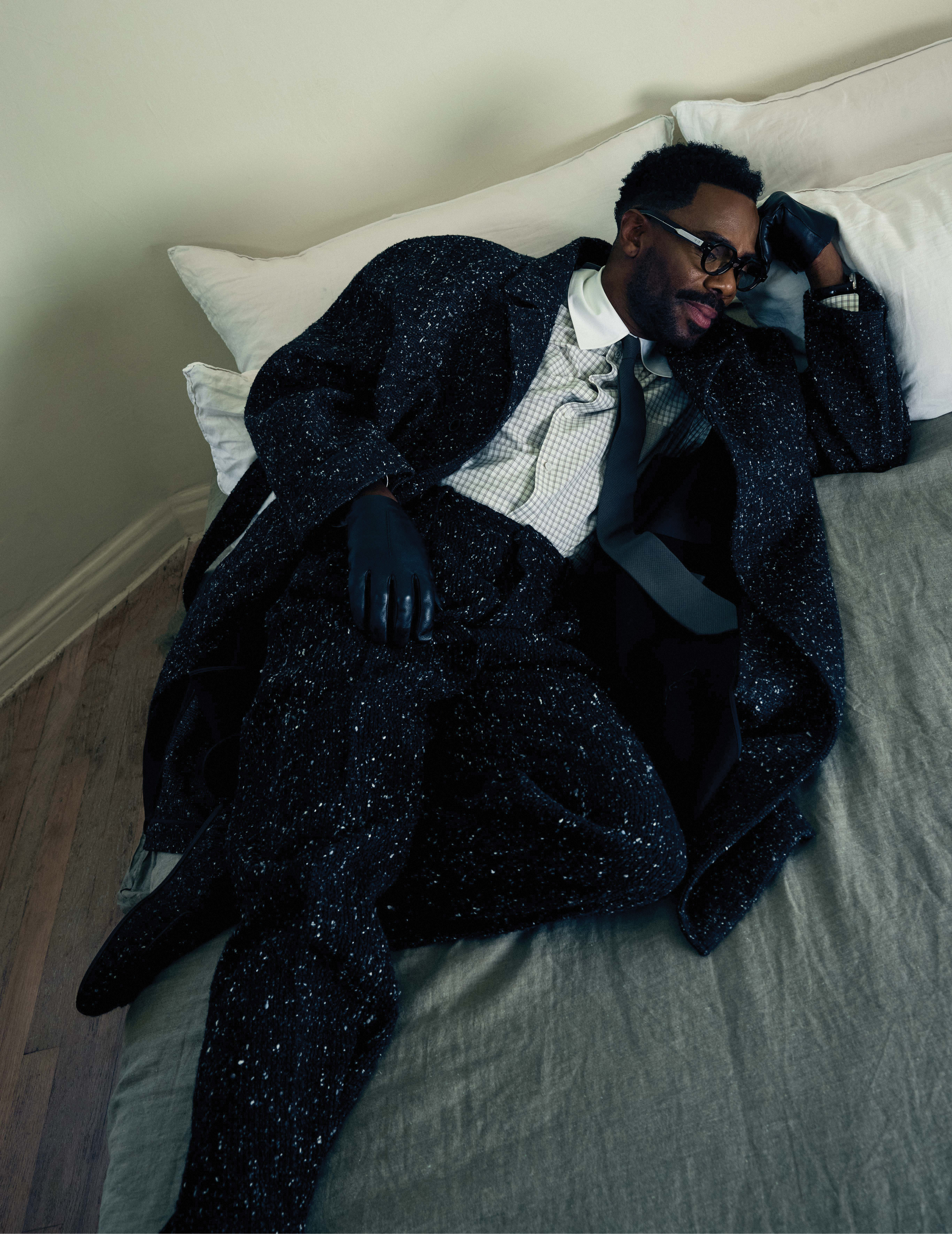
Photographed by Ami
Styled by Von Ford
Written by Hannah Bhuiya
Grooming: Jamie Richmond at Exclusive Artists Mgmt using Dior Sauvage Serum
Flaunt Film: Jordan Moran & Maxwell Klaiber
DP: Andrés Aragón
Flaunt Film Editor: A.T. Etzweiler
Colorist: Ashton Thomas
Photo Assistant: Kseniia Efimova
Styling Assistant: Charles Rose
Production Assistants: Ameen Kher and Rose Garcia
Stay up-to-date with exclusive events and content.


