F L A U N T


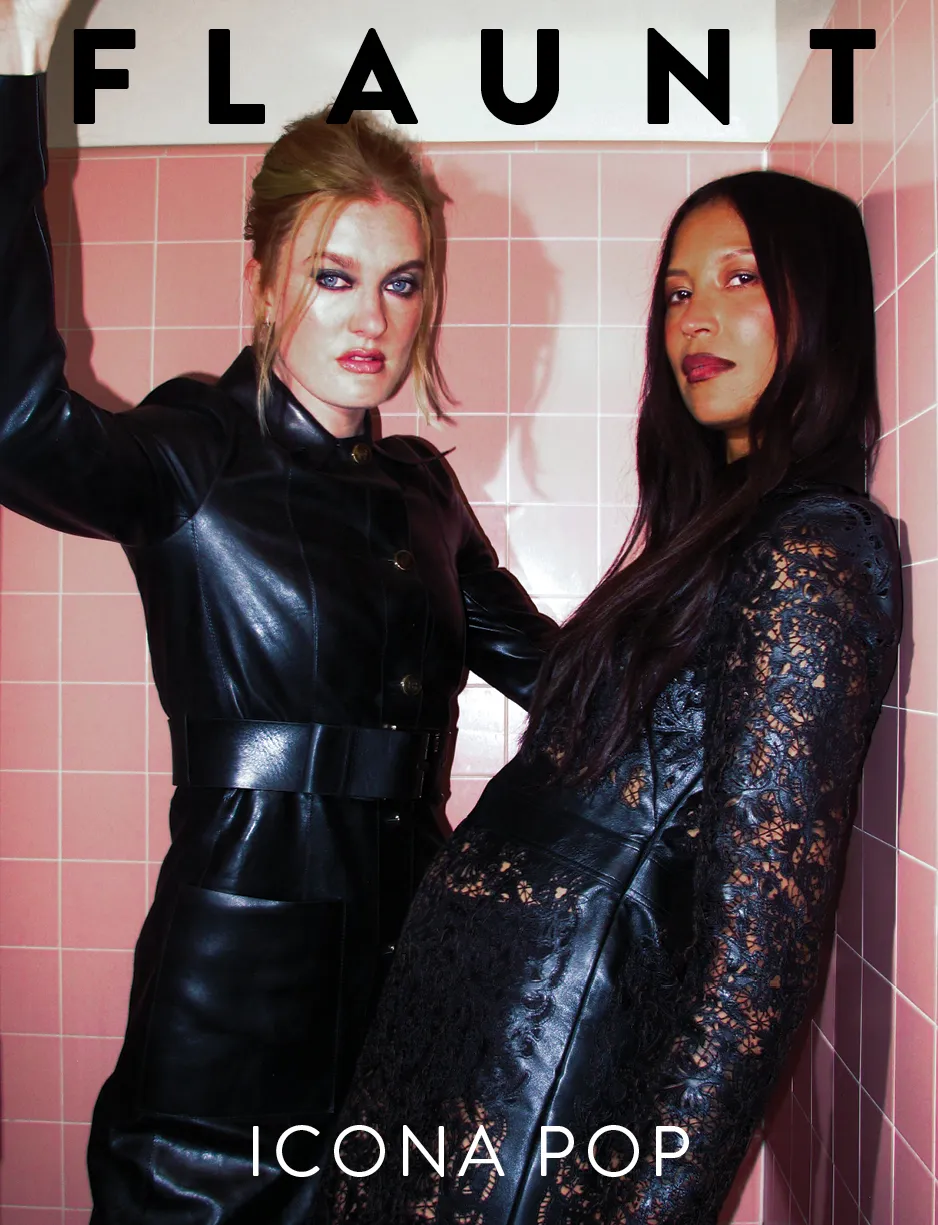
The body is the possession we are most reliably persuaded to relinquish. Every spiritual tradition of consequence has construed it as something to be transcended, mortified, escaped—the flesh as prison, as veil, as the lower thing the higher self must strip itself of. And the modern, secular version, though it has dispensed with the soul, has kept the contempt: we treat the body now as a chassis for transporting the head to its obligations, maintained grudgingly and otherwise ignored until it fails. We do not, as a decree, live inside our bodies. We live a few inches ahead of them, in the next attractive vessel.
It is worth dwelling on this peculiarity because the alternative—actual residence in one’s own flesh, the warmth and the weight and the ache of it—is the precondition for nearly everything we claim to want. Grief and pleasure reside within, and so does the sensation, increasingly scarce and increasingly counterfeited, of being present for one’s own life. To leave the body is to leave the scene of all genuine feeling, and to do it for long enough is to arrive somewhere very cold.
A medicine man in New York once put this to a friend of Icona Pop, plainly, during a particularly emptying season of her life. He looked at her for some time and asked whether she wanted to live inside her body. He told her she had gone frozen, and he prescribed the only remedy he trusted: heat, motion, touch. He told her to dance.
This friend repaid the diagnosis by handing it over to Caroline Hjelt and Aino Jawo, who turned it into a song (how they’ve approached every tangible feeling for nearly 17 years). The song is called “Ritual.” It lends its name to the fourth Icona Pop album, out August 14, and the medicine man’s question—Do you want to live inside your body?—turns out to be the only one the record is asking, and the one its two authors had spent the last several years answering, against their will, in the negative.
Icona Pop reveal themselves to me in the woods. In LA colloquialism this is Griffith Park. We’re sat at a picnic bench at a café aggressively dressed as a summer camp and we are drinking lemonade, which is a comic setting to share with two women who have spent their adult lives as champions of the global nightclub. What they have come to discuss is, by any honest accounting, what will be revered as the best dance record of the year, and it is a record about grief, and the second fact is concealed inside the first.

This concealment is the entire Icona Pop method, and has been since “I Love It,” the 2012 single featuring Charli xcx which has become completely intertwined with the collective consciousness. It is a masterpiece: the euphoric nihilist anthem, three minutes of gorgeous not-caring and a car driven off a cliff at maximum volume. That its authors have spent the intervening 14 years learning, at considerable cost, how to care is the central irony of their catalog, and the subject, more brazenly, of this album. Icona Pop thereafter spent nearly two decades of Not Caring and Loving it on the road with Miley Cyrus, Katy Perry, and One Direction; Club Romantech, This Is…Icona Pop, each record an unbroken forward motion that is indistinguishable from being alive. “We never stopped and it almost felt dangerous,” Caroline says. “So you teach your body not to deal with things. And then your body catches up."
It caught both of them at once, which is what befalls a twosome who have occupied a singular nervous system since their early 20s. Since meeting at a nightclub and becoming musical collaborators the very next day, Icona Pop had been, by every account including their own, one thing. “When we lived here we had a house together and did absolutely everything together,” Caroline says of Los Angeles, “and we’re so used to just being in sync.” She pauses on the next part. “With everything that’s happened, now is maybe the first time we’re not really in the same place in life.”
And the bill was specific. Aino’s grandmother—one of her dearest people and half of her Finnish heritage—died of COVID while Aino was in Los Angeles. She fell ill in the aftermath; she then became pregnant with her second child. Caroline, in tandem, was disassembling inside a divorce, and, worse than the divorce, learning what it was to be without Aino in the room for the first time in 17 years. What frightened them was not the grief itself but the fear that there was no way out of it.

“There’s such a strength in being two,” says Caroline. “But in a situation like this it’s also so vulnerable. What if the other person doesn’t want to do this with you? Well—it’s not about wanting. What if they don’t have the capacity?”
It was through a raucous need for movement that Caroline asked Aino if she could begin assembling a team for their forthcoming project, which would await Aino as soon as the capacity emerged. “When we started writing and got back together—I feel like because we both were in a new place—we were in a different mindset,” says Caroline. We were also much more open and vulnerable and comfortable with our team, and I think you can hear that, yeah, on the album.
That located clarity shares the album’s namesake, Ritual. Ritual was the technology they used to find their way back into their bodies, and they are happy to list those rituals, glamorous and unglamorous. There is the sauna, which they hunt down in every city they land in—“very important in getting you into a calm space,” Caroline says. There is nature: “If you have a crazy week of work, you need to just go out in the woods and reconnect.” There is, most touchingly, the ritual of simply asking. “We have a ritual of talking,” Aino says. “To touch base and be like, ‘How are you? What’s going on?’” And there is the ritual of deliberately doing nothing, which for two people constitutionally incapable of it is the hardest discipline of all, and which Caroline endearingly describes as a scheduling problem: making time to do nothing, “almost like a date.”
The largest ritual, the one the whole record is erected to honor, is dancing, which should not be mistaken for recreation. “We usually have a trip to Ibiza,” Aino says, “and we just stand in the middle of the dance floor and look at each other. For us, it’s not about the party. It’s dancing to a certain rhythm. It’s kind of like a meditation—it’s such a weird thing.” This is the underbelly of Ritual, and what Icona Pop has been getting at since they crashed the car into the bridge: that the dance floor is both refuge and a stab at any emotion.

“During a healing process, you have to slow down and think, but you can’t work on yourself 24/7 for too long,” says Caroline. “You need to get out and see what happens. On a night out, you’re not thinking of everyone else; it’s just about getting into the music.”
Ritual enacts precisely this belief across its runtime, and the thesis is lodged, appropriately, in the title track, where the medicine man’s diagnosis survives verbatim—he said girl your body is frozen, you gotta dance your ass off—before the song instructs the listener to turn the key: You got an inner Ferrari, you need to drive. Over Sebastian Furrer and Jason Gill’s ascending and effervescent synths, Daya arrives to deliver a line on the subject of heartbreak-as-renovation: Can my heart break into a new shape, kinda like an earthquake?
The record was built largely with fellow Swedes—Erik Hassle, Tove Lo, and Yaeger with British writer Ines Dunn among them—after the duo’s 10-years-overdue return to Sweden (“I don’t think we could have written this album here, in LA,” Aino laughs). And from that center it radiates outward through the full blueprint of a long night. “Hurt Me,” is its devastated core, an essay on grief engineered as a club classic, and it maintains the disguise so completely that Aino cannot perform it while looking at Caroline. “I don’t know if she’s gonna cry. And if I look at her, I’m gonna cry.” It is not, Caroline insists, a revenge song—“When the song reaches climax at the end, it almost feels like you’re out on the other side dancing with your friends again still hurt—but also happy”—and its tenderest line verges on the intolerable in its clemency: I hope you love you the way you never loved me. The summer single “Yellow Top” is the most nakedly hedonic thing here, a song with its hand already halfway up its own shirt. And “Mad Love” rests on a chorus they wrote in 2009, the year they were fated to meet on the dance floor, and consigned to a drawer until they had accrued enough life to earn its verses.

“We are letting people in for the first time,” Aino says when I inquire about what sets Ritual apart from their lineage of dance records. “We’ve been scared of that.” She notes that the preceding catalog was no farce—at the time, their bodies navigated an entirely different terrain. “We could write about a lot of other people’s heartbreaks and come up with a good story. But we were in a different place—constantly on tour, party party party. It was very hard to write about something else, because that was our life.” Caroline has a phrase for what the album does instead of confessing. “It’s vulnerable and powerful at the same time. It’s not telling you to reflect. Everything is about what we’ve been through, and breaking patterns, taking back control. Listening to our bodies. It feels like starting over, we’re almost naïve.”
It is almost amusing to hear a band of such withstanding oeuvre ruminating on rebirth, and it is the truest answer anyone gives all afternoon to the medicine man’s question. To live inside your body is to be a beginner in it again—to feel the cold you outran finally catch you, and to find, on the far side of it, that you are still here, prone to thaw. The Gospel promised the word would become flesh and dwell among us; it said nothing about how long the dwelling takes, or how much you have to lose before you manage it. Icona Pop spent 17 years blaring as a song at a party they weren’t at, but they now sit before me as two women at a picnic bench in the wilderness, drinking lemonade. They will soon fly home to their children and lounge at another Swedish park. The record is called Ritual because ritual is just this: the practice of returning to the body, and staying still, preferably with those you love.
Caroline lifts her cup and squints at the sky. “I’m not really used to this,” she says. “Sitting in the sun.”
Photographed by Selah Tennberg
Styled by Annie & Nora
Written by Melanie Perez
Hair: Cesar Deleon Ramirez using Conde Professional Extensions, Kerastase, L'Oréal Pro
Makeup: Chloe Forbes at Opus Beauty
Flaunt Film: Sophie Saunders
Hair Assistant: Masey Castro
Production Assistant: Ameen Kher
Stay up-to-date with exclusive events and content.


