F L A U N T


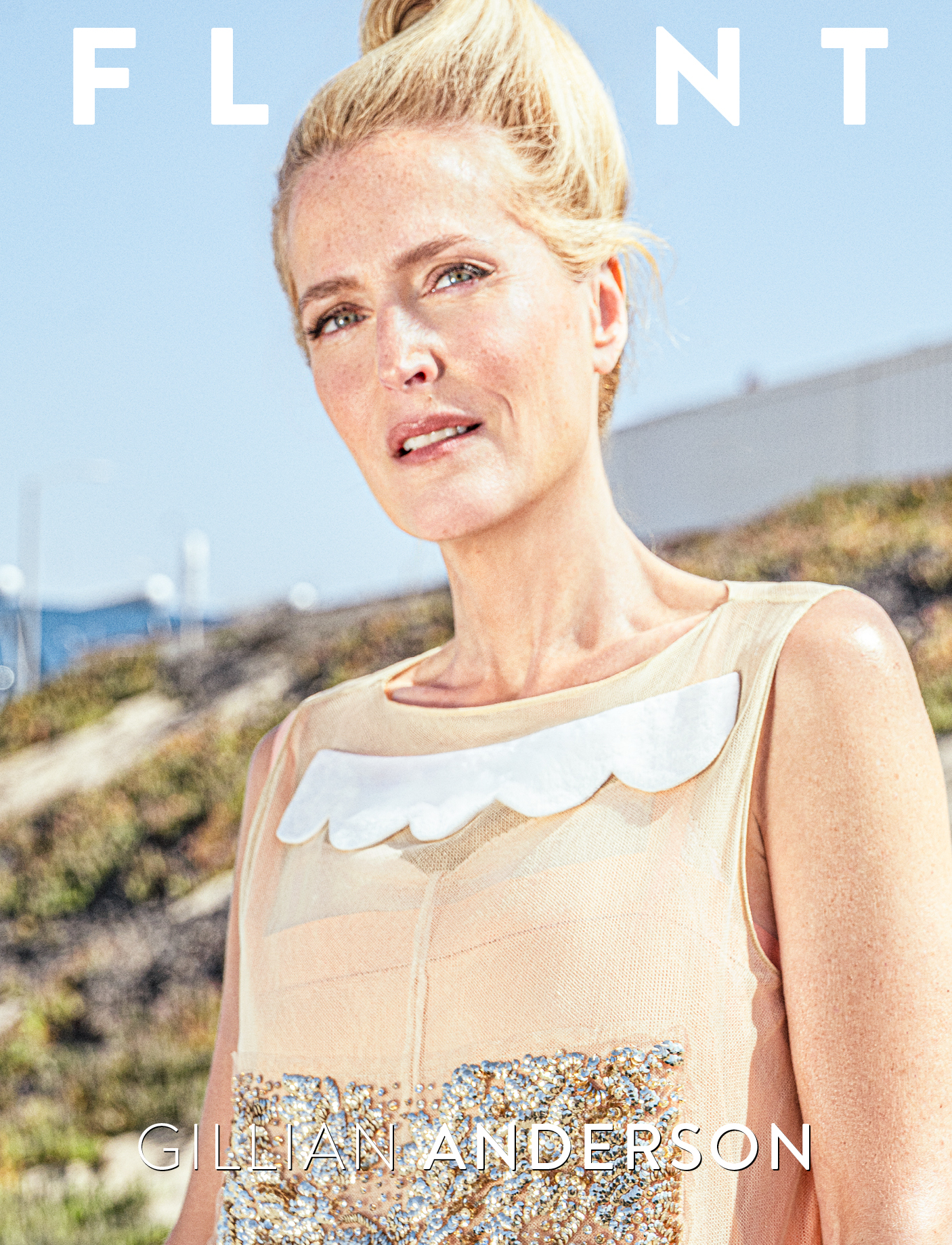
“The potent thing about all intentional sexual fantasies is that we are the authors of the stories,” writes Gillian Anderson for the introduction to her book Want, a compendium of anonymously submitted letters describing the secret desires of hundreds of women. “We have agency and we control the action, who does what to whom and how, down to the last elaborate, exquisite, erotic detail. Fantasy is a safe space; it is not necessarily what we wish was real.”
With this in mind, you should see how she eats a Kentucky Fried Chicken wing. The way director Jane Schoenbrun films her, everyone is made to watch, transfixed, as Anderson’s fingertip descends in eroticized slow motion to tap the foil cover of what might be barbecue sauce before peeling it back to drown the fowl in the syrup. The sound of the scene is as aurally arresting as it is visual. By the time she puts the dripping wing, shining with the dip, fully into her mouth, it’s clear that the chicken isn’t the point.
The best sex scene in Teenage Sex and Death at Camp Miasma—Schoenbrun’s third feature film after We’re All Going to the World’s Fair (2021) and I Saw the TV Glow (2024)—is set at a dinner table. No one undresses. No one even touches. And, as Freud never said, sometimes a dipping sauce isn’t just a dipping sauce. Schoenbrun might be the author of this fantasy, but it’s Anderson—whose line of functional beverages, named, of course, G Spot, and her turn as sex therapist Dr. Jean Milburn in the Netflix series Sex Education—who brings to Camp Miasma an earned wisdom in matters of “flesh and fluids,” to borrow from one of the film’s most memorable lines.
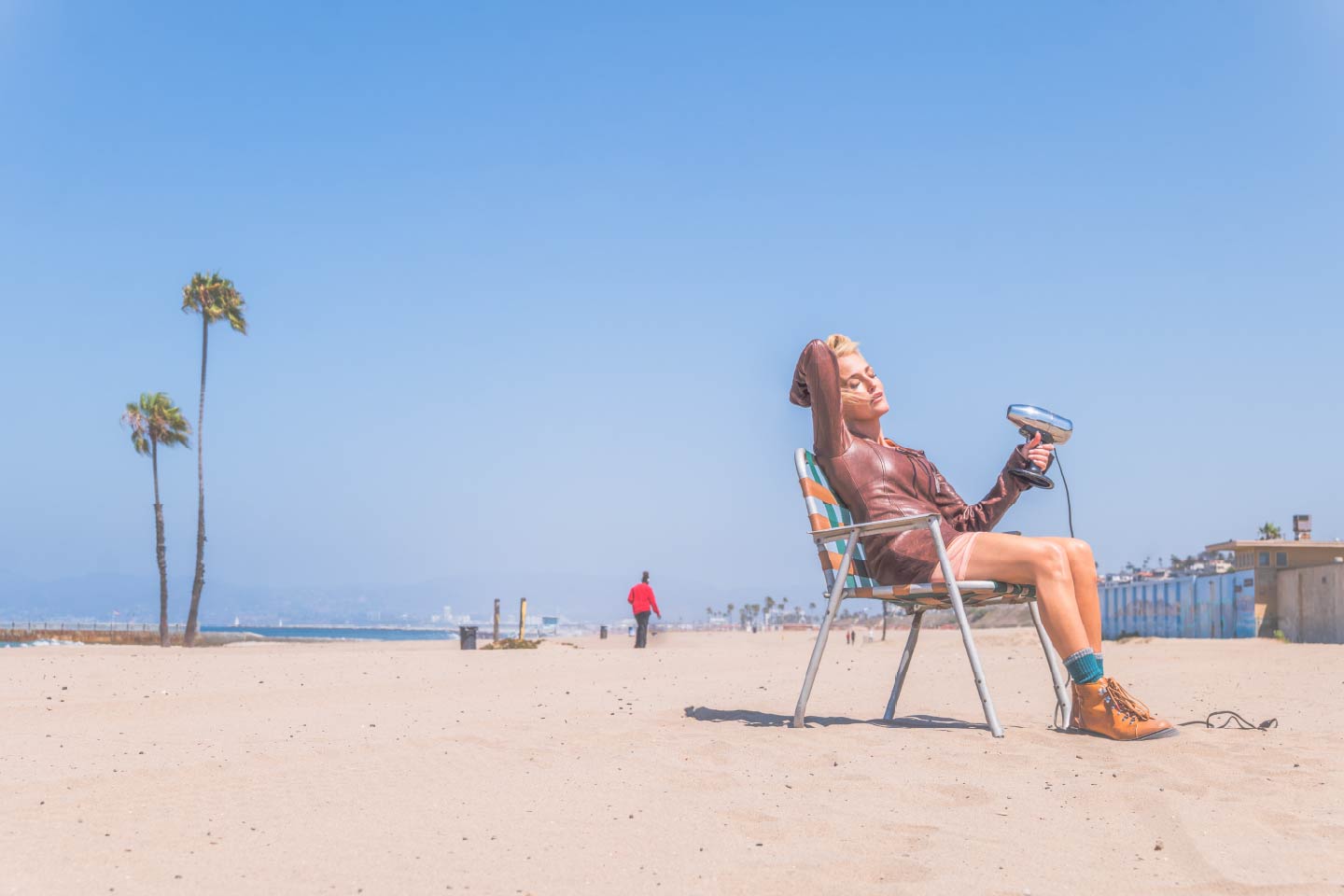
“Our cultural relationship with sex has been quite schizophrenic,” Anderson tells me as she readies to leave for Los Angeles International Airport to catch a flight back to her home in London. “We’ve gone from whispering about it to driving by incredibly explicit in-your-face billboards to this conundrum of younger generations not really being that interested in it in their personal lives or watching other people engage in it. It has something to do with their relationship to screens and their phones and intimacy. I’m asked about this all the time, but I don’t have enough information about why it might be and how it could be remedied.”
This is where Hannah Einbinder’s Kris comes in. Hired by a studio to direct a new Camp Miasma—another in a series of endless sequels for the film-within-the-film we are watching—Kris is visiting Billy, played by Anderson, the original “final girl” from the first installment of the Camp Miasma franchise. Kris is determined to convince her to star in the reimagined version. Miraculously, Billy has managed to live alone on location at the “real” sleepaway campsite from the movie she made so many years ago, where she orders takeout and eats tremendous amounts of candy. Which brings us back to the dipping sauce.
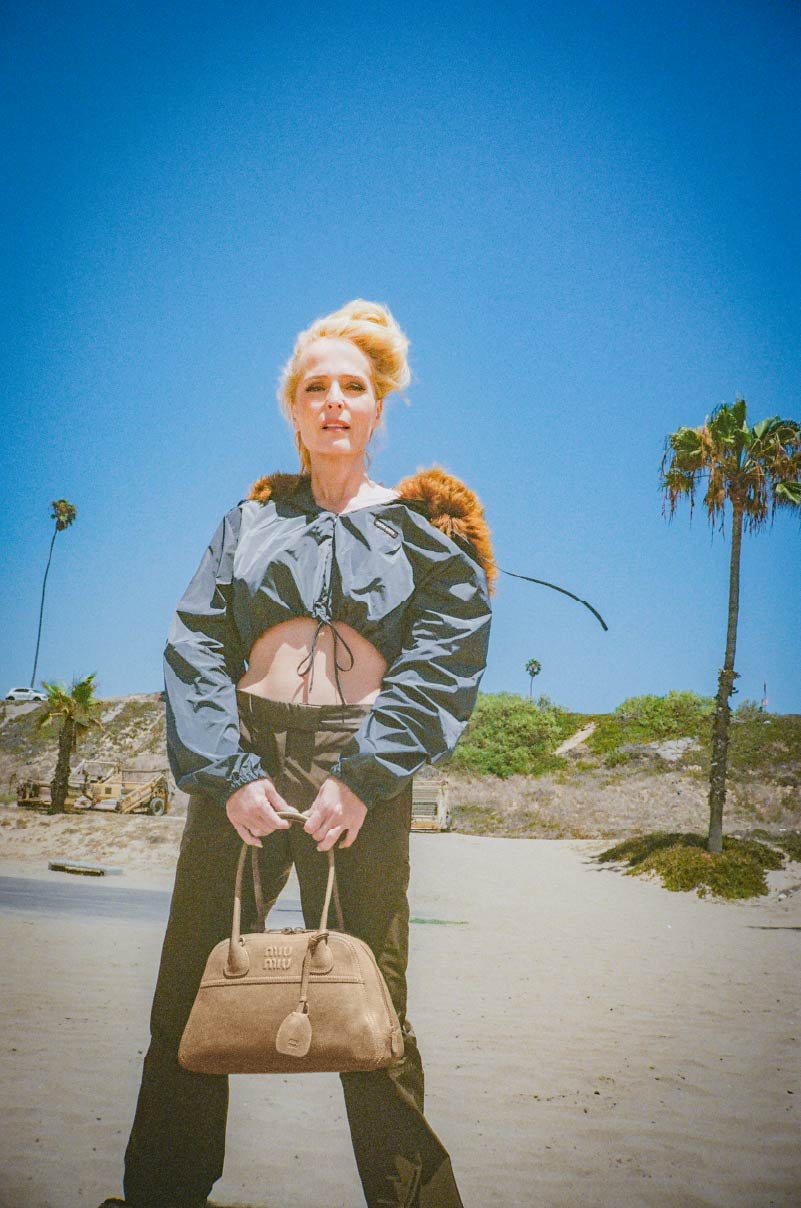
Seated at the other end of the table, with the bucket of chicken between them, we see Kris approach their food with an entirely different demeanor than Billy’s sensuous bites. With the wariness of a KFC virgin, they dab the wing gingerly into the container and nibble it so carefully we hear only a dry crunch as they simultaneously press a hand to their mouth to prevent any unseemly dripping. Kris will admit later in the film that they think they’re bad at sex. We already know this from the dinner we just witnessed.
As it turns out, the original Camp Miasma was the impetus for Kris’ “queer awakening,” and they are self-aware enough to realize they have been asked by the studio to direct the reboot to help erase the notion that Camp Miasma and its endless run of sequels is rooted in transphobia. The killer in the films—named Little Death, in a nod to the French phrase for “orgasm” (le petite mort)—recalls “problematic” psycho killers Buffalo Bill in The Silence of the Lambs, or Leatherface from The Texas Chainsaw Massacre, who, along with murdering people, played with their own gender. As legend has it, Little Death alternately dressed as a boy or a girl and bunked in the boys or girls dorms at Camp Miasma depending on their mood or the time of year.
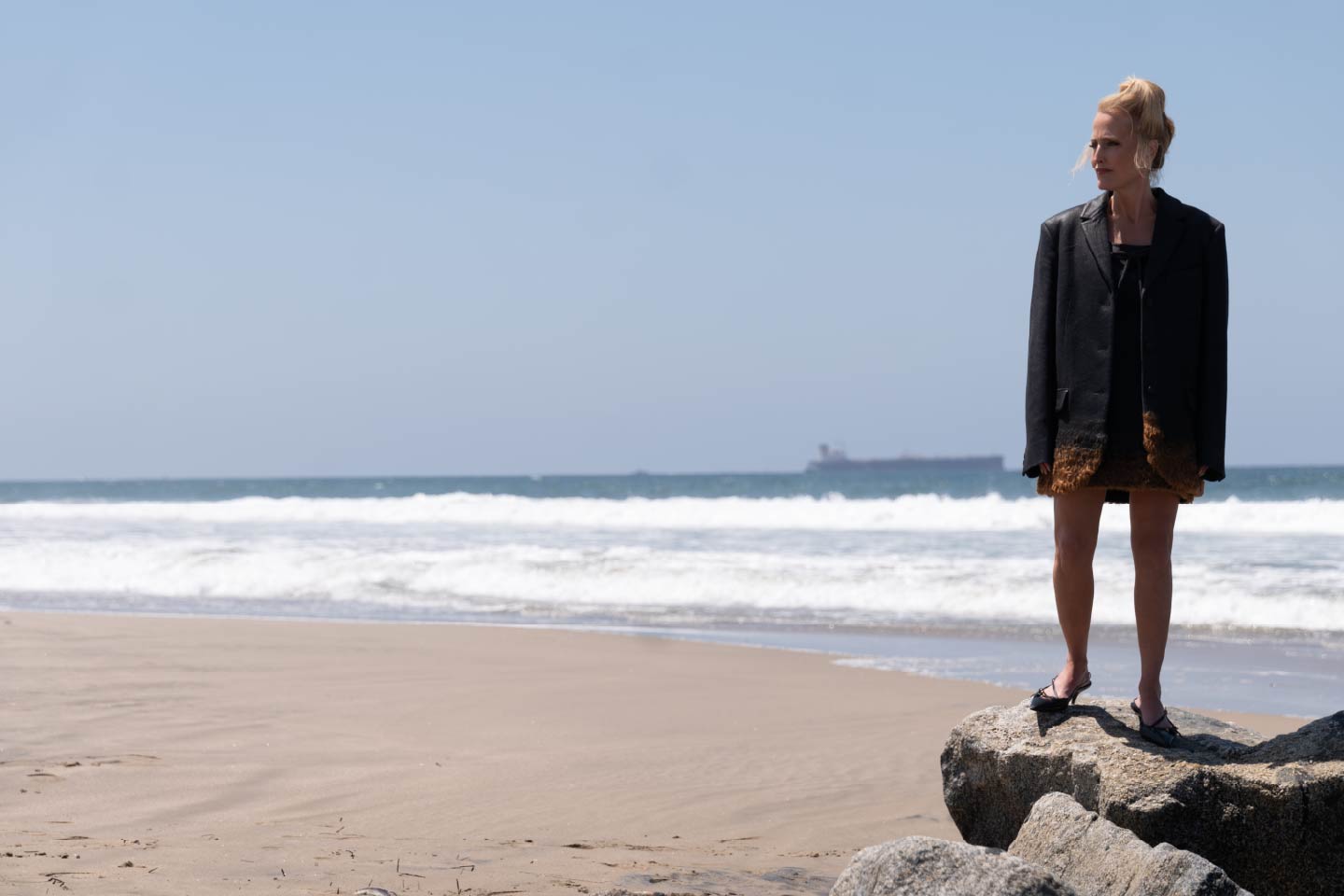
“Listening to Jane and Hannah discuss horror movies has probably helped me to understand them more than any essay I’ve ever read,” Anderson admits. “Particularly about transphobia and misogyny within the horror genre. The depictions of monsters and what we find horrific. The problematic relationship with trans characters within horror films and how some members of the trans community have felt horrified in their experience of their own bodies. The fears we have with our relationship to ourselves, and the fear that comes up naturally in life as we’re going through puberty, as we’re going through our first sexual experiences. Sometimes blood is involved in that transaction, right? It can be painful. It can be violent even when it’s not meant to be violent.”
The relationship between Einbinder’s Kris and Anderson’s Billy expands Schoenbrun’s cinematic fascination with the uncanny—themes where pop-culture will only wink and nod at and Miasma is unafraid to dive more deeply. Here, we see Schoenbrun wandering further into the metatextual landscapes first tread in I Saw the TV Glow and We’re All Going to The World’s Fair. Given their relationship to these unfamiliar worlds that are sometimes uneasy to navigate, it’s not hard to imagine they cast Anderson as Billy because of her familiarity with that strangeness in which Scully from The X-Files seemed to thrive and conquer.
“Jane was interested in me being a part of this film not just because of the type of material that I’ve done before,” says Anderson. “I understand the idea of Billy being an icon to Kris and how casting me might play into the meta themes they explore in the film. But I don’t know whether it was because I played a therapist in Sex Education, or whether it’s related to their fandom of me as Scully. Those characters have certainly impacted me and my own experience and my own perception of sexuality. But one of the things that was important to me, that I didn’t even realize was something that I would have to navigate so carefully, was how to approach the sex in the film. It was a very fine line that I needed to walk. I didn’t want Billy to be creepy. I didn’t want her to be predatory. I wanted Kris to make the first moves, but I also didn’t want to play her too maternal.”
This fall, Anderson is set to publish More, the follow-up to Want. The first was an unexpected worldwide best-seller and a beacon for countless women who have felt left in the dark with unfulfilled needs they have felt too timid or shameful to express openly with their partners. Reading her introduction to the second collection of letters that she’s curated, it’s clear that Anderson was perfectly cast in Schoenbrun’s film.
“Wow, I thought, who knew fantasies could be that constructive and valuable,” she writes. “But also how exciting because, once you acknowledge what they reveal about you, you can’t unknow it. It’s a profound self-reflection and personal growth…more is a rallying cry: to want more, ask for more, explore more, discover more. This book is about having the audacity to demand more in a world where, so often, we are not heard. And it is an affirmation that our sexual desires are not frivolous—they are fundamental.”
With The X-Files, Anderson inspired young women to pursue more unconventional careers, ones usually reserved for men, and the lasting legacy of FBI Special Agent Dana Scully runs from queer icon to feminist hero. At 58, Anderson has become something of sex-positive guide not just for the fellow-feeling women who submitted their most private longings to her for her books, but also as an inspiration to a younger generation that seems befuddled by intimacy.
“The books do relate, in a way, to the kinds of conversations we have in the film,” Anderson says, about how her own comfort in matters of sex could have informed the way she portrayed Billy. “Not just the subject matter, but in the ways that we reveal ourselves to each other. So much of it is ultimately about fear. Fear of what other people think about us. Fear of what even our long-term partners might think of us, and how we might feel judged after having a conversation that challenges a sexual relationship.

“One of the things that’s remarkable about Jane,” she continues, “is how honest they are about their relationship to sex and intimacy and joy and their own body, and the complexity from having been in one body for a good portion of their life and now they are in a transformed body and rediscovering themselves. Jane is so honest and transparent about their experience, and it really invites very deep and honest conversations. That level of communication is affecting and contagious. Communication is everything. Our fear and anxiety get in the way of us being able to have fulfilling relationships.”
“Do you think I’m disgusting?” asks Kris, after they undress and attempt to seduce Billy, only to be left in tears, unable to let go long enough to even approach having an orgasm. It’s this scene that Anderson alluded to previously, where she had to find some rarified middle ground between elder seductress and caring mother. Lean too far in either direction and the relationship between our two protagonists devolves into caricature, or into something unnerving and sinister, or into a less-than-real-life scene from a horror sequel that isn’t nearly as good as the first one.
Teenage Sex and Death at Camp Miasma, by her own admission, was a challenge for Anderson. Her performance as Billy, regardless of year-end accolades which seem inevitable, is unlike anything she has done before, because no one had seen her potential for this kind of cinematic transformation until Jane Schoenbrun.
“For a long time it was something I couldn’t or didn’t want to talk about,” Anderson says, about being overwhelmed by the fame and attention generated by the cultish devotion fans still have for The X-Files, which is slated for a reboot by none other than Sinners director Ryan Coogler. “It took over my life during my formative years, and I just wanted to be done with it. But to have conversations with Ryan, who is clearly such a fan—it’s amazing. I’m very grateful for the series and a character that has become so iconic in different ways. It has led women to become forensic pathologists, or discover that they were gay, or helped them to get through a really difficult time in their teenage years. It’s given so much meaning to so many people, it’s no longer for me to judge or disparage it. I’m finally able to appreciate its place in the culture and able to engage with fans who got so much from it.”
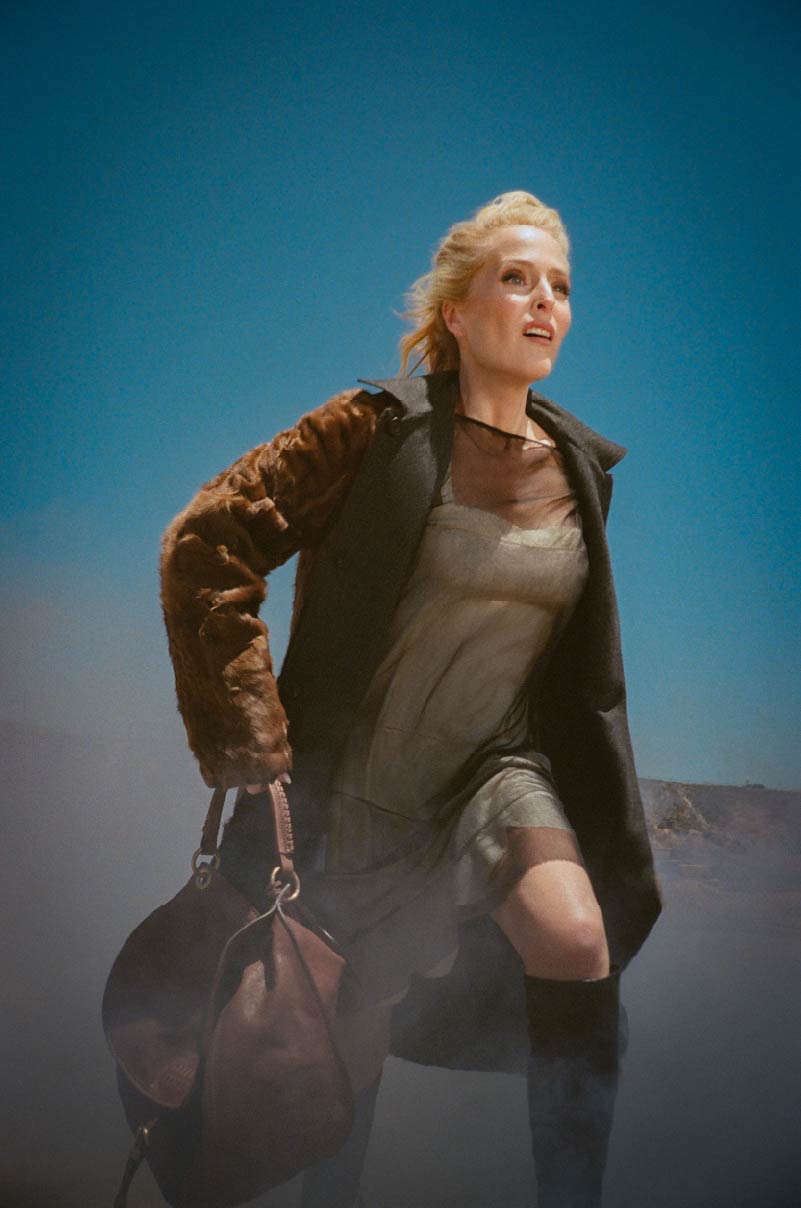
Anderson has never stopped working. She’s cemented her status as a worldwide small-screen superstar with celebrated performances as Margaret Thatcher in The Crown, Stella Gibson in The Fall, the aforementioned Jean Milburn in Sex Education, as well as literary adaptations for BBC television. Yet, with Teenage Sex and Death at Camp Miasma, her second independently-authored book More, the forthcoming feature Animals, in which she co-stars with Ben Affleck who also directed, and finally, her upcoming turn as Martha in a West End revival of Edward Albee’s Who’s Afraid of Virginia Woolf?, why does it feel as if we’re in the early stages of what some internet commenters have dubbed a “Gillian-aissance”?
“It’s interesting, isn’t it?” she asks, pondering the notion that she’s in the throes of some kind of comeback when she’s never left. “But you’re right. I’ve been working constantly. On the other hand, with the response to this film [Camp Miasma] which could have easily disappeared under the wire if it were in someone else’s hands, and Animals, which I can’t wait for people to see—it’s a fantastic time. I’m also very aware that it’s tough for a lot of people in this industry right now. I’m so grateful to be working and that I continue to get opportunities that feel like miracles. I don’t take it for granted.”
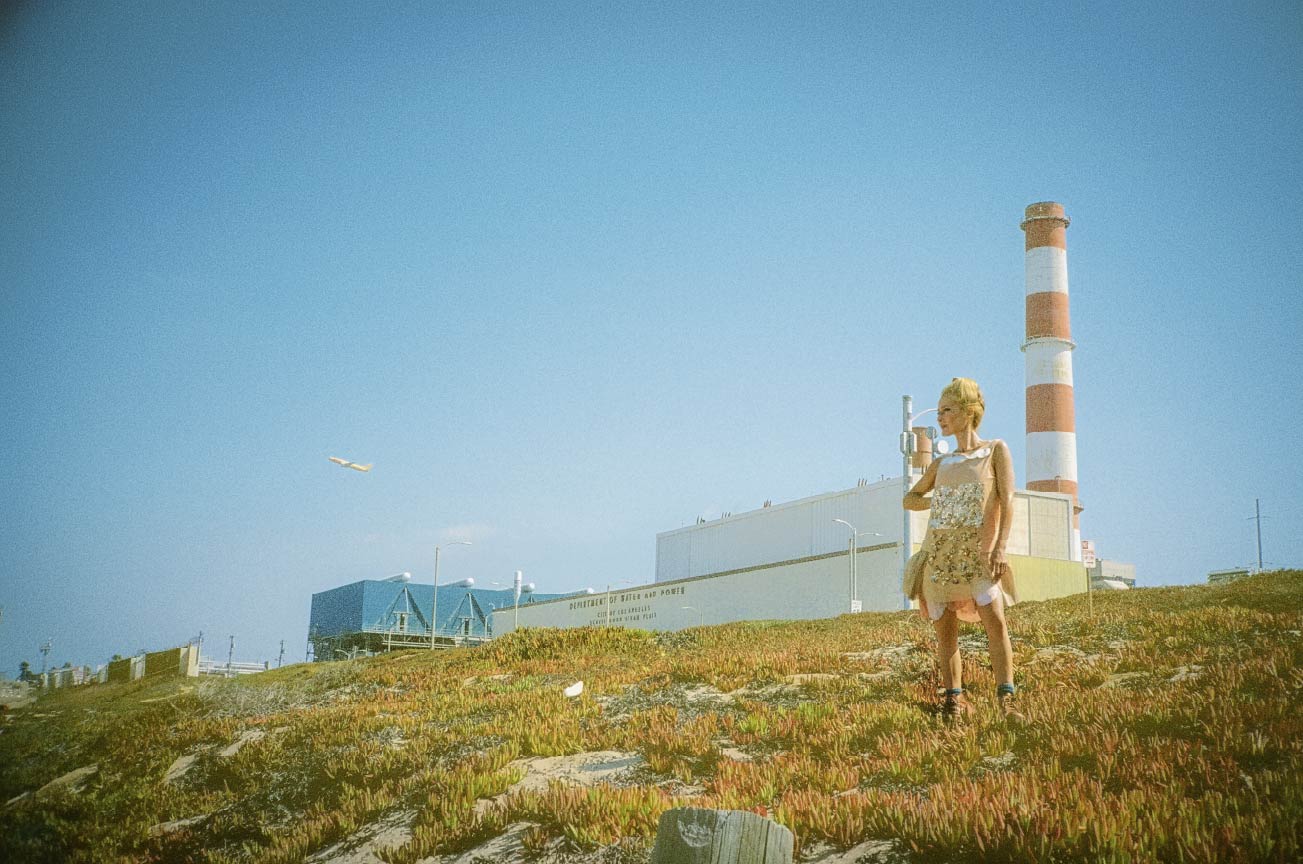
Photographed by Michael Muller
Styled by Christopher Campbell
Written by Gregg LaGambina
Hair: Paul Jones at Forward Artists
Makeup: Zoe Taylor
Digi Tech: Michael Seeley
Photo Team: Justin Seeley
Flaunt Film: Simon Gulergun
Retouch: Nataly Trach
Production Assistants: Ameen Kher, Maggie Zou, Marley Brennan
Stay up-to-date with exclusive events and content.


