F L A U N T


You’ve worked across institutional exhibitions, gallery projects, and publications in recent years. How do you describe your practice today?
My work sits at the intersection of exhibition-making, content development, and long-term narrative construction. Across institutional, gallery, and nonprofit contexts—including my roles with Karma, UCCA, and The Eden Arts Foundation—I’m involved in shaping how exhibitions are articulated publicly through texts, publications, and bilingual content systems that mediate between artists, institutions, and audiences.
Rather than treating content as supplementary or promotional, I approach it as infrastructural. Narrative frameworks play a critical role in how artworks circulate within institutional contexts and the broader art ecosystem: they shape interpretation, establish continuity, and allow artistic practices to move across exhibitions, publications, and markets over time. My aim is to build structures that support complexity while remaining legible across different audiences, enabling artworks and ideas to generate dialogue, recognition, and long-term resonance.
We’re speaking while Xiao Jiang: Looking Out is still on view at Tank Shanghai. Can you tell us more about how you’ve been shaping this project, particularly during the exhibition period?
Looking Out is an institutional solo exhibition currently on view at TANK Shanghai, and working with a project during its exhibition period is especially important to me. At this stage, interpretation is still forming, and content remains active rather than fixed.
For this exhibition, I was closely involved in shaping the exhibition’s narrative and public-facing content—an area that has consistently been central to my practice. I worked in close collaboration with the artist and the institution to discuss the thematic direction of the project and to jointly select and determine the works included in the exhibition, aligning the conceptual focus with its spatial and narrative structure.
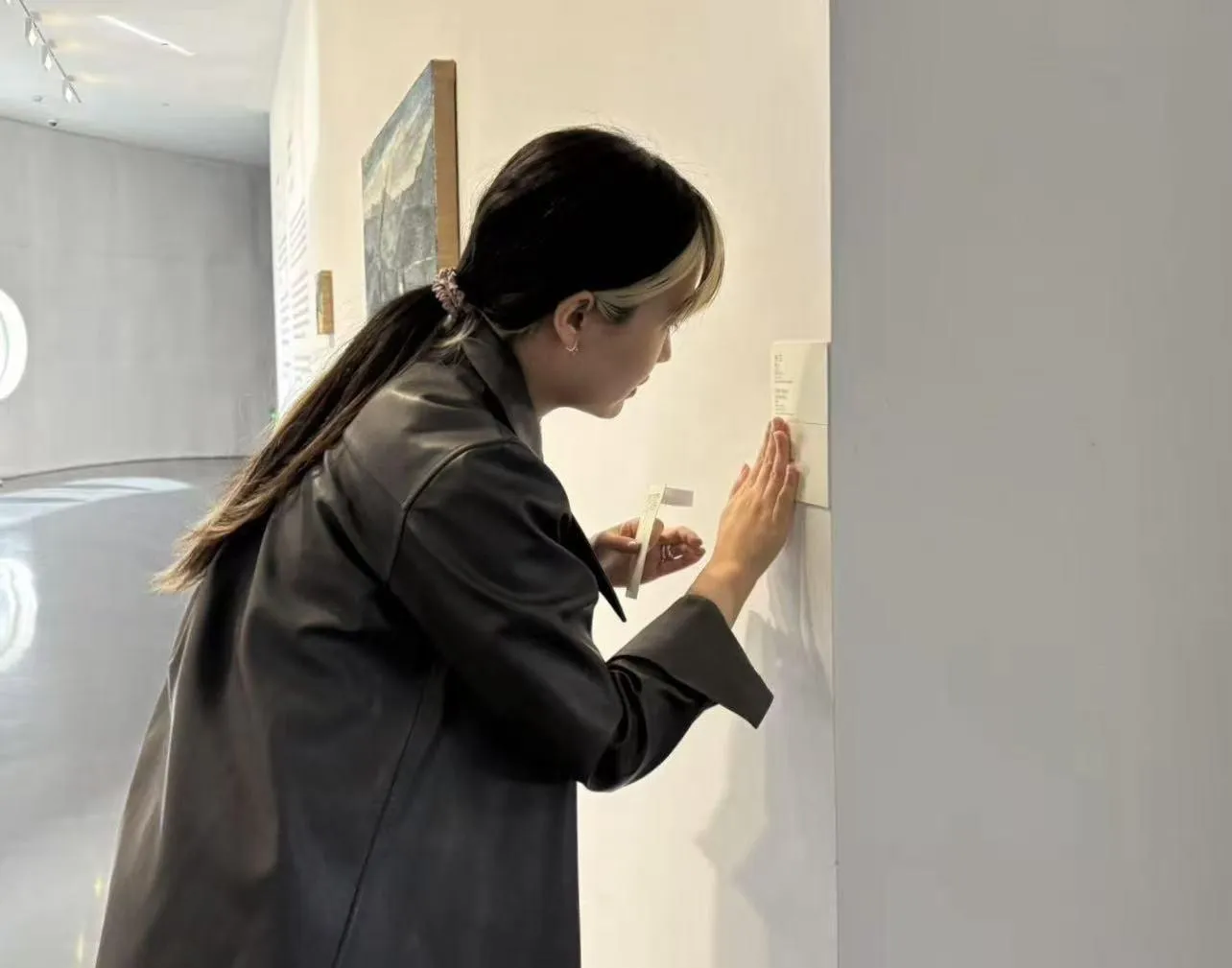
All text-based content within the exhibition—including wall texts and extended exhibition writing—was authored by me. My focus was on how language can function as a point of access without diminishing conceptual depth, translating the artist’s concerns into a public-facing framework while preserving ambiguity and individual interpretation. Coordinating bilingual content was also central to this process, ensuring the exhibition’s conceptual integrity across linguistic and cultural contexts.
Because the exhibition is ongoing, this work continues to evolve in dialogue with the institution, the artist, and audience reception. I approach content as a living component of the exhibition—one that adapts as the project unfolds.
Balancing guidance and interpretive openness in exhibition texts is often a delicate task. How do you approach writing without overdetermining the viewer’s experience?
I’m careful not to let language overtake the work itself. In exhibitions like Looking Out, the goal is not to explain or resolve meaning, but to create points of orientation. This involves deliberate decisions about pacing, emphasis, and omission—allowing text to guide attention where needed while preserving interpretive space for the viewer.
In addition to institutional exhibitions, you’ve worked extensively with international galleries. Can you speak to that aspect of your work?
Alongside institutional projects, I’ve been deeply involved in exhibition and content development with international galleries and art organizations, including projects with Karma in New York and Los Angeles, as well as collaborations with institutions such as TANK Shanghai and Longlati Foundation.
These include Xiao Jiang’s institutional solo exhibition Looking Out at TANK Shanghai, his first European institutional presentation at López de la Serna CAC in Madrid, and Alan Saret’s retrospective exhibition The Rest of Me, which brought together bodies of work that had never been presented collectively before. I’ve also worked closely with artists such as Ulala Imai, supporting her exhibitions in New York and Los Angeles, and Henni Alftan, assisting with her solo exhibition in Shanghai. Across these projects, my role has focused on shaping exhibition narratives and public-facing content that remain coherent as exhibitions move between institutions and regions.
Publishing seems to be another major component of your practice. How does it relate to your exhibition work?
For me, publishing is not separate from exhibition-making—it is another way of narrating and curating. While exhibitions are time-bound, publications allow those experiences to be restructured and sustained.
I’ve worked on institutional publishing projects developed in parallel with exhibitions, where catalogues functioned both as documentation and as extensions of curatorial thinking. At UCCA, I served as an editor on a series of ISMs publications and exhibition catalogues, working on chapter structure, text editing, and bilingual coordination.
More recently, I served as one of the Chief Editors of Eden’s Assemblage, the first comprehensive publication of Eden Arts Foundation. I led the project from conception through completion, developing the editorial structure, shaping the overarching narrative, and coordinating contributions across disciplines. The publication was conceived as an autonomous cultural object rather than a retrospective record.
You frequently work bilingually. How does cross-cultural practice shape your approach to content?
Working bilingually has shaped how I understand narrative. Translation is never just linguistic—it involves operating across different cultural logics, institutional structures, and art systems. Having worked extensively between China and the United States, I focus on ensuring conceptual consistency rather than literal equivalence, often restructuring content so that ideas can circulate meaningfully across contexts.
In this sense, bilingual work becomes a form of narrative design, allowing exhibitions and artistic practices to remain intellectually rigorous as they move between languages, regions, and audiences.
Drawing on over eight years of experience working across galleries, museums, and publishing contexts, what connects these projects for you?
What connects my work across these contexts is a sustained focus on narrative structure—how artistic practices are articulated, positioned, and carried forward over time. Moving between exhibitions and publications has allowed me to develop a methodology that preserves complexity while enabling projects to remain legible as they circulate across institutions.
As you look ahead to what’s next, what guidance would you offer to those beginning their path in the field today?
In addition to ongoing exhibition and publishing projects, I’m currently preparing a pop-up exhibition in Hong Kong, continuing a trajectory focused on how exhibitions are articulated across contexts.
For those starting out, I would emphasize patience and attentiveness. Many of the most meaningful contributions in this field are built over time, through careful observation and long-term commitment. Ultimately, the work is about creating conditions in which artistic practices can be thoughtfully situated, sustained, and understood.

Stay up-to-date with exclusive events and content.


