F L A U N T


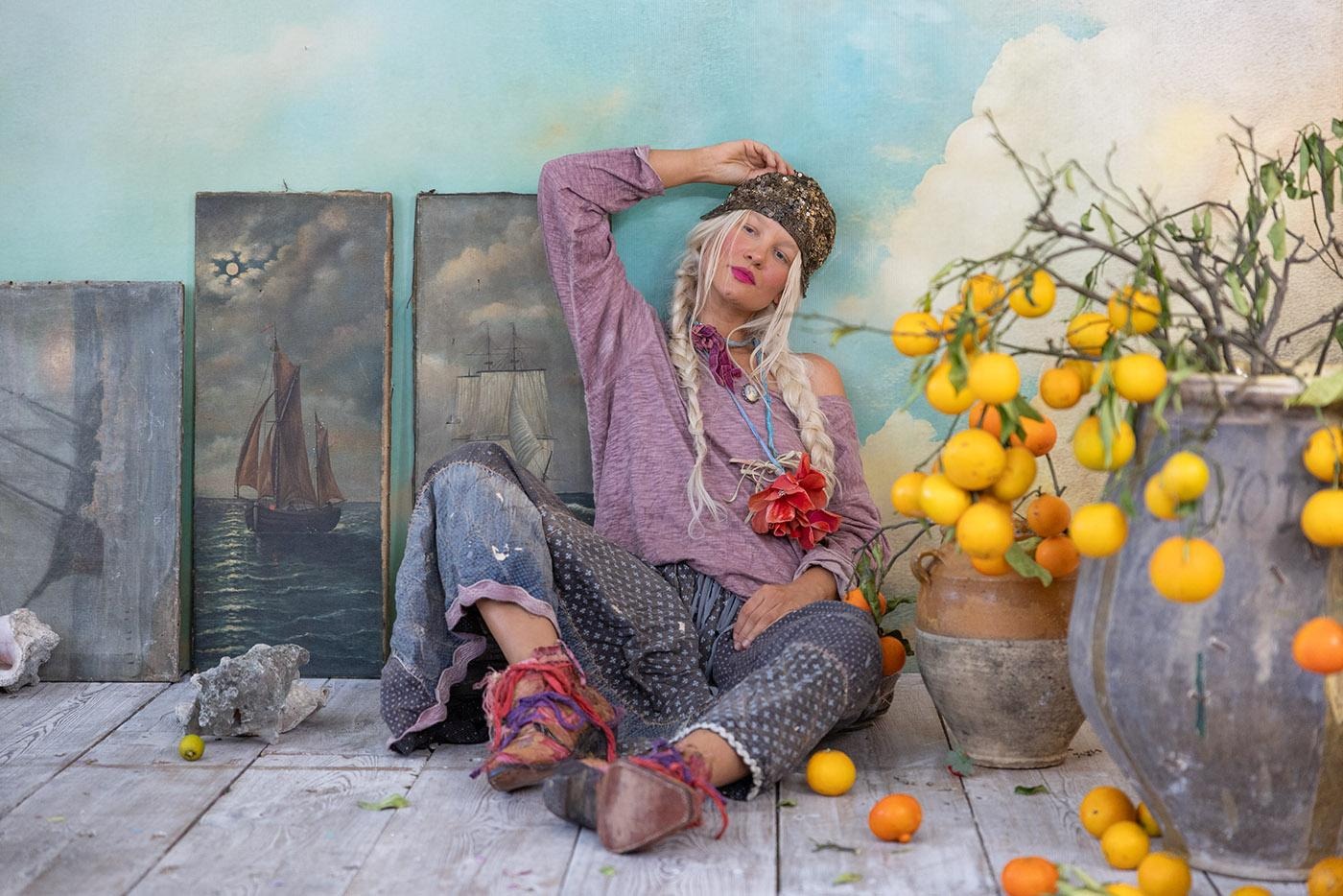
Some fashion houses begin with inheritance. Others begin with capital, access, or a polished idea of taste. The story Magnolia Pearl tells about itself begins somewhere rougher and more intimate: with scarcity, handwork, and founder Robin Brown learning to make beauty out of what was available.
That origin matters because Magnolia Pearl’s philanthropy does not feel separate from its clothes. The garments are marked by repair, age, softness, patching, and visible imperfection. They do not hide the evidence of having lived. The giving model follows the same emotional logic. What has passed through hardship can still hold beauty. What has been used can be useful again. What has been broken can become part of the offering.
Hunger is not a branding concept. It is bodily memory. In Brown’s telling, that memory sits close to the heart of Magnolia Pearl’s charitable work.
Brown’s childhood as marked by poverty, instability, abuse, neglect, malnourishment, and periods of homelessness. Those details are heavy, and they should not be used as spectacle. In the Magnolia Pearl story, they matter because they help explain why beauty is treated not as ornament but as survival.
The brand’s first-garment story carries that same charge. Company materials recount that Brown made a backpack from kite string and an old tapestry, then sold it for the amount she needed to retrieve her mother’s ashes. It is a striking origin because it joins grief, necessity, craft, and exchange in one object.
That thread still runs through the clothes. Magnolia Pearl’s pieces often look pieced together from memory: cottons that feel softened by time, jackets with patches and paint, dresses that seem to belong to a dream of old rooms, open roads, and handmade devotion. The garments suggest that beauty does not have to arrive untouched. It can be assembled, rescued, altered, and worn close.
The philanthropic structure reflects that same belief. Brown founded the Magnolia Pearl Peace Warrior Foundation, which company materials describe as supporting causes connected to food, housing, medical and veterinary care, arts education, Indigenous communities, animal welfare, and disaster relief. Public nonprofit records list the Foundation as a 501(c)(3).
The foundation gives the brand’s emotional language a practical channel. Care becomes more than a mood. It becomes a place for money to go.
Magnolia Pearl Trade is where that idea becomes especially fashion-specific. The resale platform allows pre-loved garments, samples, specialty items, and sold-out pieces to circulate again. It gives collectors a way to find pieces that may have slipped past them and gives garments another life beyond their first owner.
Company materials state that 100% of certain third-party seller fees and 25% of the final value of specialty or brand-exclusive listings are donated through the Peace Warrior Foundation. That detail keeps the story grounded. The platform is not simply saying that resale feels good. It is naming a mechanism by which parts of resale activity can support charitable work.
For Magnolia Pearl, that mechanism feels like an extension of the clothing itself. A patched dress is not pretending the tear never existed. A distressed jacket is not ashamed of wear. A pre-loved garment on Magnolia Pearl Trade is not treated as finished because someone else owned it first.
The same philosophy moves through each layer: mend, recirculate, give.
That is why Brown’s hunger quote belongs inside the fashion story, not outside it. The prayer to feed people is connected to the way the brand understands material life. Fabric can be rescued. Clothing can be passed on. Value can be redirected. Beauty can come from need without being reduced to it.
This is also what keeps the philanthropy from feeling ornamental. The brand’s giving is strongest when viewed through the same lens as its garments. Magnolia Pearl does not offer sleek perfection. It offers visible tenderness, repaired surfaces, and the insistence that what has been marked by life can still be luminous.
In that world, resale is not merely a market. It is another form of repair. A garment moves from one person to another. A collector finds what she thought was gone. A sample leaves storage and enters daylight. When the platform’s charitable mechanics apply, part of that movement supports the Foundation’s work.
Magnolia Pearl’s philanthropy begins with hunger, but the story does not end there. It moves into cloth, into collectors’ wardrobes, into resale, and into the idea that fashion can carry care without losing beauty.
The garment is still wanted. The piece is still rare. The style is still unmistakable. But beneath it all is a simpler promise: nothing loved has to stop at one life.
Stay up-to-date with exclusive events and content.


