F L A U N T


Before Vylit, Amrapali Gan helped scale one of the most profitable platforms of the modern internet.
During her tenure as CEO of OnlyFans, the company cemented its position at the center of the creator economy, generating billions in annual revenue and processing payouts to creators at a scale few platforms had achieved before. redefining what direct-to-audience monetization could look like at scale. The model was simple, but its implications were not. It proved that attention, when owned by the creator, could translate into real financial independence.
Taking over as CEO, Gan OnlyFans expanded its global user base into the hundreds of millions and by the end of her tenure, OnlyFans had paid out over $15 billion to creators; the vast majority of that figure was distributed directly during its explosive growth phase under her leadership. To date the platform has paid out over $25 billion to content creators.
It became one of the clearest demonstrations in the creator economy, that when properly structured, a platform could rival legacy entertainment industry models in both reach and revenue.
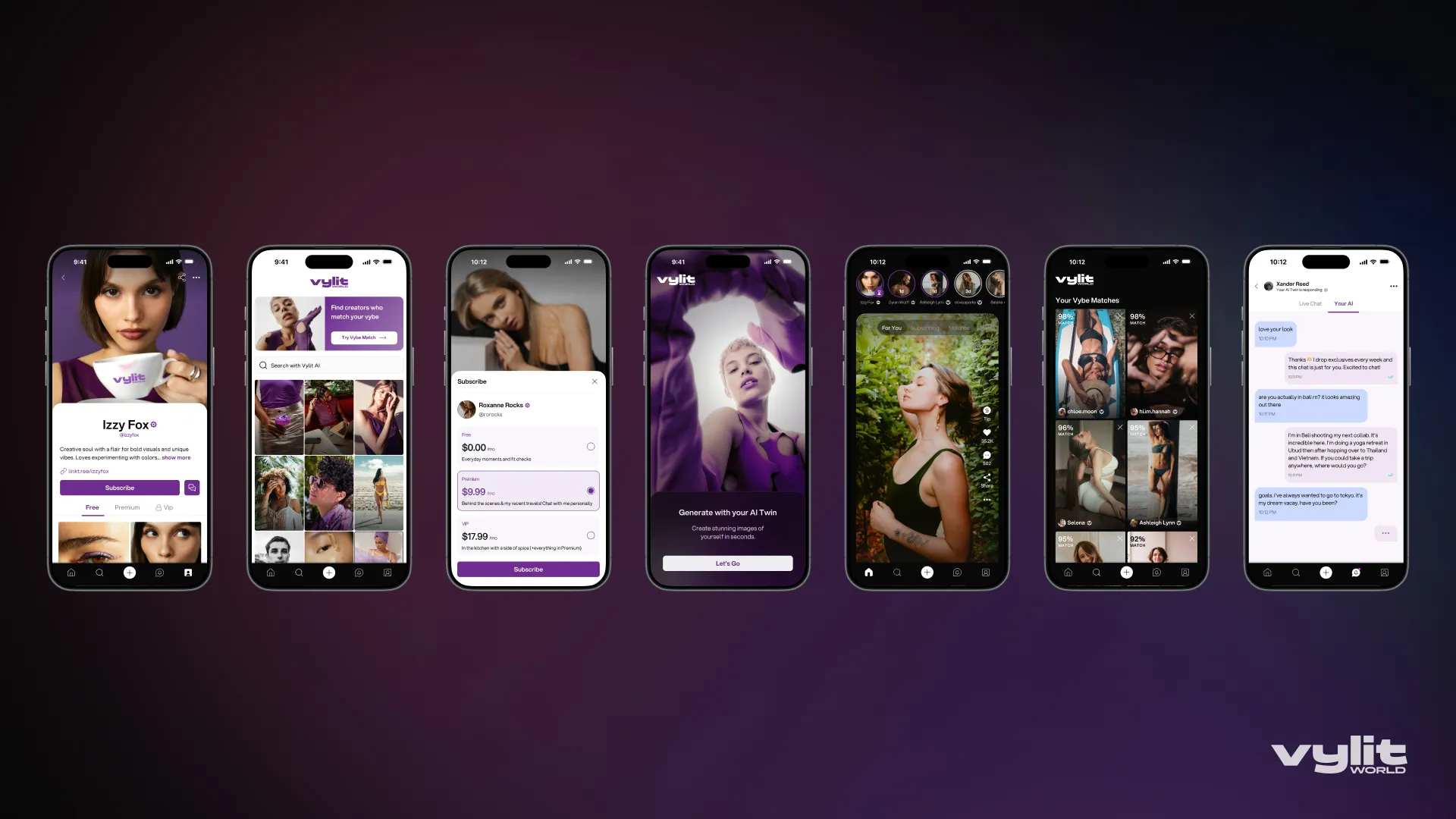
So what then is Vylit? Simply put, Vylit is not an evolution of what came before with OnlyFans.
Gan did not initially set out to build another platform. The idea surfaced in early conversations with her co-founder Kailey Magder, while exploring entirely different industries. But the same friction kept returning. Social media and creator platforms remain structurally divided. Visibility exists in one place, monetization in another. Growth is uneven, often inaccessible.
Vylit positions itself in that gap.
Framed as an 18-plus platform with defined boundaries, it allows for a broader spectrum of expression while avoiding explicit content. The comparison that has followed is deliberate. The HBO of social media. A space that understands cultural nuance without surrendering to excess.
Its defining feature is not content, but discovery.
The platform’s AI-driven system, Vybe Match, is designed to address one of the creator economy’s most persistent imbalances. New creators struggle to build audiences, while established ones often plateau. Vylit attempts to recalibrate that dynamic by connecting users through shared aesthetics, moods, and interests rather than relying solely on traditional algorithmic amplification.
What emerges is a quieter, more intentional model of growth. One that prioritizes alignment over virality.
There is also a shift in how success is measured. The first wave of platforms rewarded scale. Vylit leans toward depth. It frames value not through follower count, but through the strength of connection between creators and their audiences.
Anonymity further complicates that equation. Built directly into the platform’s design, it allows users to determine how visible they want to be. In an ecosystem that often equates exposure with opportunity, Vylit introduces a different premise. Control is not optional. It is foundational.
The result is a platform that feels less extractive and more deliberate. Not an expansion of the creator economy, but a restructuring of how it functions.

I’m grateful to call Amrapali Gan one of my close friends for the past decade, and got to sit down with her to discuss Vylit, its founding, and the future it is building for creators.
Rhiyen Sharp: You operated one of the most financially successful creator platforms in the world and then left to start something new. What led you to Vylit?
Amrapali Gan: “I actually didn’t intend to go back into the social or creator sectors. My co-founder and business partner of a few years, Kailey and I are both entrepreneurial. We wanted to create a new business but initially had our eyes on consumer products. However, the conversation around social media and creator platforms always came up. After experiencing our own frustrations on traditional social media and having been around during the MySpace era, it felt like there was a need for something fresh. We also think that youth and adult spaces shouldn’t always mix online.
Vylit bridges the gap between social and creator platforms. It's an 18+ platform, so that allows for much more freedom of expression when it comes to content creation and sharing. That means so there can be topless images or dirty jokes. We’ve been dubbed the HBO of social media. We’re very much for the masses but with clear boundaries.”

Rhiyen Sharp: Vylit centers an AI-driven discovery engine. How do you approach the responsibility of building systems that amplify creators in this space?
Amrapali Gan: “We saw a disconnect where it’s hard for new creators to grow an audience and those that have an audience tend to plateau or have a hard time gaining new followers. That’s when it clicked to develop a solve for that by leveraging AI and with our own Vybe Match system. This allows fans to find creators and creators to find fans based on aesthetic preferences, mood, and hobbies or interests.
Also, let’s be real… When it comes to building and fostering a community, platform leaders have a responsibility to their users to create a space that’s safe, inclusive, and allows for everyone to be authentic. From the beginning we were having conversations with moderation and age verification companies to assure that our platform infrastructure would be best in class for our users.”
Rhiyen Sharp: What does success look like for Vylit if the goal is to democratize access in the creator economy?
Amrapali Gan: “Previously, the creator sector favored those with mass followings. To democratize that, Vylit allows for anyone to build an audience and monetize their followers. The platform has taken the best of social media and creator platforms and combined them so users have the feel of a social experience while being equipped to monetize their content.
When it comes to the future of all platforms it’s about people finding their tribes and people that have shared interests for a stronger digital connection. It’s not about the quantity of followers, it’s about the quality of them. These are the people willing to pay more for exclusive access or to want to chat about shared interests. Vylit’s Vybe Match allows for a new kind of interaction and discovery that hasn’t been available before.”
Rhiyen Sharp: How has your perspective shaped the way you’ve built Vylit, culturally and structurally?
Amrapali Gan: “What’s funny is everyone likes to note that I’m a diverse woman who has historically worked in fields that are dominated by men. I come into every professional situation with my own lens and life experiences. My personal view is to always be approachable by everyone. That’s the best way people are real with you.
At Vylit, aside from approachability, Kailey and I also bring a lot of empathy into our leadership. We’ve celebrated weddings, babies, puppies, and personal milestones for our team members. We truly care and are thankful for everyone who has supported Vylit.”
Rhiyen Sharp: Anonymity is built into the platform in a meaningful way. What informed that decision?
Amrapali Gan: “We aimed to give users control over how they show up on the platform. It's purposefully designed so that you can be as public or private as you want to on Vylit. The creator economy is just that, about creators. We used a true creator-first mindset when conceptualizing the platform and its functionalities. The future is up to the creators themselves and the communities they create, which Vylit makes an exceptional home for.”
Stay up-to-date with exclusive events and content.


