F L A U N T


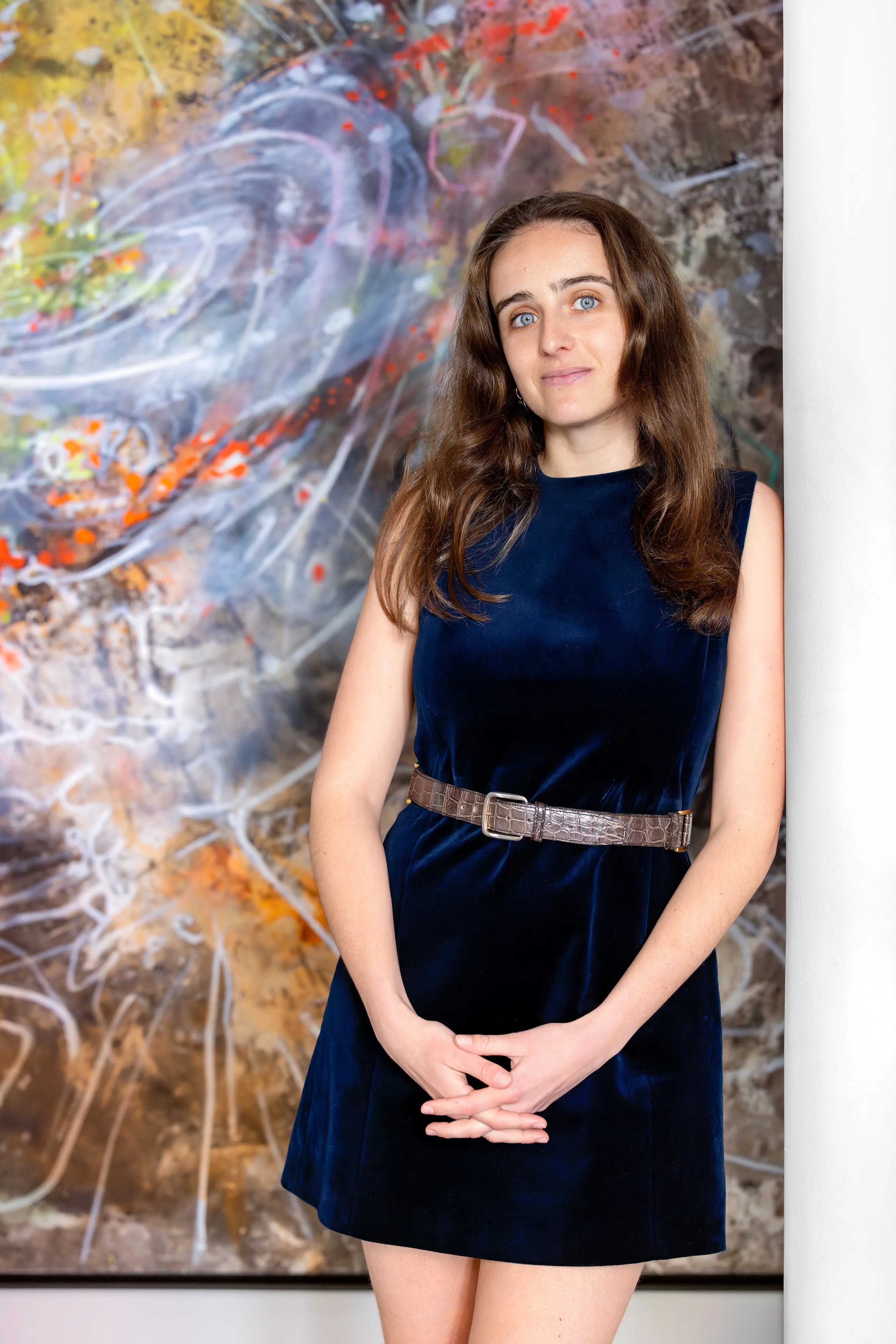
Entering the Contemporary Art World
Long before she began advising collectors, curating exhibitions, or preparing to open her own gallery in Manhattan, Victoria Mouraux Durand-Ruel was surrounded by stories.
They were stories about artists who were initially dismissed. Stories about collectors who took risks. Stories about moments when culture changed direction before most people realized it was happening.
Raised between Paris and Brussels, Mouraux Durand-Ruel grew up in a family whose history is deeply intertwined with the history of modern art. She is a descendant of Paul Durand-Ruel, the influential nineteenth-century dealer who championed artists including Claude Monet, Pierre-Auguste Renoir, Edgar Degas, and Camille Pissarro at a time when many critics and collectors rejected their work.
But for Mouraux Durand-Ruel, that legacy has never felt like a destination. It has felt like an invitation to ask questions.
Who decides which artists become visible? What makes a cultural movement last? How do creative communities form around shared ideas?
Those questions would eventually shape both her academic research and her professional life.
Mouraux Durand-Ruel’s path into the contemporary art world was not a direct one.
She initially studied law and politics in France before pursuing graduate work focused on cultural heritage, the art market, and international studies. Along the way, she gained experience at institutions including The Metropolitan Museum of Art, Christie’s London, Phillips New York, and TEFAF, one of the world’s most respected art fairs.
Today, she serves as an Art Advisor specializing in Modern and Contemporary Art at Opera Gallery in New York, where she works closely with collectors, artists, and exhibitions spanning multiple generations and geographies.
Yet her interests have always extended beyond the mechanics of the market itself.
Artists’ representation in response to the AI transition
While completing graduate studies in San Francisco, she examined the questions of representation, cultural visibility, and the ways institutions shape artistic narratives. Her research focused on the evolving presence of artists from Africa and the diaspora within Western museums and markets, eventually leading to both a master’s thesis and published academic research.
“Cultural recognition rarely happens by accident. It is built through advocacy, context, and sustained relationships”, she says.
Those questions of representation feel even more urgent today, as the contemporary art world navigates a period of rapid transformation.
Artificial intelligence can generate images in seconds. Social platforms influence aesthetic trends globally. Visual culture moves at a pace that would have been unimaginable even a decade ago.
Rather than viewing these changes with anxiety, Mouraux Durand-Ruel sees them as part of a larger historical pattern.
In the nineteenth century, photography pushed painters to rethink what painting could offer beyond imitation, helping open the door to Impressionism and its focus on light, perception, and the sensation of a moment.
In her view, artificial intelligence may be creating a similar challenge for artists today. If technology can generate polished images almost instantly, the value of art may move even more strongly toward what cannot be automated.
Mouraux Durand-Ruel is drawn to artists whose work creates a sense of encounter. Some may work through figuration, others through abstraction, photography, sculpture, ceramics, or installation. What matters to her is whether the work carries a human urgency.
“I find myself returning to artists whose work feels deeply human,” she says. “Artists who create moments of reflection, vulnerability, and connection.”
Opening an art gallery in New York
Later this year, Mouraux Durand-Ruel will take the next step in her career with the launch of Mouraux Durand-Ruel Gallery in Manhattan.
The gallery will support both emerging and established artists, presenting contemporary works alongside selected secondary market pieces from Impressionism to Modern Art to foster a dialogue across generations, geographies, and artistic movements.
Built on five generations of expertise in the art world, Mouraux Durand-Ruel Gallery will operate as an independent New York entity dedicated to what she describes as a “Defender of Art” ethos.
“I want the gallery to be an alternative to the impersonal white-box model. My aim is to create a warmer, more intimate atmosphere” she says.
Plans include artist talks, publications, music programming, community events, and collaborations across creative disciplines. The goal is to create an environment that feels welcoming and intellectually curious, where visitors can encounter ideas as well as objects.
In many ways, the vision reflects a broader belief about the role of cultural institutions today.
That approach also reflects the bridge she hopes to build between Paris, Brussels, and New York. Mouraux Durand-Ruel Gallery will draw on her family’s historical connection to Impressionism, her father’s contemporary gallery in Brussels, and her own experience in the New York art world to create a transatlantic platform for artists and collectors.
The art world she inherited is very different from the one she now inhabits. Yet some questions remain remarkably consistent.
Which artists are shaping the future before the rest of the culture recognizes it? Which voices remain underrepresented? What kinds of spaces will people seek out in an increasingly digital world?
For Mouraux Durand-Ruel, those questions remain at the center of the work ahead.
And in a cultural moment defined by speed and constant visibility, her answer is surprisingly measured: slow down, look closely, and pay attention to what has not yet been fully seen.
Stay up-to-date with exclusive events and content.


