F L A U N T


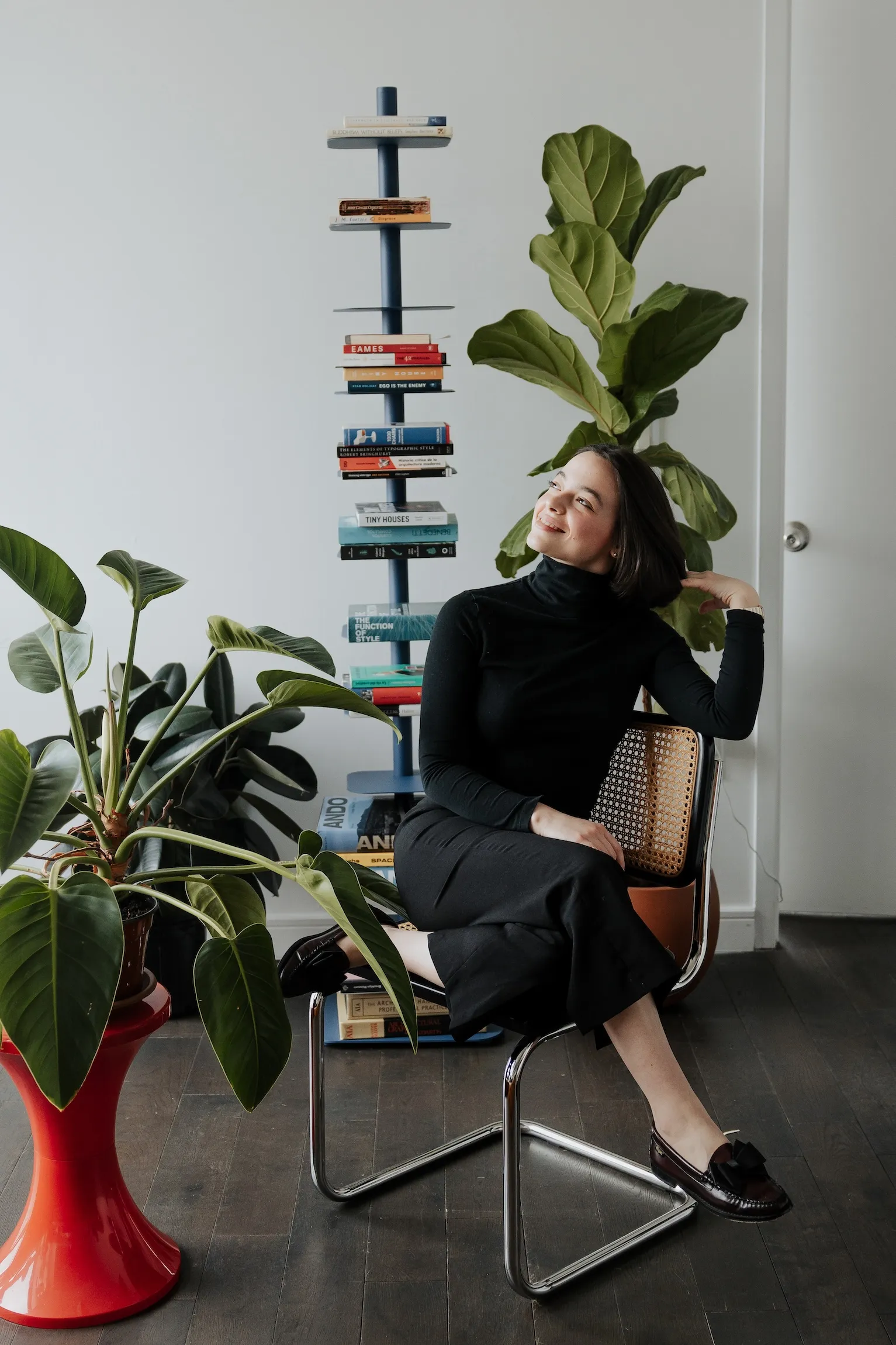
As cities develop, some architects are rethinking how buildings can adapt to new sustainability needs while still honoring heritage and cultural identity. For Valeria Bardi Cohen, an architectural designer at the well-recognized design studio S9 Architecture in New York City, this means working at the intersection of sustainability, memory, and material reuse.
Much of her work centers on adaptive reuse—taking old buildings and giving them new purpose. It’s an approach that’s both environmentally responsible and culturally sensitive, creating a dialogue between the past and the future.
Building on What’s Already There
Bardi Cohen has worked on projects across the U.S., from Atlanta to Dallas to New York. While at Handel Architects, she contributed to the residential and mixed-use developments surrounding Ponce City Market adjacent to the Belt Line, which includes Georgia's first timber office tower. The projects blends old and new, pairing the industrial context with modern additions that prioritize sustainability and community.
She was also involved in a mixed-use residential tower project in downtown Dallas, where she helped design common areas, residential layouts, and custom furnishings—an experience that sharpened her sensitivity to how people interact with everyday spaces.
At S9 Architecture, she contributes to projects that emphasize transformation across multiple scales—from urban master plans to residential and retail developments. Among the most significant is the Iron District in Charlotte, North Carolina, a redevelopment of the former Charlotte Pipe and Foundry site—once the largest pipe manufacturing plant in the United States. The 13-block mixed-use district is being realized in phases, with the first four-block phase currently under construction, comprising 500 residential units, 150,000 square feet of office space, 100,000 square feet of retail, and a 150-key hotel. The design integrates public green spaces, pedestrian and bicycle networks, and local art installations, honoring the site’s industrial heritage while creating new connections between communities. For Bardi Cohen, the project represents a compelling model for how cities can evolve and densify without erasing the layers of their past.
Back in New York, she is part of the design team transforming a 1911 industrial building in Manhattan into modern residential lofts. The project preserves the historic façade while reinterpreting the building’s character inside, with updated interiors, amenities, and terraces. It’s a full-circle moment for her—seeing the impact of adaptive reuse not just as a strategy, but as a philosophy of design that adds meaning and longevity to the built environment.
Repair, Not Replace
Bardi Cohen’s academic research reinforces these ideas. Her award-winning thesis, Architecture After Extraction: Nada Muere en México, explored how post-industrial and environmentally damaged sites in Mexico might be repaired and revitalized rather than demolished. The concept of “repair” becomes a form of resistance—not just against environmental degradation, but also against cultural erasure.
“Repairing what’s already there is not just sustainable,” she explains. “It’s powerful in retaining cultural identity.”
This mindset carries into her professional work. Whether it’s preserving original brickwork or adapting mechanical systems into exposed decorative elements, design-forward features, her projects tell stories through material choices and construction techniques. She sees each building as a layered object—part memory, part machine, part future vision.
Looking Ahead
Now, Bardi Cohen is looking to expand her work into civic and cultural buildings, especially those connected to the performing arts. She’s interested in the spatial dynamics between performer and audience, and how backstage systems support the storytelling that unfolds on stage.
“I’d love to reimagine a historic building as a cultural space,” she says. “It’s another way of keeping memory alive while giving it a new role.”
Her vision for the future of architecture is one about thoughtful transformation. Working with what’s already there and giving it new meaning. Through her work, she exemplifies a shift in the architectural conversation—toward reuse over demolition, toward spaces that are both efficient and emotional, and toward cities that grow not by forgetting, but by remembering.
Stay up-to-date with exclusive events and content.


