F L A U N T


Architecture was the starting point for Tong Guan, but it did not remain the only focus of her work. Over the years, she has worked with digital art, film, interiors, physical materials and exhibition design, often using technology to solve problems that begin with an architectural idea. Her interest goes beyond how something looks on a screen or on paper. She is interested in what happens when that idea becomes a physical place that people can actually experience.
Her academic background gave her a foundation in architecture and experimentation. After studying in the UK, Guan earned her master’s degree at Städelschule in Frankfurt, an institution known for its unconventional approach to art and architecture. She later continued her education at the Southern California Institute of Architecture, or SCI Arc, in Los Angeles, where she developed her technical skills and explored new approaches to digital design.
Her career has taken her to London, Frankfurt, Munich, Paris and California. In Paris, she worked with a leading fashion and interior design studio and was involved in the launch of Jean Paul Gaultier’s interior decor line in Asia. The experience exposed her to the relationship between fashion, interiors and visual identity, interests that would continue to inform her work.
A particularly important chapter came at Stray Dog Cafe, the research studio of Pritzker Prize winning architect Thom Mayne. Guan was the Technical Lead Artist, working with Mayne to translate complex architectural concepts into physical forms.
Mayne’s designs can begin with unusual geometries and ideas that are difficult to construct in conventional ways. Guan’s job was often to figure out how those ideas could actually be produced. Her technical knowledge allowed her to work as a digital sculptor, developing forms that could eventually exist outside the computer.
That work was showcased in SHAPING ACCIDENT, Mayne’s exhibition at LA Louver gallery. Guan helped translate the exhibition’s fractured geometric concepts into tangible, immersive forms, using digital processes as part of the physical making of the work.
.jpg)
Her own creative projects have allowed her to take those ideas in a more personal direction. Her 3D animated film, Paper Dreams: The Surreal Shores of Belonging, premiered at the “Truth of the Consequence, Belonging in the World” salon hosted by Heidi Duckler Dance. The film follows a young girl through a series of changing, dreamlike environments as she explores identity and human connection.
Behind the film is an extensive technical process. Guan used Unreal Engine, Maya, Houdini, Marvelous Designer, Rhino and Grasshopper to build its characters and environments. The result is a digital film designed to feel physical, with texture and weight rather than the polished, distant quality that can sometimes define computer generated imagery.
That interest in uncertainty and contrast is also central to Guan’s book, Grey Philosophy: The Art & Architecture of the In Between. Drawing from Taoist ideas surrounding Qi and Western architectural theory, the book examines what happens when creative work is not forced into clear categories.
Guan is particularly interested in the space between opposites: digital and physical, minimal and maximal, structure and freedom. Instead of treating those differences as contradictions, she sees them as opportunities to find new ways of making and thinking.
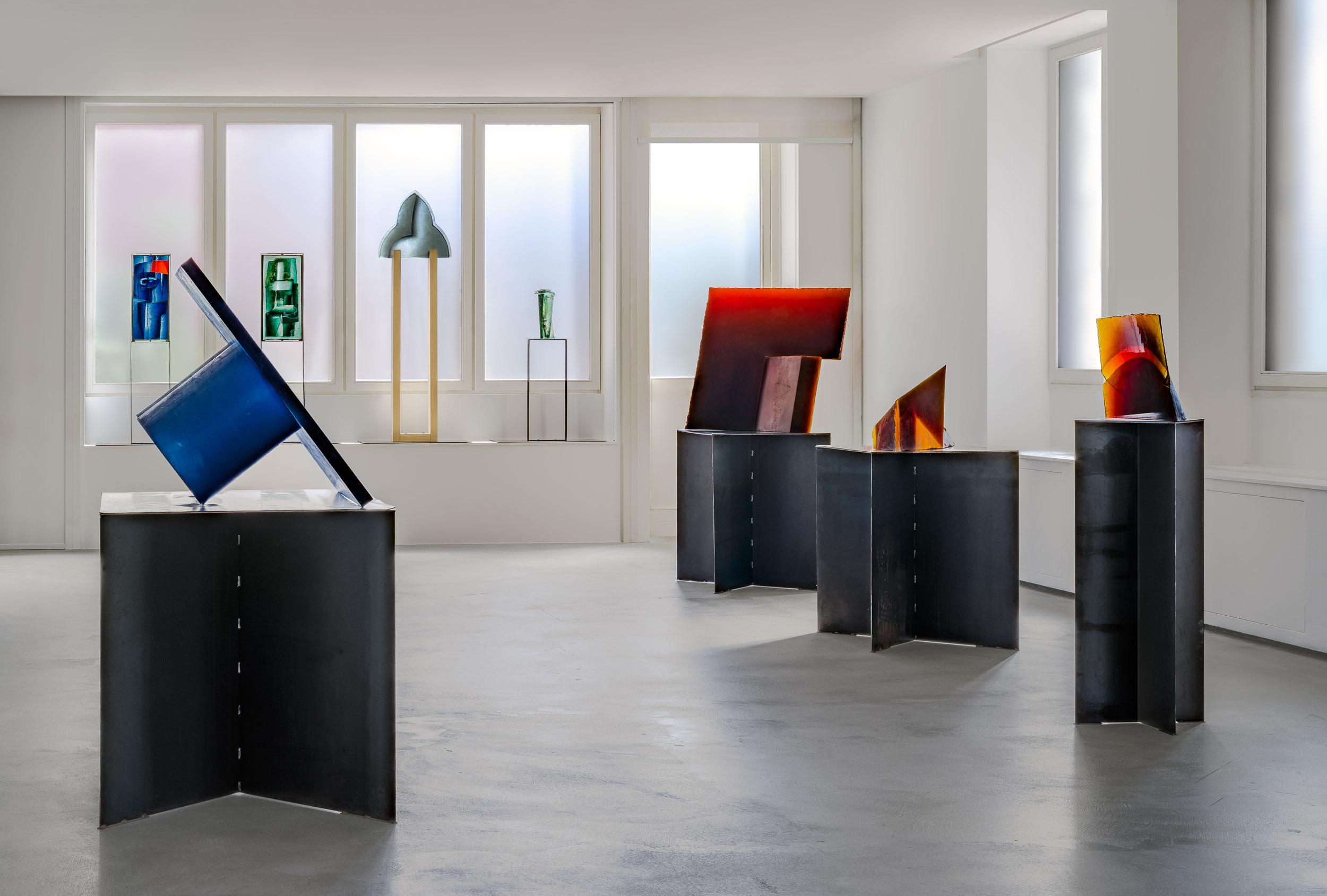
Guan’s interest in physical materials is also reflected in her work with art glass. She runs an art glass gallery in Paris, where she curates work by glass artists from around the world. The gallery focuses on craftsmanship and the relationship between fine art and functional design.
Her appreciation for physical craftsmanship is especially clear in her work with art glass. Guan runs a dedicated gallery where she brings together glass artists from around the world. The work reflects her interest in materials and in the skill required to transform something as delicate as glass into functional objects and fine art.
She also brings that sensibility into the luxury residences she designs throughout Southern California, including homes in Beverly Hills, Brentwood and Bel Air. Guan incorporates work by emerging artists into these private spaces, giving their pieces an audience while making art part of the architecture itself.
She regularly publishes in-depth art critiques on digital platforms, using the writing as a way to examine new work and offer feedback to younger artists and creators in Los Angeles.
Her latest major project brings many of these interests together. For MODE 2026, the photography festival presented by Flickr, experience design agency PHNTM invited Guan to lead the stage and exhibition design.
Taking place in downtown Minneapolis from Sept. 18 to 20, the festival will include curated gallery spaces, interactive installations and environments for live music and talks. Guan is responsible for designing the spatial experience across the festival, creating a setting that allows visitors to move naturally between photography, installations, performances and conversations.
It is a fitting project for an architect whose work has consistently questioned where one discipline ends and another begins. But for Guan, the technology itself is never the main attraction.
The result is work that can be highly technical without feeling cold, and highly conceptual without losing its connection to the physical world. For Guan, that balance is less a formula than a way of working.
Stay up-to-date with exclusive events and content.


