F L A U N T


Celebrated worldwide as a thought leader and intellectual voice, Kruse reveals how her journeys — from Thailand to Costa Rica — taught her presence, purpose, and human connection. She expands on many of these ideas in her book Stoic Empathy: The Art of Influence, Self-Leadership, and Integrity, where she explores how empathy and Stoic principles can guide both travel and life.
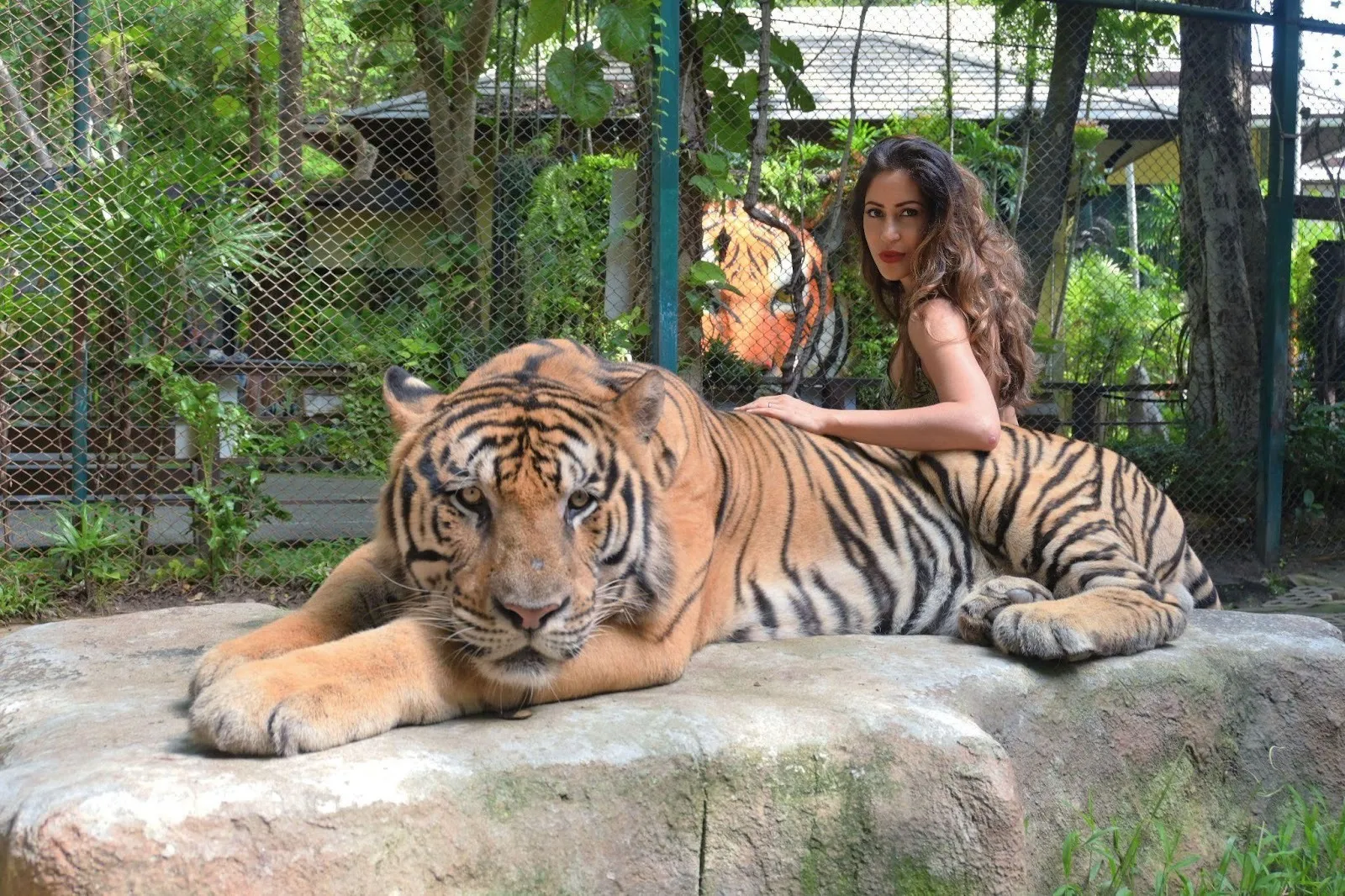
By the time Shermin Kruse found herself standing just a few feet in front a Bengal tiger in Thailand, she had already learned one of her cardinal rules of travel: slow down.
The air was thick and warm, the scent of earth and fur mingling in the stillness. The tiger’s amber eyes blinked once, then again. Around them, the world seemed to hold its breath. Slowly, and only under the close instruction of his trainer, Kruse made her way to him. She lowered herself behind his massive frame, resting her arm ever so gently along his back, careful to avoid the sweep of his tail. She didn’t lean in for a staged grin. She didn’t rush. She simply sat there.
At the time, she believed what she had been told — that the tiger was a well-cared for rescue. “I wanted to trust the story I was given,” she recalls. “But since then, I’ve carried questions, even guilt, about whether that was true.”
That unease, she explains, became a teacher in itself.
“Travel isn’t just about chasing the next sight. It’s also about asking harder questions of ourselves. Presence doesn’t always feel serene; sometimes it feels like responsibility. And sometimes, it’s about acknowledging our mistakes and choosing to learn from them.”
It’s a philosophy rooted in Stoicism — the discipline of choosing how to respond, aligning action with virtue — and in empathy, the practice of asking: who, what, and which environment is affected by my choices?
Grace in Unlikely Places
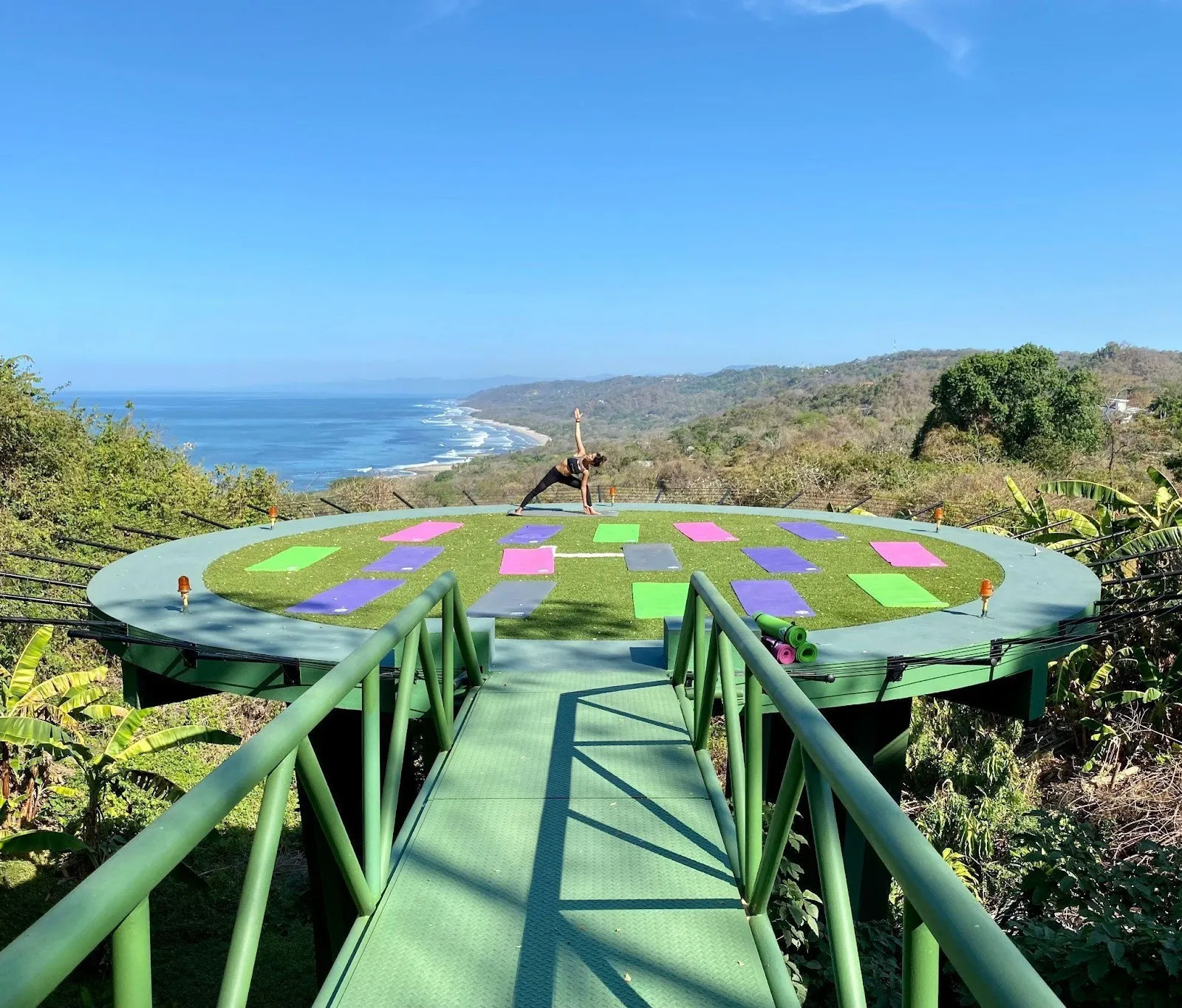
Another photograph from Kruse’s travels shows her in a yoga pose on the private helipad of a well-to-do Costa Rican home. The Pacific Ocean stretches out in the distance, sunlight glinting off the water.
“A helipad is designed for speed, for arrivals and departures. But I wanted to turn it into a place for stillness,” she says with a smile. “That’s the heart of my philosophy — the space doesn’t dictate my state of mind. I do.”
Her ability to repurpose spaces into sanctuaries mirrors a Stoic’s indifference to externals — luxury, chaos, glamour, or grit, the environment matters less than the state you choose to cultivate. And it’s paired with a quiet awareness of the hidden hands who make such places possible — pilots, crew, groundskeepers — an empathetic lens she brings to every setting.
Connection Across Generations
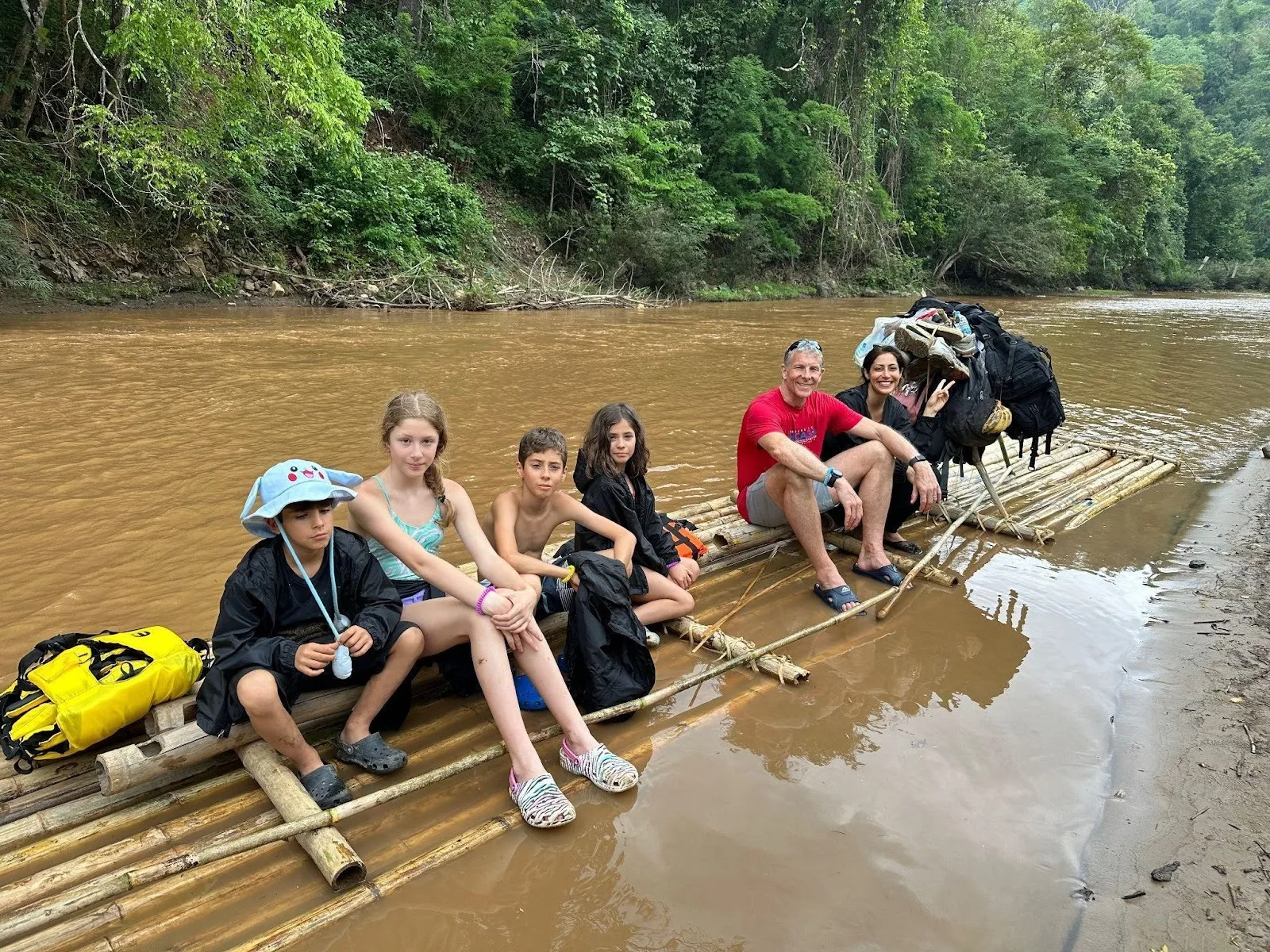
Then there’s the image of Kruse and her children on a wooden raft deep in the northern hilltribes of Southeast Asia, where there are no roads, no stores, and no other tourists in sight. Guided by locals who know every turn of the river, they glided through untouched landscapes and later slept in riverside huts on stilts, with no electricity or running water. The water shimmered under a canopy of green, laughter echoing between banks.
“Travel changes when you see it through your children’s eyes,” Kruse reflects. “It’s not just about what I take in, but what I pass on. We’re building a bank of shared stories — stories that teach resilience, gratitude, and curiosity.”
For Kruse, those moments are a bridge between generations and cultures. They embody the Stoic idea of oikeiosis — our natural pull toward caring for and growing alongside others — and a deep empathy for the guides whose skill and generosity make such journeys possible.
The Three Tenets
When pressed for her “rules” of traveling well, Kruse offers three, each illustrated by a story:
Beyond Souvenirs
The best souvenirs aren’t the things you bring back — they’re the ways you come back changed. To dive deeper into Shermin Kruse’s philosophy, get your copy of Stoic Empathy: The Art of Influence, Self-Leadership, and Integrity.
“Travel is my practice ground for life,” she says. “Every journey asks me to master myself and expand my empathy. Sometimes that means awe, sometimes it means guilt. But the best souvenirs aren’t the things you bring back — they’re the ways you come back changed.”
Photographed by James Gustin
Stay up-to-date with exclusive events and content.


