F L A U N T


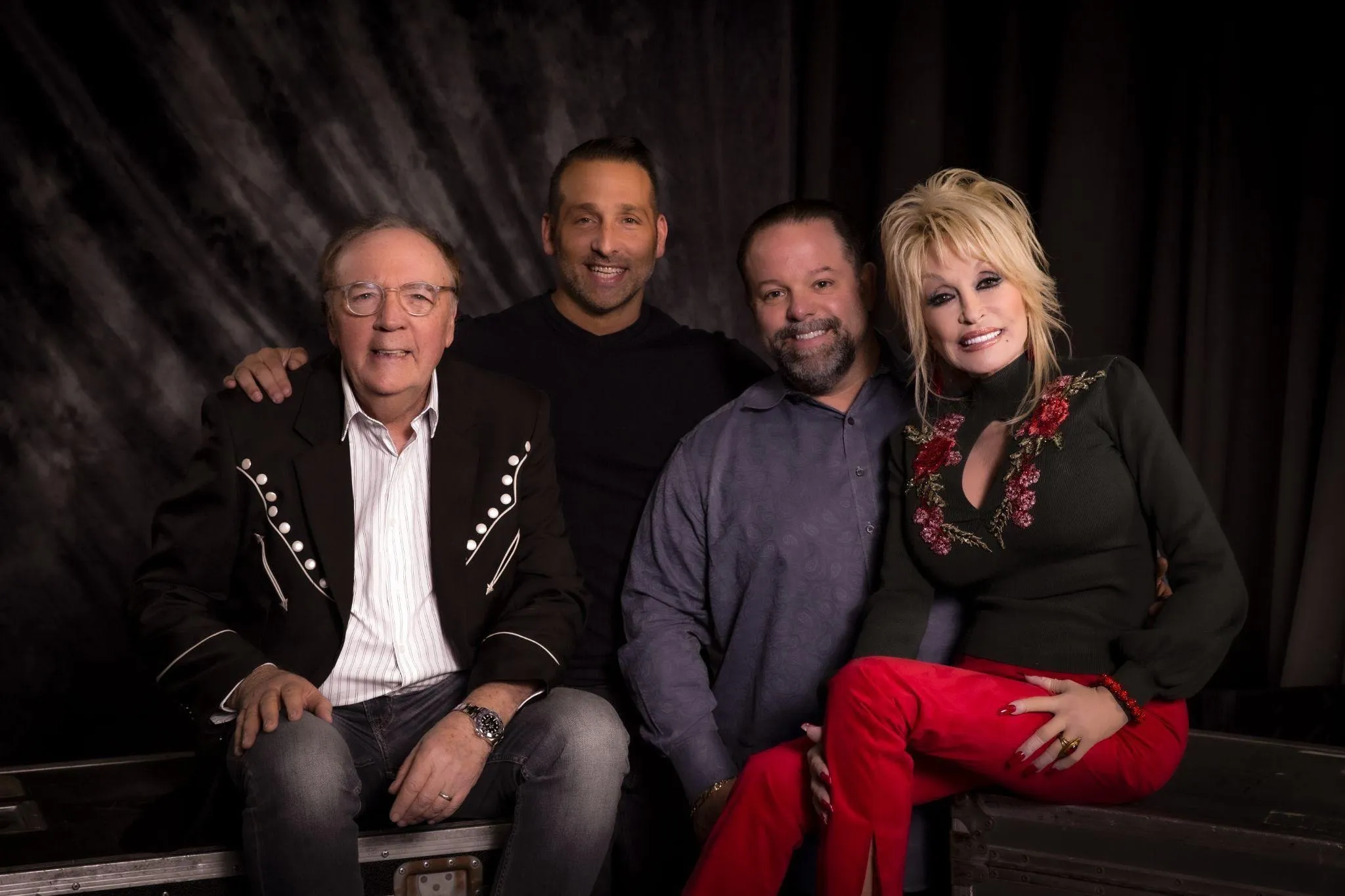
Right now, Shawn Ullman is trying to get a legendary deaf baseball player from the 1800s into the Hall of Fame. That's where you find him in 2026 — building a national movement around a story most people have never heard, assembling an unlikely coalition, and generating the kind of momentum that makes you wonder how nobody did this sooner. It is, if you know anything about him, completely on brand.
There's a version of this story that starts with a résumé. UT film school. William Morris agent trainee program. A front-row seat to the comedy boom of the early 2000s. A decade working alongside Quincy Jones III. A national public health movement. A relevancy agency.
That version is accurate. It's also the least interesting thing about Shawn Ullman.
The more interesting version starts with a question he hasn't stopped asking since his twenties: Why do some ideas capture the world's attention while others disappear?
Most people ask that question and then go into consulting. Ullman built a career out of answering it in real time.
"There's always a moment where people ask me why I'm working on something. Why this story, why this community, why now. And I've learned that if I have to explain the why, I'm probably too late."
— Shawn Ullman
He arrived in Hollywood the way a lot of ambitious kids do, with more instinct than blueprint. A film school internship with Mike Judge on the set of Office Space cracked the door; the William Morris agent trainee program kicked it open. But Ullman didn't stay on the traditional path long. While his peers were learning the mechanics of a business that had worked a certain way for fifty years, he was watching something more interesting: the edges where entertainment, technology, and culture were starting to bleed together.
That instinct pulled him toward the Laugh Factory on the Sunset Strip — not exactly a predictable next move for someone with a foot in the agency world. But it was the early 2000s, and comedy was in the middle of a genuine moment. Chris Rock, Bob Saget, Dane Cook, Jon Lovitz, Louis C.K. Names that would define an era were showing up on the same stages, night after night, working out material in front of three hundred people. Ullman was in the room for all of it and he saw something most of the industry hadn't: that the energy didn't have to stay there. Together with IMG's Theodore Forstmann, he helped wire the club for live digital broadcasts, convinced that live comedy could travel before streaming was a concept anyone had a name for.
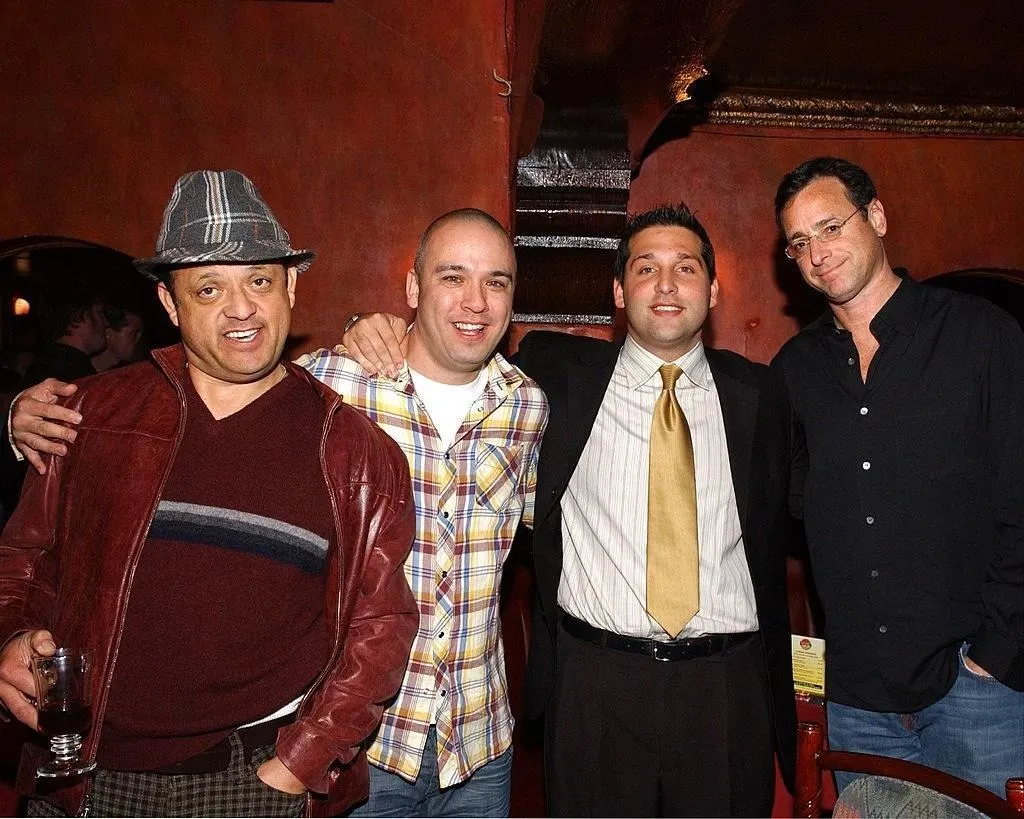
It didn't work. Broadband wasn't ready, video stuttered, connections dropped, and paying audiences sat watching buffering screens. The idea was roughly a decade ahead of where the technology actually was. What's telling is how little Ullman seems to treat it as a failure in the traditional sense — the instinct was right, the timing was wrong, and the rest of the industry eventually arrived at the same conclusion without him needing to be there for it. Being early, it turned out, was going to be a recurring condition."
The Quincy Jones III chapter is where the story gets harder to compress.
Their creative partnership began at the Laugh Factory and would span more than fifteen years — years spent inside conversations about music, culture, media, and what it actually means to move people. Working alongside QD3 and within the orbit of the Jones family is the kind of context that's difficult to quantify, but it shapes the way you think about what culture is and how it moves. Ullman absorbed it.
"Being around QD3 and the Jones family for over a decade taught me how to think about culture. They didn’t treat it like content to be manufactured, rather a living force that can shape the world.”
— Shawn Ullman
Out of that relationship came Feel Rich named after his parents Phyllis and Richard Ullman, which, in retrospect, looks almost prescient. Years before wellness became a billion-dollar cultural category with its own magazine covers and branded retreat circuits, Ullman and Jones were making a documentary about health inside hip-hop culture. Not a PSA but a movement, built on a fairly radical premise for 2011: that the people best positioned to change how a community thinks about its own health are the voices that the community already trusts.
Common, Russell Simmons, Fat Joe, The Game. Real conversations about real choices not abstinence messaging, not finger-wagging, but artists talking about what they ate, how they moved, what they'd changed. Public health messaging had been trying to penetrate hip-hop culture for years with limited success, and Feel Rich did it by simply getting out of the way and letting the artists talk.
The documentary found its way onto major streaming platforms and into a partnership with the White House's Let's Move! initiative, The American Heart Association. Johnson & Johnson, and The American Diabetes Association. Not bad for something that started as a cultural instinct rather than a marketing brief.
That's the through-line in Ullman's career that the résumé doesn't quite capture: he doesn't start with audiences. He starts with communities.
I’m not trying to manufacture enthusiasm. I’m trying to find the enthusiasm that’s already there and give it a place to grow. That’s a very different job.
— Shawn Ullman
The distinction matters. Audiences consume. Communities carry things forward, change behavior, show up, tell their friends. The question Ullman has spent two decades learning to answer isn't how do you reach people, it's how do you make people care enough to move?
FLEXDEF, the agency he founded, was built around that question made operational. He calls it a "relevancy agency," which is either a very contemporary piece of branding or a genuinely useful description of what the firm actually does, depending on how cynical you are about the word relevancy. In practice, it means Ullman and his team are the people everyone from startups to billionaires call when they want to exist in culture rather than just adjacent to it — when a campaign isn't enough, when a press release isn't enough, when what they actually need is a moment.
Some of those moments are large. Bringing the Beyond Van Gogh immersive experience to Circuit of The Americas in Austin. Engineering one of SXSW's more unexpected headline moments with a live performance from none other than Dolly Parton.
Others are slower burns. A forgotten chapter of baseball history, being rewritten in real time, with Ullman helping build the national conversation around Dummy Hoy and a push toward the Hall of Fame that has been decades in the making.
Different categories. Same underlying skill.
The people who work with Ullman tend to describe him in terms of timing — not what he does, but when he does it. He shows up before things are obvious. He connects rooms that don't usually talk to each other. He finds the thread between a Quincy Jones project and a public health initiative, between a comedy club and the internet, between a country legend and a tech launch, and he pulls on it until something new exists. Ullman himself is more self-deprecating about it — he'll tell you his résumé is basically a record of ideas that showed up three to five years before the world was ready for them. Given the evidence, it's hard to argue with that reading. It's also what makes him useful."
"My résumé is basically a list of ideas that were three to five years early. I've made my peace with that. Sometimes being early is the job."
— Shawn Ullman
That's not a job description. It's closer to a sensibility. And in an industry full of people who are very good at executing against trends that already exist, it's rarer than it sounds.
Ullman has never been particularly interested in explaining what he does. The work, eventually, explains itself.
Stay up-to-date with exclusive events and content.


