F L A U N T


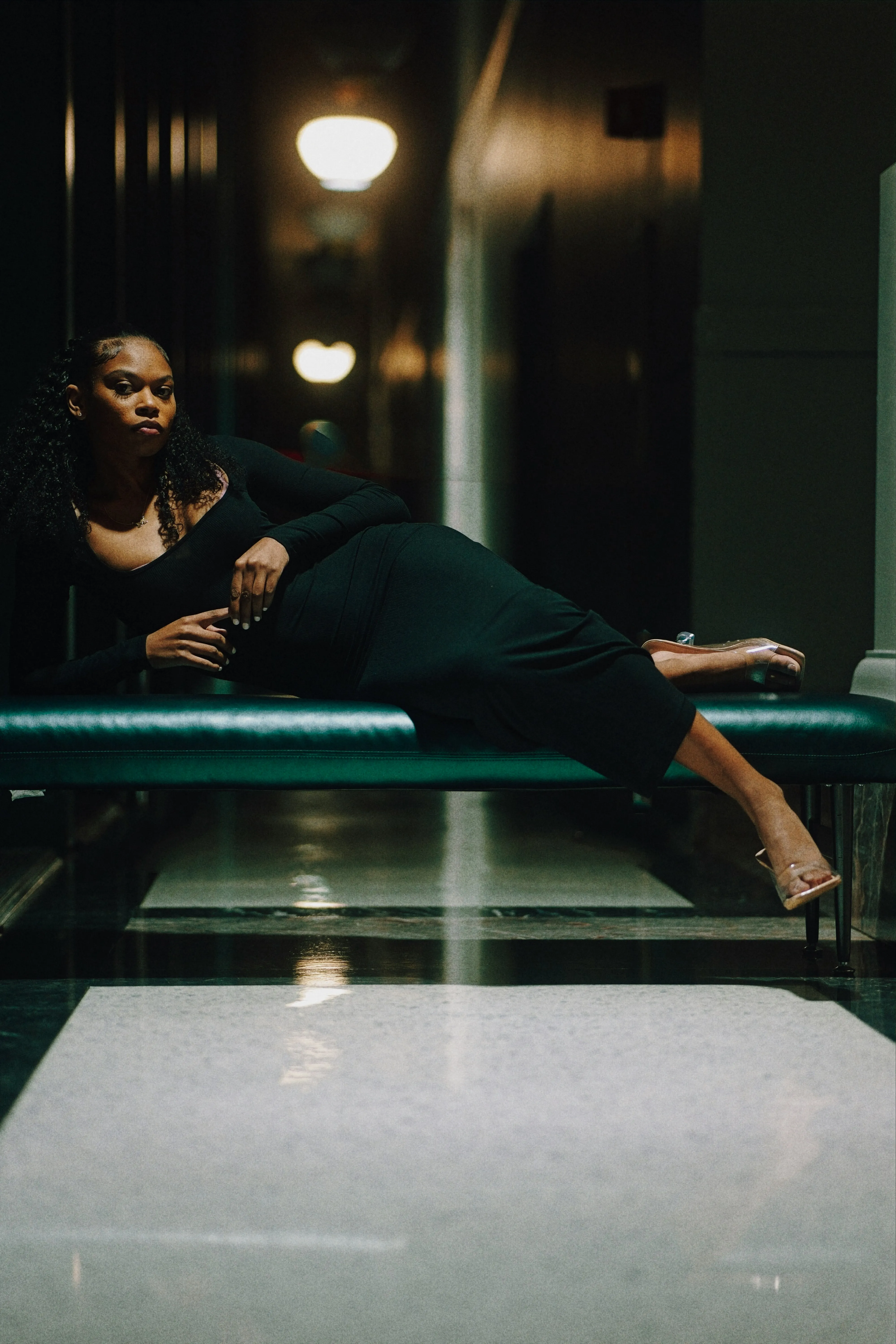
For a long time, elegant evening wear looked almost identical across the board — the same cuts, the same silhouettes, the same narrow idea of what "glamorous" was supposed to mean. That's changing. And not slowly. Today, plus size evening gowns have become some of the most striking, intentional, and beautifully crafted pieces in formalwear. The shift isn't just aesthetic. It's cultural.
What matters now is how a look feels, how it moves, and whether it actually reflects the person wearing it. Modern eveningwear isn't about hiding or correcting. It's about showing up.
The formulas that used to define formalwear — structured bodices, heavy fabrics, shapes designed to minimize — are increasingly obsolete. Designers are rethinking what it means to dress someone for a special occasion, and the results speak for themselves.
Formal dresses today look nothing like they did a decade ago. Flowing fabrics, clean architectural lines, and figure-embracing silhouettes have replaced the old "cover everything" approach. It's visible on runways. It's visible on red carpets. Celebrities like Lizzo, Ashley Graham, Paloma Elsesser and the influencer Catie Li have fundamentally shifted what glamour looks like — not by following rules, but by ignoring them entirely.
Their impact is real. According to multiple studies, most women in the U.S. wear a size 14 or larger, yet the luxury fashion sector largely ignored this demographic for decades. That gap is finally — if still imperfectly — closing.
The best evening gown isn't the most expensive one. It's the one cut for your proportions.
Asymmetrical hemlines and draped necklines create natural movement and visual interest without relying on embellishment. They also photograph beautifully, which is why you'll see them all over red carpet coverage. For curvy evening wear, these cuts work especially well because they follow the body's natural lines rather than fighting them.
Soft crepe and satin remain the gold standard for plus size evening gowns — both fabrics fall gracefully, catch light in elegant ways, and feel luxurious without adding visual weight.
Both work. The key is knowing your preference and trusting it.
Fitted gowns — particularly those with defined waists — create strong, deliberate silhouettes. Column cuts in particular are having a major moment. Flowing A-line and empire-waist styles, on the other hand, offer comfort and ease of movement without sacrificing elegance.
Neither is more "flattering" in any objective sense. Flattering means you feel good in it. That's the only metric that matters.
Small decisions compound. A neckline, a fabric choice, an accessory — each one shifts how a look reads as a whole.
Monochromatic looks — head-to-toe in one color — almost always read as more elevated and intentional than mixed-color combinations. Black is perennially safe, but deep jewel tones like emerald, burgundy, and midnight blue are equally sophisticated and photograph exceptionally well.
As for fabrics: satin, velvet, chiffon, and soft crepe each bring something different. Satin is high-impact and high-sheen. Velvet is rich and textured. Chiffon moves. Crepe drapes. Choose based on the occasion and how much attention you want the fabric itself to draw.
Trends cycle. A good fit doesn't.
This is why more designers are investing in how a dress moves rather than simply chasing the next silhouette trend. A gown that fits well — that sits correctly on the shoulders, doesn't pull, and doesn't require constant adjustment — will always outperform a trendier piece that doesn't.
For plus size formalwear, this is especially relevant. Standard sizing has historically been inconsistent across brands, which means trying before buying (or ordering multiple sizes online) is usually worth it. Many brands now offer extended size ranges with adjusted proportions — not just scaled-up versions of straight-size cuts — which makes a significant difference in how pieces actually fit.
The luxury fashion industry's relationship with size inclusivity has been complicated — and in many ways, it still is. But the direction of travel is clear.
More labels are expanding their size ranges. More campaigns feature genuinely diverse body types rather than token representation. Runways that once felt homogeneous now regularly feature models of different sizes, backgrounds, and body shapes.
Figures like Ashley Graham, who became the first plus-size model to appear on the cover of Sports Illustrated Swimsuit Issue, and designers who build collections around real body diversity, have pushed this forward. It's not complete progress. But it's progress.
What style of evening gown is most flattering for plus size figures? There's no single answer — the most flattering gown is the one you feel confident in. That said, styles with defined waists, V-necklines, and flowing fabrics like soft crepe or satin tend to be widely recommended for their versatility and elegance.
What fabrics work best for plus size evening gowns? Soft crepe, satin, and chiffon are popular choices. They drape beautifully, move naturally, and don't add unnecessary visual bulk. Velvet is a strong option for cooler months and formal winter events.
Where can I find plus size formal dresses for special occasions? Many mainstream and luxury retailers now carry extended size ranges. Brands like Eloquii, Marina Rinaldi, and Tadashi Shoji are known for their inclusive formalwear offerings. It's always worth checking whether a brand sizes proportionally for plus sizes rather than simply scaling up smaller cuts.
How do I choose a color for a formal gown? Monochromatic looks — wearing one color head to toe — tend to look the most polished and elongating. Deep jewel tones (emerald, burgundy, navy) are consistently elegant. Ultimately, wear what makes you feel like yourself.
Stay up-to-date with exclusive events and content.


