F L A U N T



The art of the Pixel Pants project operates at the intersection of fashion imagery and digital logic, using underwear not as expression but as a system through which desire, privacy, and representation are reorganised. Rather than presenting intimacy as narrative or identity, the project treats it as something formatted through pixels, pattern, and circulation. Pixel Pants functions less as an artwork to be decoded than as a visual framework that exposes how images of the body are produced, regulated, and consumed.
The project originated as a creative-directorial inquiry into how intimacy is mediated today. Fashion, long understood as a second skin, has historically shaped desire and identity through proximity to the body. Pixel Pants reframes this legacy through the logic of the pixel, the smallest unit of digital representation, to ask what occurs when the most private zones of the body are filtered through systems designed for screens, compression, and mass distribution. While the garment anchors the work conceptually, the project extends into a broader system of image-making, authorship, and translation.
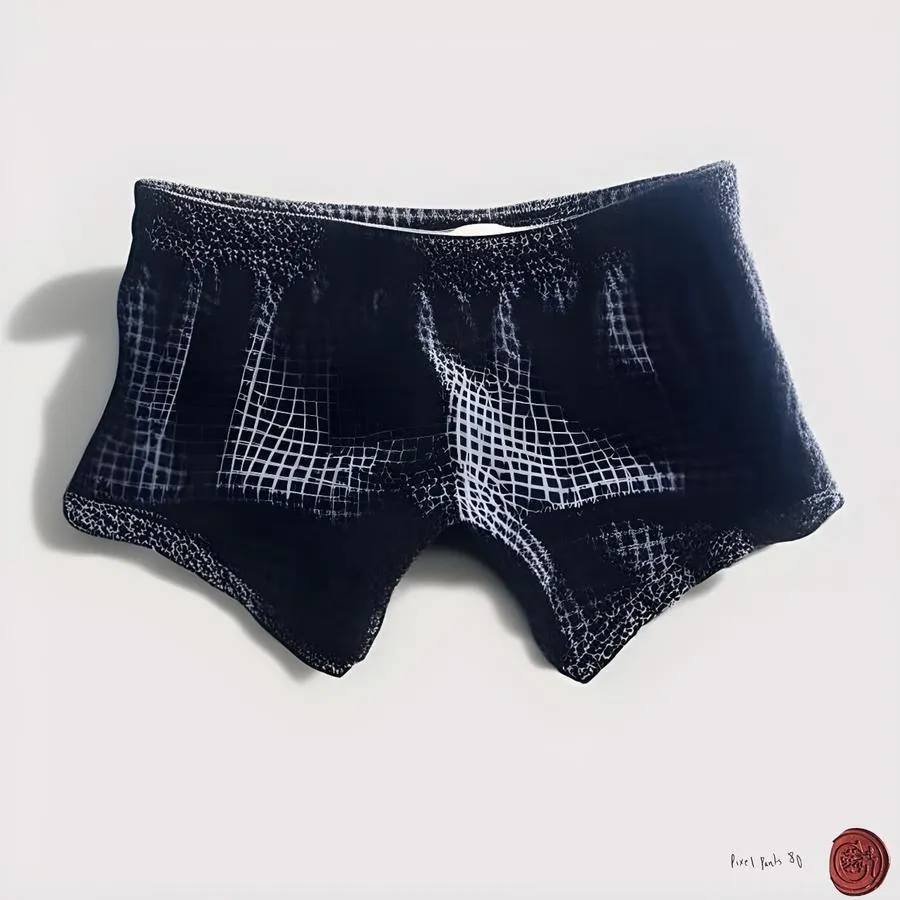
The coherence of this framework results from a tightly structured creative-directorial approach by Camilla Ridgers. Rather than advancing a personal narrative, her role was to establish the parameters within which the project could operate. From the outset, Pixel Pants was conceived as a rule-based environment rather than an expressive gesture. Decisions around scale, texture, framing, and resolution function as structural constraints, closer to interface design than fashion styling. This positions the project nearer to a visual operating system than a traditional fashion editorial, with each output registering as a controlled variation within a unified logic.
Central to the project is the tension between proximity and abstraction. Pixelation typically signals distance, a loss of detail or legibility. In Pixel Pants, this logic is inverted: the pixel becomes a unit of closeness, magnifying surface while simultaneously anonymising the body. The resulting visual language oscillates between exposure and concealment, eroticism and censorship, touch and code. Rather than resolving these contradictions, the project sustains them, reflecting how contemporary intimacy is increasingly shaped by digital systems that both promise access and impose limits.
Fashion imagery functions here not as spectacle but as infrastructure. The conventions of fashion photography pose, crop, lighting, and material emphasis are deployed strategically to control how the work is read. Ridgers’ direction resists overt narrative cues, keeping attention on surface and system rather than personality or lifestyle. In doing so, Pixel Pants adopts the visual language of editorial fashion while subtly undermining its traditional aims of aspiration and identification.

Technology is neither celebrated nor condemned; it is treated as a condition to be designed within. The pixel is acknowledged as the dominant visual grammar of the present. By translating bodily intimacy into pixel-based structures, Pixel Pants mirrors how digital platforms compress, regulate, and redistribute images of the self. What emerges is not a dystopian warning, but a precise observation of how desire is formatted under contemporary visual economies.
Authorship is similarly reframed. Pixel Pants resists the singular-genius model often associated with art and fashion, instead foregrounding creative direction as orchestration. Ridgers’ role is evident in the alignment of garment construction, digital aesthetics, photographic execution, and presentation into a coherent system. The project’s authority derives not from autobiography, but from the rigor of its constraints and the clarity of its visual decisions.
Material translation remains central. The work moves fluidly between physical and digital states, treating fabric, image, and screen as equivalent sites of meaning. The garments are not merely photographed; they are activated through the camera, becoming images that behave like digital artifacts. This reflects how fashion increasingly exists as image before object, and how intimacy is often encountered through representation rather than touch.
Culturally, Pixel Pants occupies a productive intersection between fashion’s engagement with technology, art’s turn toward systems, and a broader moment in which privacy, exposure, and desire are continually recalibrated by digital platforms. The project offers no manifesto. Instead, it proposes a framework for seeing one that reveals how bodies are encoded, stylised, and circulated in a pixel-dense visual culture.
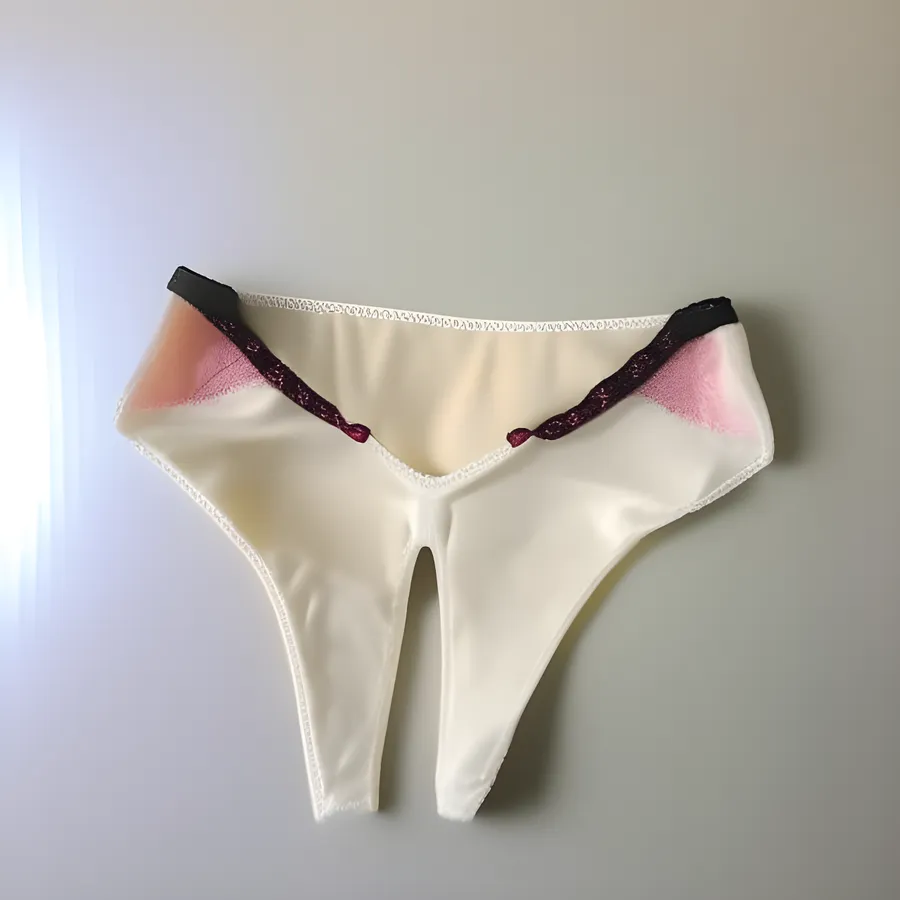
Benjamin Kandler (Graham + Kändler; former Art and Project Lead for Global Digital Art and Private Sales at Phillips, and Director of Digital Art at Unit Gallery) observes: “Ridgers, with delicacy and wit, explores how intimacy, tech, and agency triage themselves when left to their own devices. Pixel Pants probingly examines the space between the encoded and the material, where design and autonomy are entangled in a quiet alchemy. The series is a pertinent reflection on authorship in a tug-of-war with computation. In an era of AI slop and neural normcore, Pixel Pants is distinct in its synthetic unmaking and re-assemblage, asking with disarming humour who or what scripts our private aesthetics.”
Ultimately, Pixel Pants operates as an exercise in creative direction as authorship. Its force lies not in revelation, but in design: the careful construction of a visual language that allows contradiction to persist without collapsing into commentary. In this sense, Pixel Pants functions less as an object than as a method offering a disciplined case study in how art, fashion, and technology can be held within a single system of meaning.
Stay up-to-date with exclusive events and content.


