F L A U N T


Many creative fields are seeing renewed interest in handcrafted work. People are drawn to objects where the maker’s effort is visible, whether it’s ceramics, custom clothing, or limited-edition prints. This shift is partly a response to the rise of automation and digital tools that make everything look uniformly polished. Research supports this trend: a study from the Rotterdam School of Management shows that artworks generated by AI are often perceived as less creative and less valuable compared to pieces made by humans. A consumer study SurveyMonkey finds that almost half of consumers see AI-generated content as inauthentic, and complementary surveys from AtomRadar and Baringa show that people are more likely to trust and emotionally connect with work created or directed by humans—especially when cultural representation is at stake.
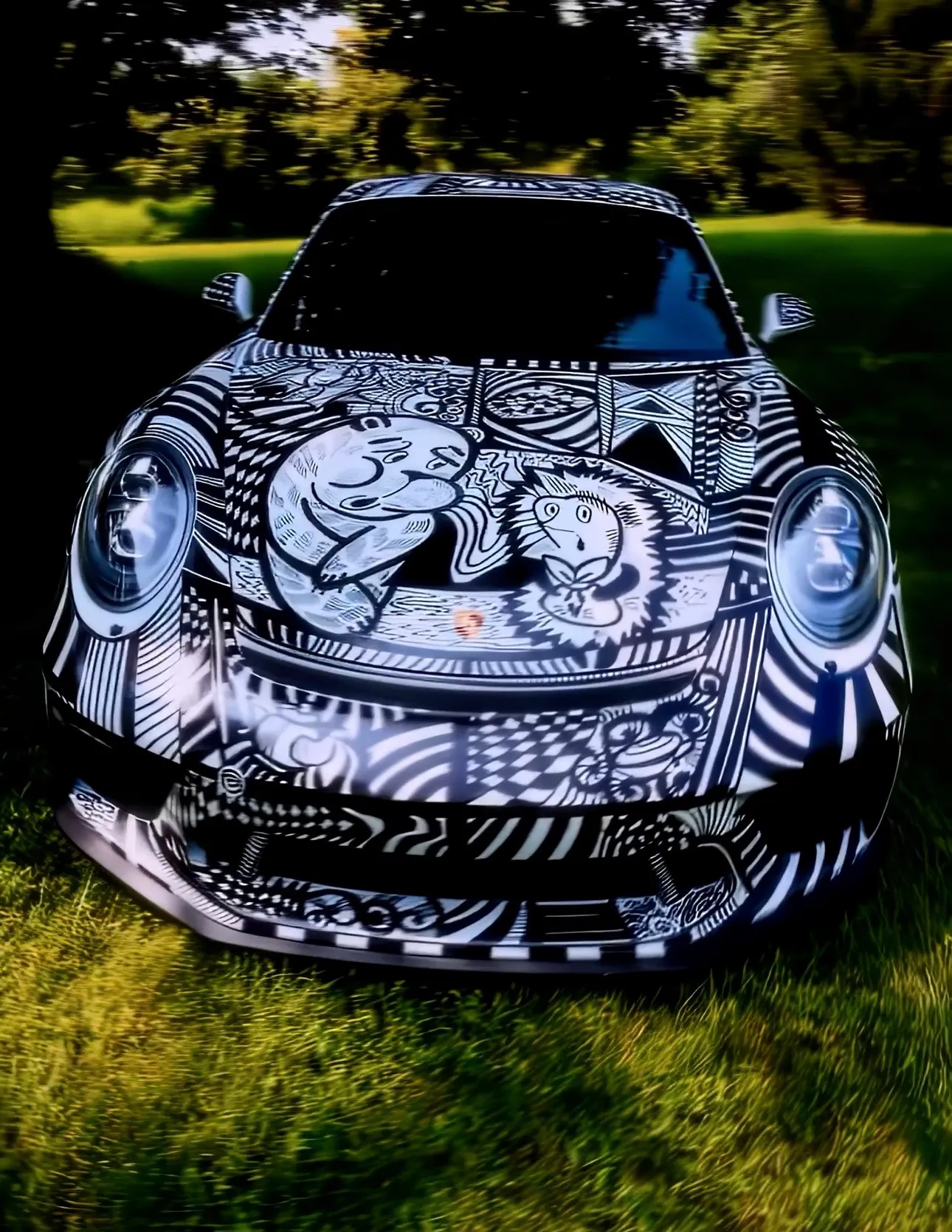
This preference for authenticity is appearing even in an unexpected sphere like automotive culture. Alongside performance upgrades and engineering projects, a niche of fully hand-painted cars has emerged. These works combine technical skill with artistic expression and are increasingly viewed as collectible objects rather than decorative tuning. Two recent projects, “Alice in Wonderland” and “Hedgehog in the Fog,” illustrate how this direction is evolving. Both were created by Papin Garage, an automotive atelier based in Hallandale Beach, Florida, and operating since 2016. Their work shows how manual techniques and narrative illustration can turn a familiar vehicle into a large-format artwork. The studio has developed a strong reputation within the luxury automotive scene, attracting the interest of high-level clients who have ordered private viewing events and custom consultations. The projects of the company are regularly discussed not only by the car enthusiasts, but also designers and artists. Video materials featuring Papin Garage cars regularly draw wide viewer engagement and circulate well beyond niche automotive audiences, while a Dakar-focused series accumulated roughly 1.5 million views over time. Their work shows how manual techniques and narrative illustration can turn a familiar vehicle into a large-format artwork.
What makes these cars compelling is not only their appearance but also the process behind them. When conversations about AI fatigue and the return of physical craft dominate design conferences and cultural reporting, the appeal of meticulous, manual work has become easier to understand. According to the project documentation, each vehicle was completely dismantled so the artist, Masha Razum (@masha.razum), could work with every panel separately. No vinyl, printing, or stencils were used; the images were applied entirely by hand with brushes and markers. Once the painting was complete, the surfaces were sealed with multiple layers of clear automotive lacquer, each sanded and polished to create depth and ensure durability in everyday use.
This approach resembles gallery-grade art production, but is adapted for the challenges of a three-dimensional object designed to move, bend light, and withstand weather. Painting on a car requires the artist not only to master composition but also to anticipate how lines travel across curves, how imagery behaves over door seams or air vents, and how different angles distort or reveal visual detail. As artist Masha Razum explains, “A car isn’t a flat surface - it bends and breaks the image. You have to design for movement, for changing light, for the moment when a line disappears in a curve and reappears two meters later.” The precision involved echoes a broader trend of the renewed respect for craft disciplines that demand time, coordination, and embodied skill. These are the qualities many viewers feel have become rarer in the digital age.
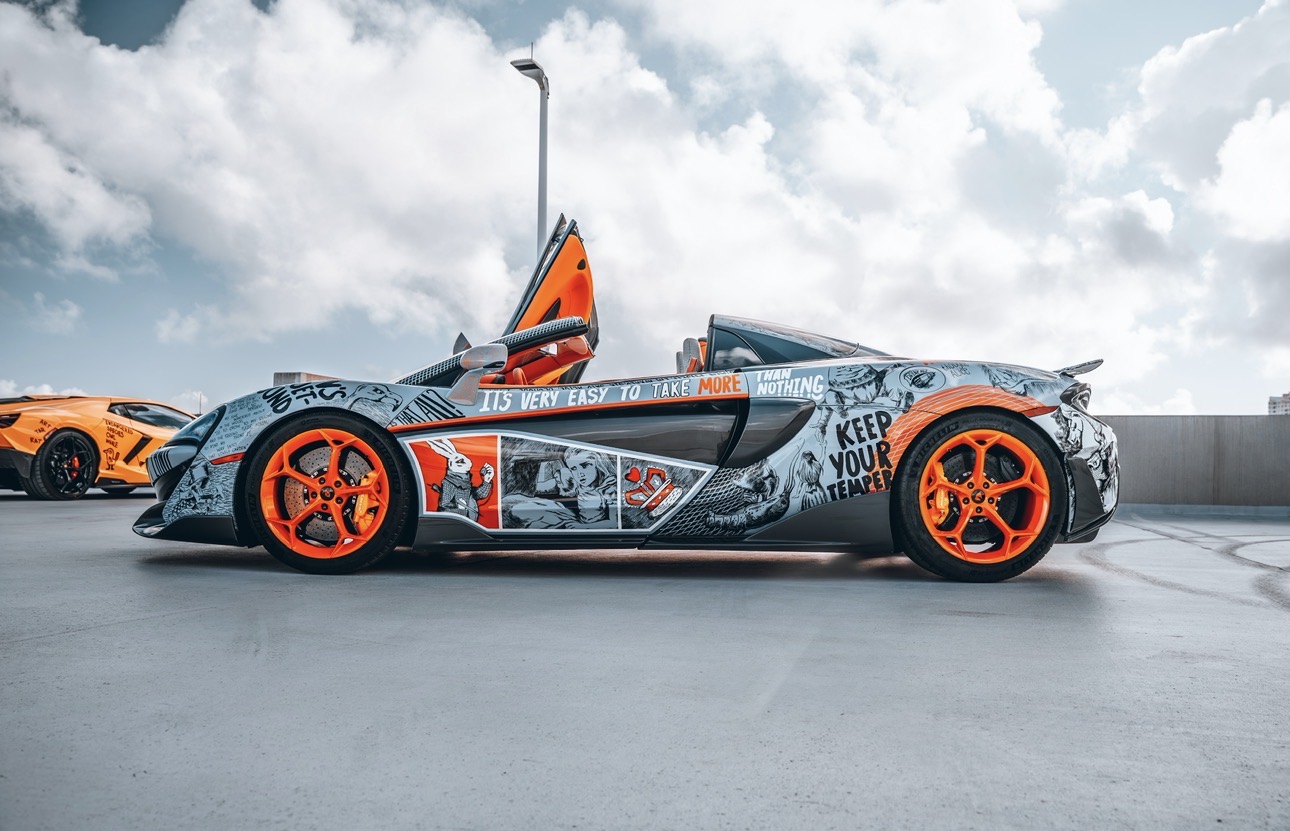
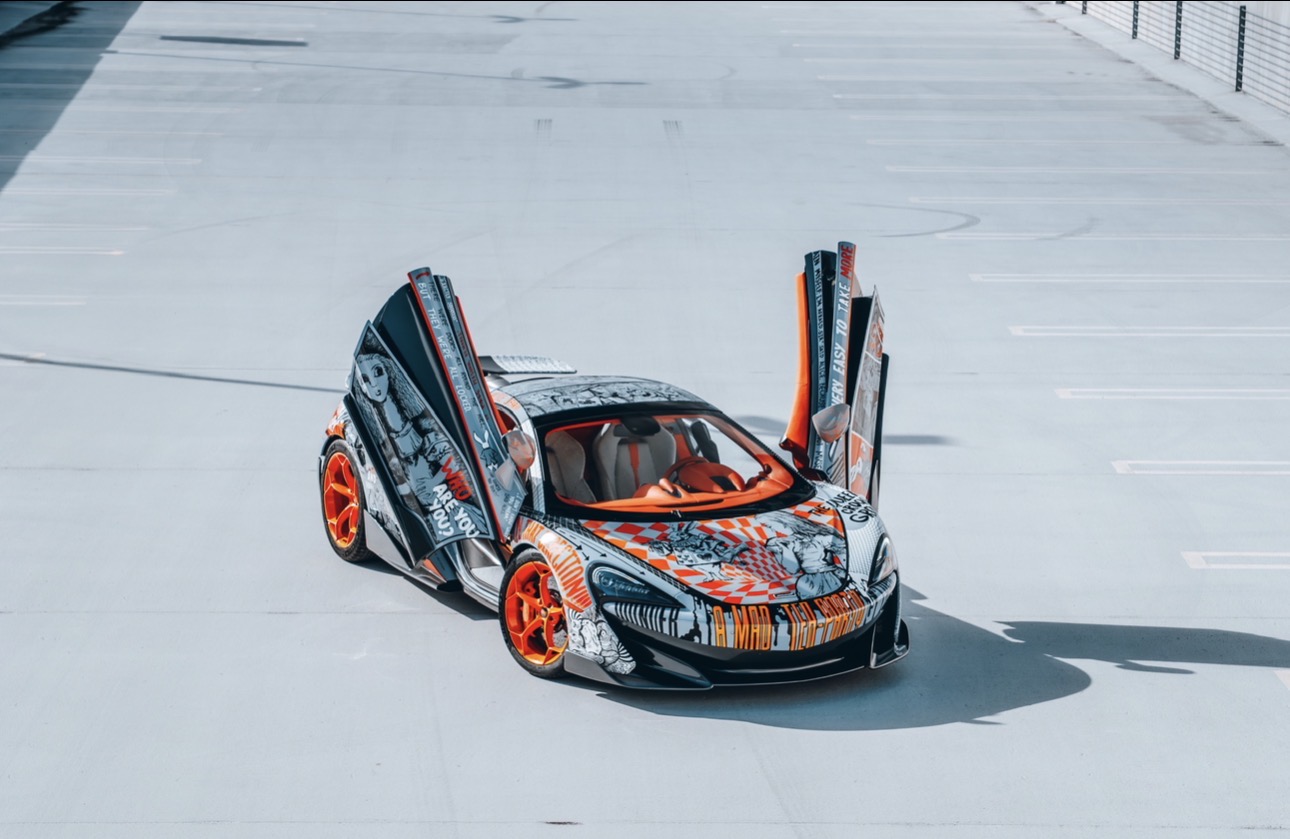
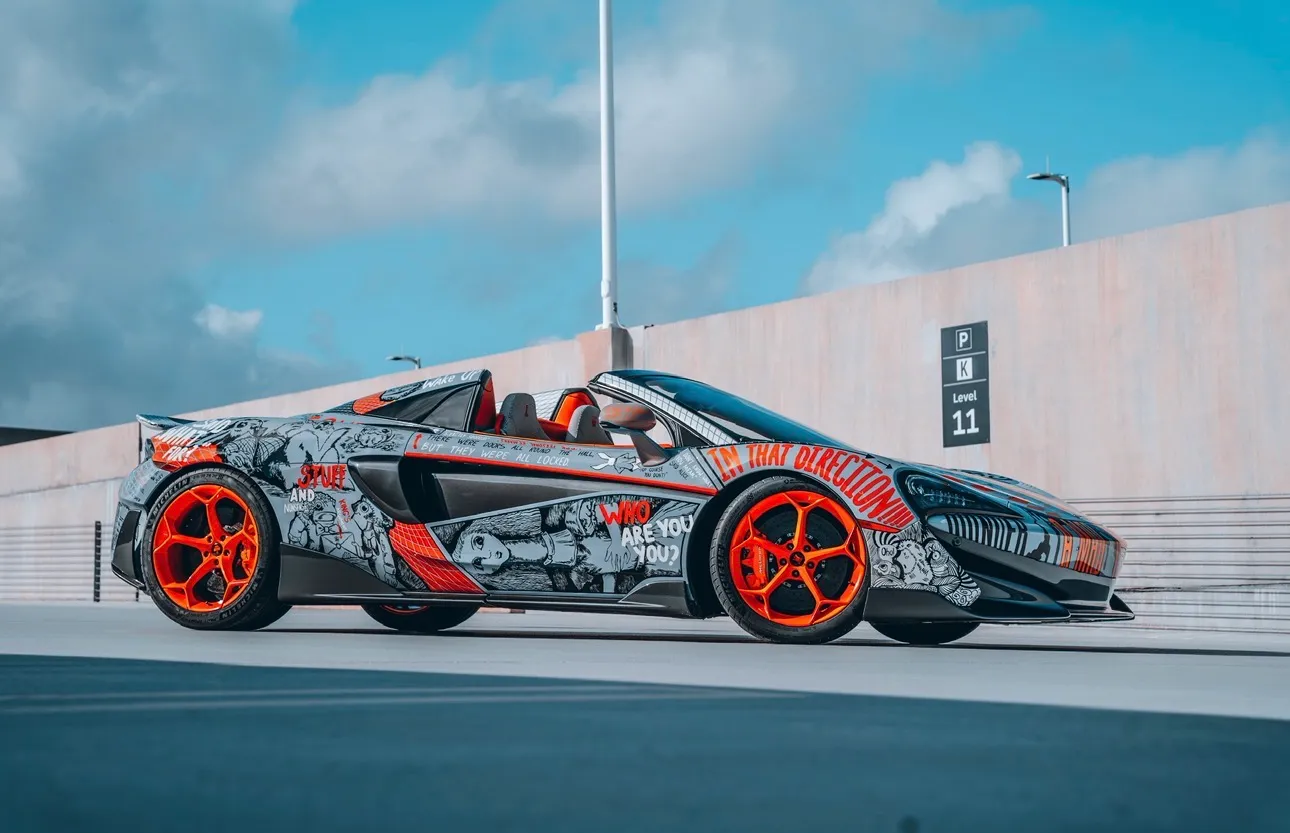
Within this technical framework, each project develops its own artistic universe. “Alice in Wonderland” is vivid and cinematic, built around color, recognizable characters, and dynamic transitions. On the McLaren 570S, this translates into a continuous illustrated narrative that moves across its geometry: the palette and emotional tone were planned in advance, giving the supercar the feel of a story unfolding in motion. Its energy lies in visual abundance — bright scenes that wrap around the bodywork and immediately capture attention. This mirrors a wider cultural inclination toward maximalist, story-driven imagery, as audiences look for expressive, optimistic visual experiences after several years of restrained digital minimalism.
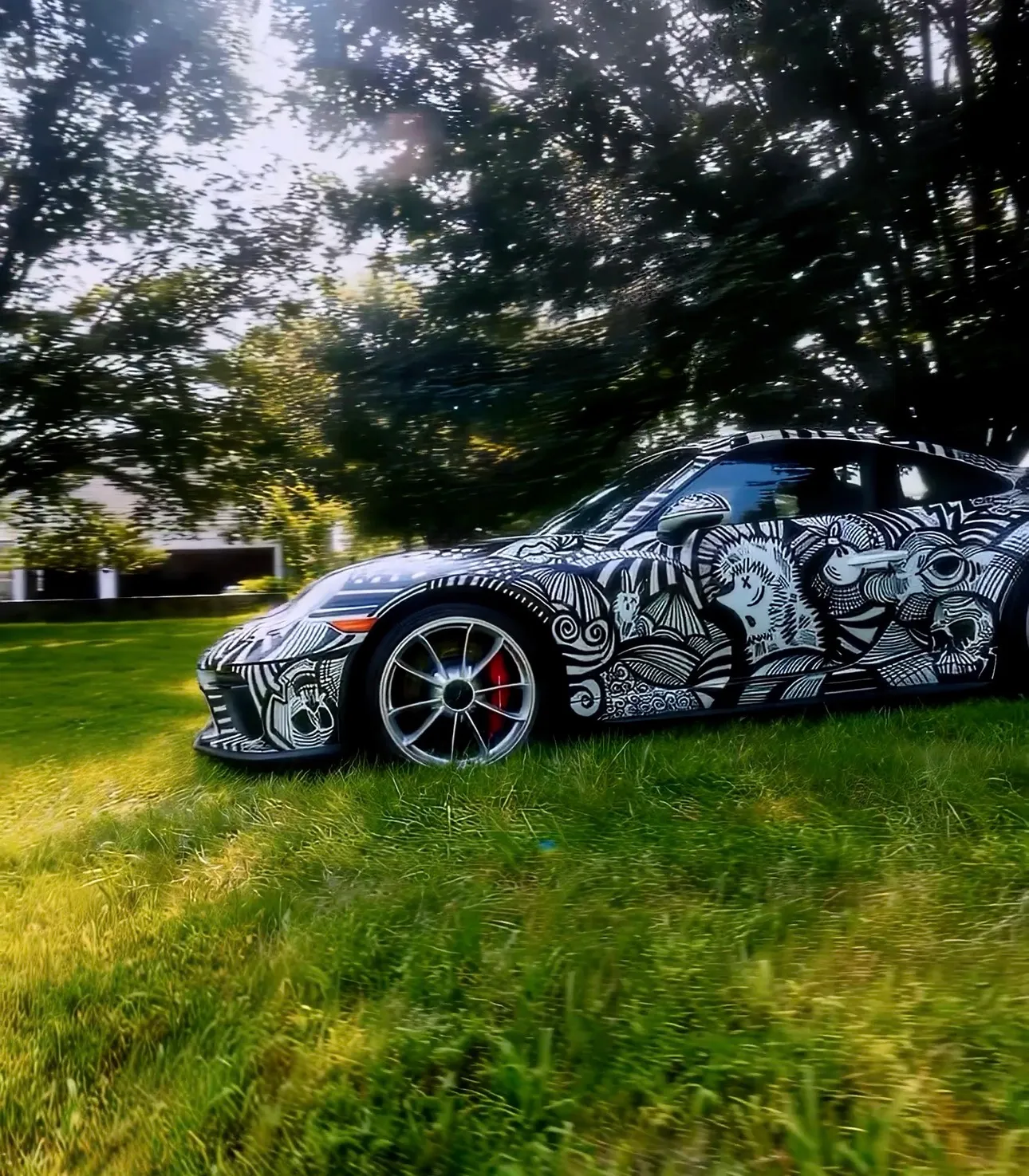
“Hedgehog in the Fog,” by contrast, relies on restraint. Inspired by the iconic animated film, it uses black-and-white illustration to create an atmosphere of quiet, shifting texture. This monochrome approach resonates with broader aesthetic currents. Adobe’s 2025 Design Trends report notes a renewed interest in textured, hand-drawn, and deliberately imperfect visuals, as audiences seek imagery that feels more personal and less digitally manufactured. The project reflects this sensibility in a particularly demanding context. Applied to the sculptural surface of a Porsche GT3, each stroke must pass cleanly across arches, vents, and panel gaps so the fog-like rhythm remains uninterrupted. The effect is closer to contemporary graphic art than to automotive customization, and its restrained palette encourages slower, more attentive looking.
Despite their differences, both projects highlight a common idea: the value of the human touch in a period when so much visual material is produced automatically. The contrast between a hand-drawn line and a machine-generated shape is becoming more meaningful to viewers, not less. “Alice” expresses this through exuberance and color, “Hedgehog” through restraint and atmosphere, but both depend on the visible decisions and time investment of the artist. As more creative work becomes automated, these signs of manual authorship stand out as evidence of individuality and intention.
This helps explain why projects like these are attracting attention not only from car enthusiasts but from collectors, designers, and people active in the broader cultural field. A hand-painted car is no longer simply a personalization effort; it becomes a mobile art object that carries narrative and emotion through an unconventional medium. The merging of engineering and illustration expands what a car can represent, transforming it from a tool of mobility into a platform for artistic expression.
In this sense, the rise of handcrafted automotive art is part of a larger movement. As AI and other digital tools become more capable and more pervasive, the contrast they create makes handcrafted work feel increasingly distinct. The appeal lies not in perfection but in the knowledge that an object was shaped by a person, not replicated by a process. Papin Garage’s projects show how this sensibility can take form in a field not traditionally associated with fine art. They also suggest that the future of handcrafted work may involve not a return to old formats, but the discovery of new surfaces and new ways to express the enduring value of the human hand.
Published 12/22/2025
Stay up-to-date with exclusive events and content.


