F L A U N T


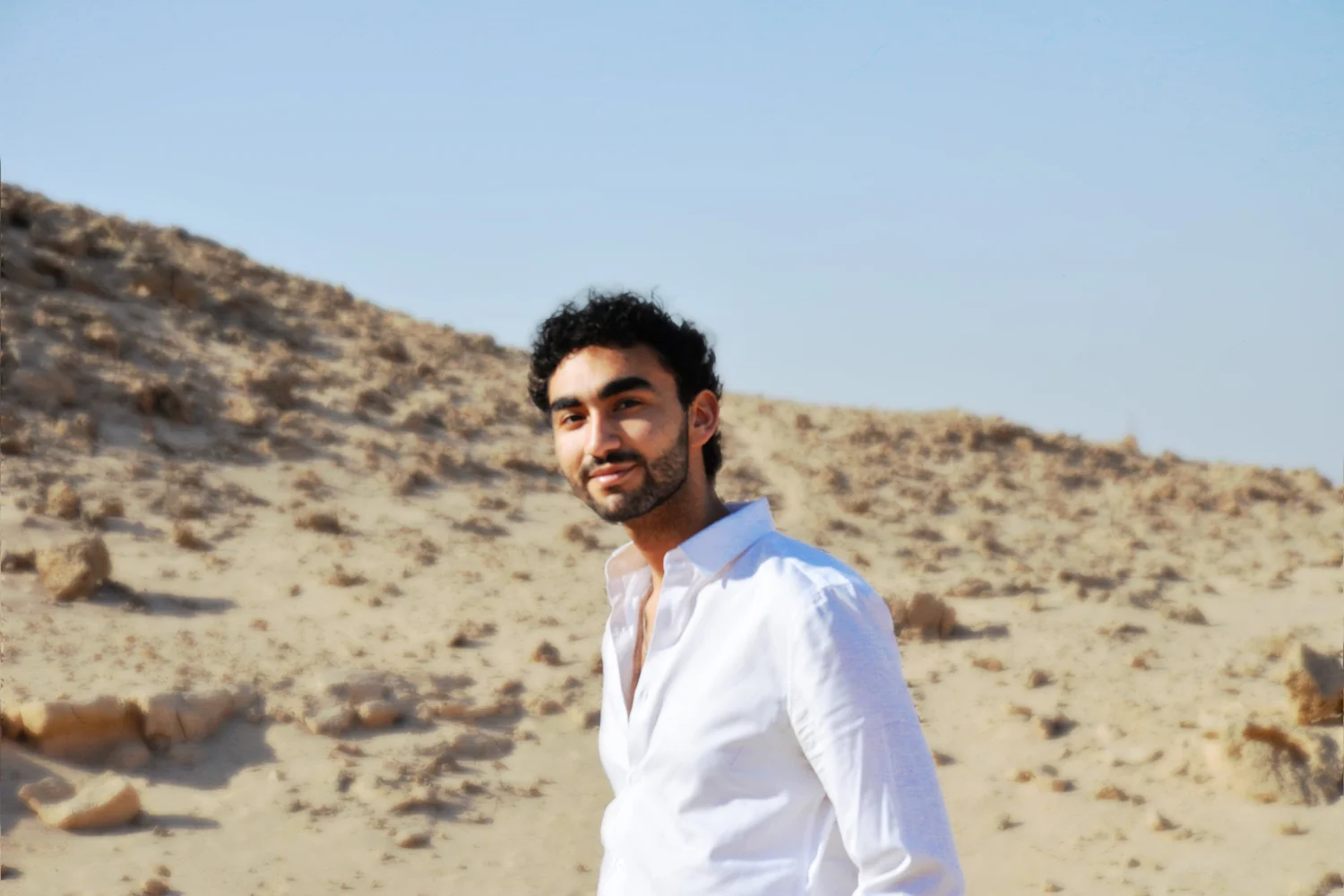
Michael Isaak did not grow up with his culture close at hand. He grew up with it at a distance,
watching it from the other side of something he could not quite name. Then he went to Egypt,
came back, and built an instrument out of what he found.
There is a particular kind of confidence in deciding to learn an instrument for a record you have
not yet made, and then making the record anyway. Michael Isaak did exactly that. The New
York-based Egyptian-American musician had been writing folk songs for years, but the debut
album he has spent the last three years building required something his existing toolkit could not
provide: the Arabic oud. So he learned it. He found an Iranian oud player named Sohail, studied
the Maqam modal systems that sit at the heart of Arabic music, and folded all of it into a body of
guitar-driven songwriting that had no real precedent for him to borrow from. The result, The
Carpet Maker, out today, is a record that sounds like it was made by someone who had
something specific to say and refused to approximate it.
The sound Isaak calls Arabesque Folk is not a genre tag so much as a description of a process.
Guitar and oud share the same melodic space without competing. The Maqam scales, with their
microtonal inflections, run underneath the songwriting without announcing themselves. It is the
kind of fusion that only works when the person making it has actually done the work, and here
you can hear that he has.
"Sit at the TV with my dad almost every night and he would show me a different piece of music."
The record was seeded by a trip to Egypt in 2023, after which Isaak spent evenings at home
with his father, working through Fairouz, Umm Kulthum, the Bombotaya folk tradition from Port
Said. That listening became research, and the research became songs. The title track imagines
a parallel life in which his family never left.
"Hold Your Keys" turns a house key into an heirloom,a quietly precise image of what diasporic inheritance actually looks like.
Elsewhere, he takes Joni Mitchell's "Eastern Rain" and pulls it so far into his own world that it stops being a cover
and becomes something closer to an argument.
The album was recorded at Laurel Road Studios in Manhattan, with Finn Gardner-Puschak
engineering and mixing. Isaak produced it himself, which matters: the record has a coherence
that comes from a single person knowing exactly what they want every element to do. Remy
Minkoff handles electric guitar, bass, and keys; Giulianna Iapalucci plays drums; Sohail appears
on oud. The arrangements are spare but never thin. Every sound has a reason to be there.
What makes The Carpet Maker worth your time is simple: there is nobody else doing this. Isaak
has carved out a sound so particular to his own story that imitation would be pointless. The
Maqam scales, the oud lines, the Port Said folklore folded into New York folk songwriting; it
adds up to a debut that arrives fully formed, with a musical personality most artists spend a
whole career trying to find.
Isaak found it on his first try.
Stay up-to-date with exclusive events and content.


