F L A U N T


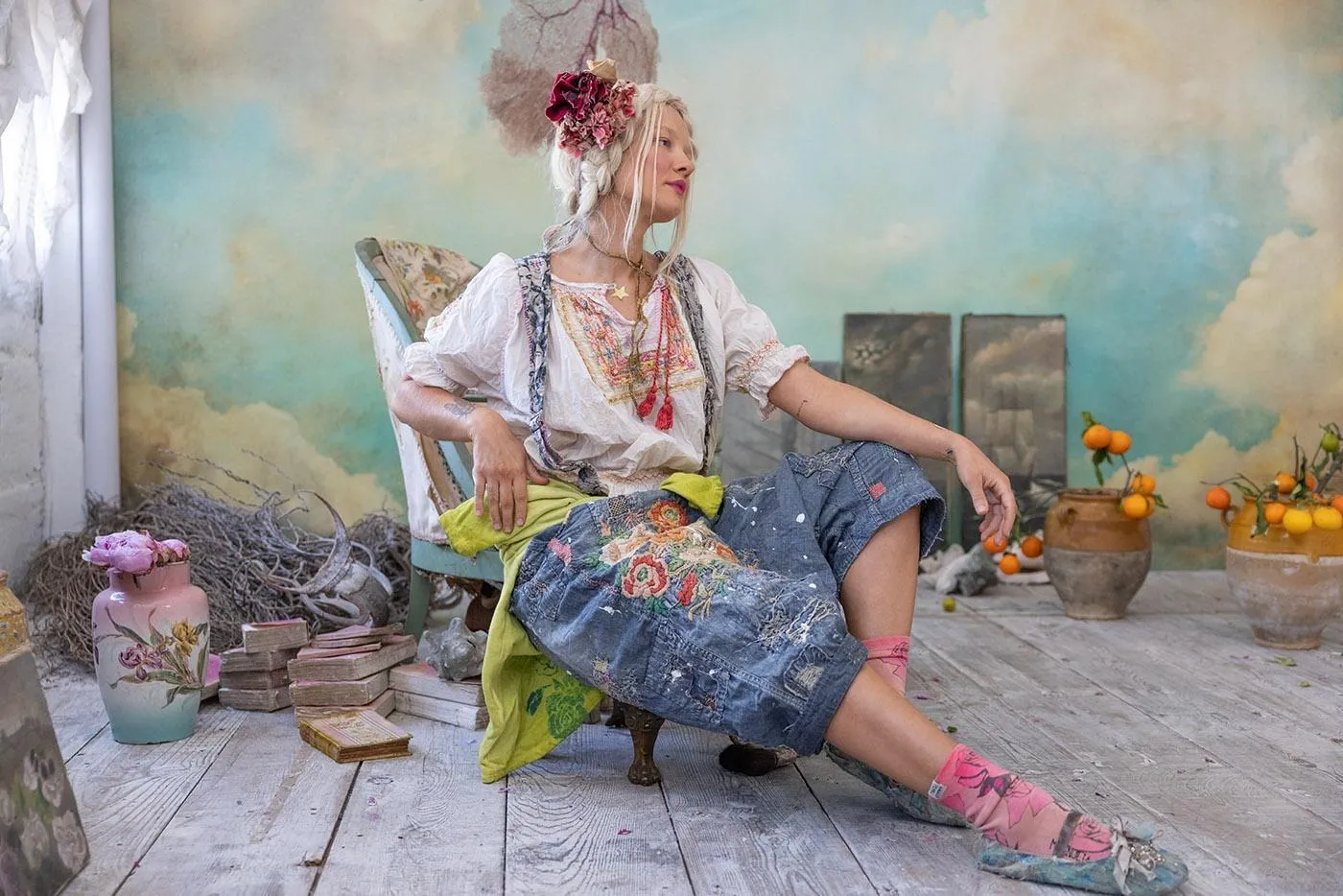
Robin Brown grew up knowing what it meant to have almost nothing. She wore what others had discarded, learned to patch before she could afford to buy, and saw beauty not in what was new but in what survived. Those early lessons did not leave her. They became the spine of Magnolia Pearl, the fashion brand she would later build from a kitchen table and a handful of scraps.
Her first sale was not a business plan. It was a lifeline. Brown stitched a backpack from kite string and an old tapestry and sold it to a stranger for the exact amount she needed to retrieve her mother’s ashes. That single exchange linked creativity to survival in her mind. Years later, that same logic animates Magnolia Pearl’s unusual place in fashion: a high-demand label rooted in scarcity, mending, and a refusal to waste.

Magnolia Pearl’s clothes are not polished. They are deliberately distressed, patched, and paint-speckled. Each piece looks as if it has already lived a long life. In a market obsessed with freshness, that choice is radical. It says that time and wear can add value rather than strip it away.
Collectors agree. Across the United States and Europe, Magnolia Pearl garments now circulate in a robust secondary market. Small-batch production means there are few of each piece. That scarcity, combined with handwork and a strong emotional story, drives prices up. Resale listings commonly show jackets and dresses reselling for two or three times their original retail. Worn becomes worth more.
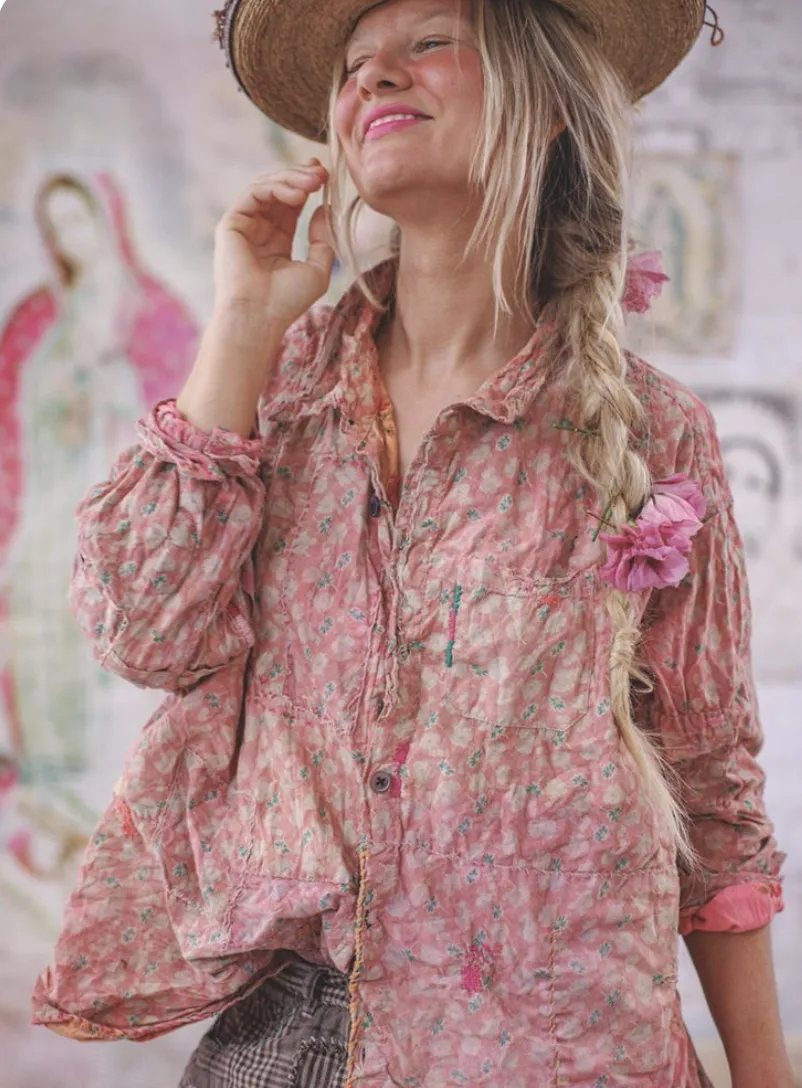
Most brands stop there. They treat resale as proof of their cachet and move on. Brown chose a different path. In 2023, Magnolia Pearl launched Magnolia Pearl Trade, a dedicated resale platform that does more than authenticate and host auctions. It channels money outward.
On this platform, 25 percent of the final value of Magnolia Pearl’s own exclusive listings and 100 percent of fees collected from third-party sellers go to charity through the Magnolia Pearl Peace Warrior Foundation. Since 2020, that foundation has raised hundreds of thousands of dollars for causes that are often overlooked: housing and clinical care for Indigenous American veterans, medical and veterinary support for people experiencing homelessness, disaster relief, and arts education for children.
This structure matters. It turns every resale into a form of redistribution. A garment that has already generated profit once does not simply generate more profit. It helps fund groceries, shelter, medication, and art classes for people who need them. In a world where fashion often exploits the vulnerable, here is a model that returns something to them.

Brown’s childhood explains why she built it this way. She knows what it feels like to be hungry, to rely on strangers, to make do with what little is left. Her memoir, Glitter Saints, recounts sleeping in parks, drinking from garden hoses, and using beauty as a way to keep going. Magnolia Pearl’s aesthetic—frayed edges, visible mending, unfinished seams—comes from that experience. The clothes do not hide damage; they honor it.
That is the moral core of the brand. It treats imperfection not as a flaw to be erased, but as evidence of endurance. It treats profit not as an absolute right, but as something that can and should be shared. When Brown says that love is the only way, it can sound sentimental. Her business model suggests she means it literally.
Magnolia Pearl will never rival the biggest global brands by volume. That is not its aim. Its challenge to the industry is quieter and sharper. If a label born from hand-me-downs can build a resale system that funds housing and healthcare, what is the excuse for companies built on billion-dollar revenues and runway shows?
The answer is uncomfortable. It forces a clearer view of what is possible when profit is not the only measure of success. Magnolia Pearl shows that clothes can carry history, that resale can carry responsibility, and that a garment can feed more than one body in more than one way.
A designer raised on hand-me-downs has built one of fashion’s most generous resale phenomena. That fact should not just inspire admiration. It should reset expectations—for what fashion owes the people who wear it, and the people it has too long left behind.
Stay up-to-date with exclusive events and content.


