F L A U N T


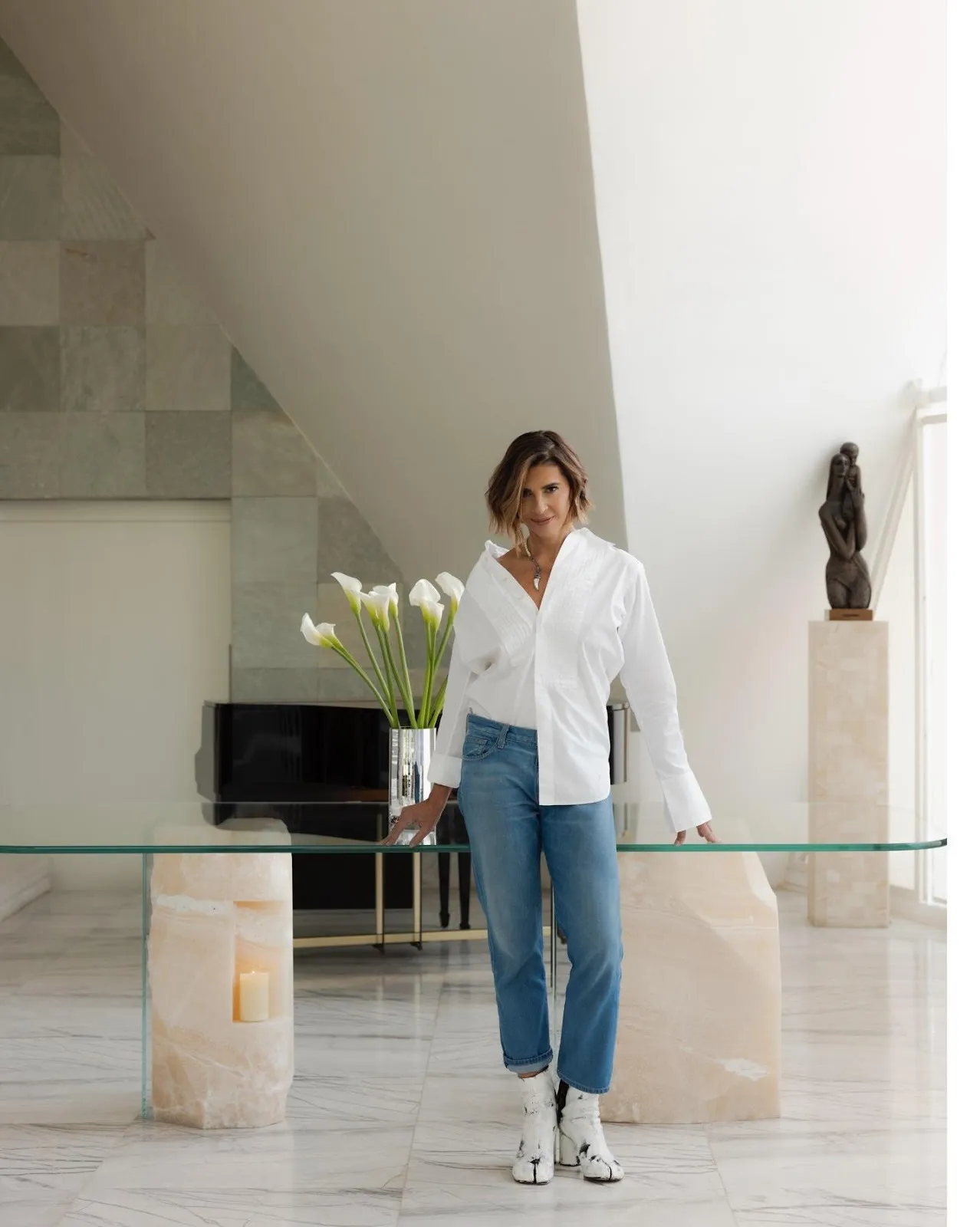
Liana Yaroslavsky in front of the Tension Studies dining table, composed of sculptural white onyx bases with extra-clear glass inserts and an extra-clear glass top.
Photographed by Alejandro Ramírez Orozco at Casa Alonso Rebaque, Mexico City.
In the Tension Studies collection, LIKA Atelier treats material contrast as sculptural language, mirroring the sensibility of its founder, Liana Yaroslavsky. LIKA Atelier takes its name from Yaroslavsky’s childhood nickname Lika and the Slavic word lik, meaning image, presence, or essence. It is not a definition so much as a feeling, something you recognize before you can name it. The collection feels like a pause and a return at once, gathering years of wandering, experimenting, and making into a quieter, more deliberate way of working, where materials lead and meaning reveals itself.
“Each work begins as a question,” Yaroslavsky explains. “What if weight could float, or silence cut through air? The answers emerge in the friction between matter and imagination.”
That friction is the foundation of the Tension Studies collection, conceived as a series of material investigations rather than decorative objects. Her work explores how opposing forces can coexist in equilibrium without resolution. Throughout the collection, materials enter into dialogue. Stone meets glass, metal, or wood, selected not for purity or perfection, but for how they resist, react, and occasionally surprise.
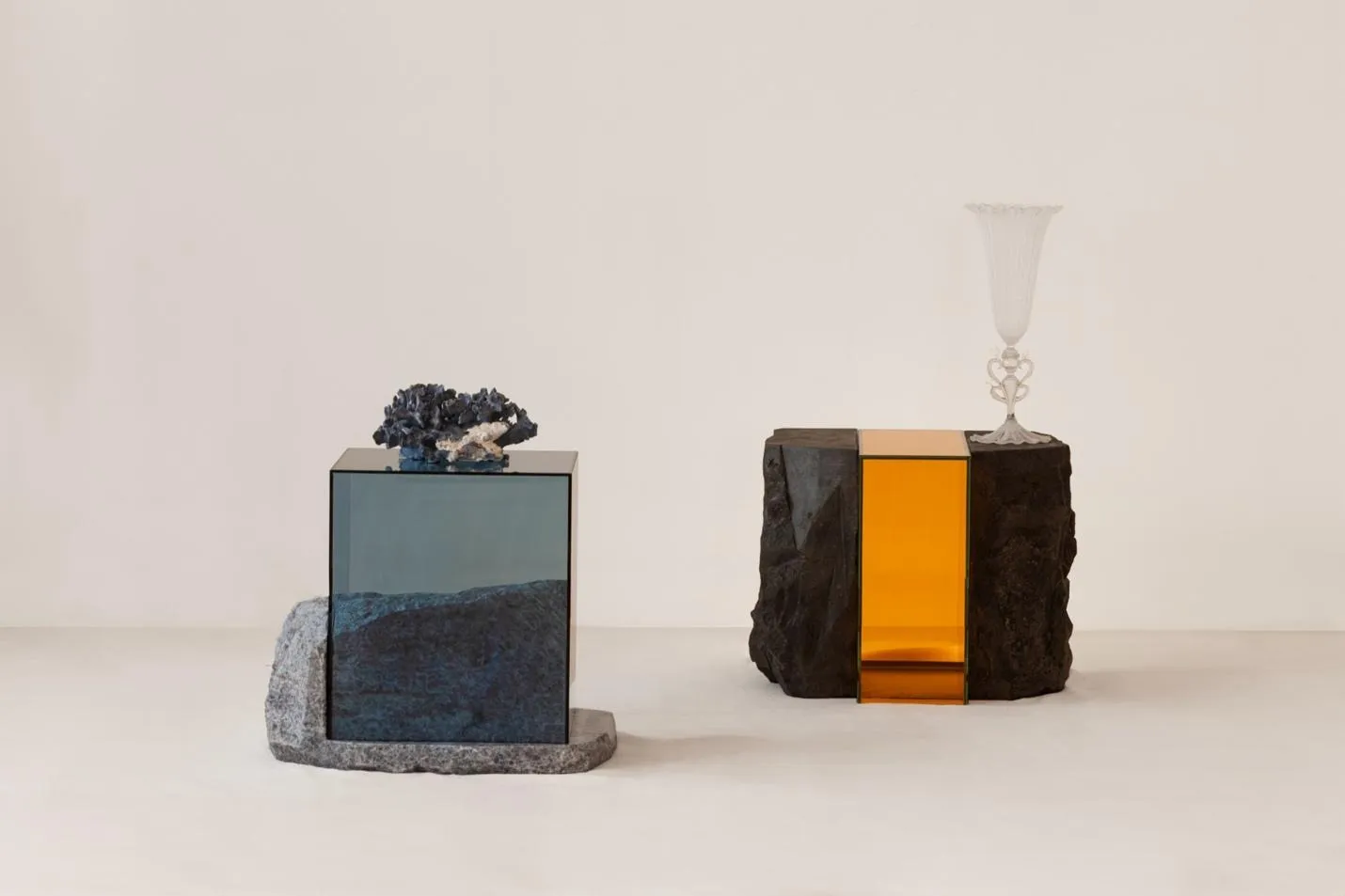
Although the series reflects Yaroslavsky’s global journey, it is deeply grounded in Mexico. Since establishing LIKA Atelier two years ago, she has worked closely with local stone carvers, glassblowers, and metalworkers, treating the city and its artisans as true collaborators. The work emerges through dialogue, shared knowledge, and material fluency.
Yaroslavsky’s career has always been marked by movement: geographic, cultural, and conceptual. Born in St. Petersburg, raised in Israel, educated in New York at Parsons School of Design, and shaped by years in Paris and Los Angeles, she now calls Mexico City home. Each place has fed her imagination, acting as a launching pad for reinvention while reinforcing a respect for history that remains visible throughout her work. That lineage is underscored by her inclusion in the permanent collection of the Shanghai Museum of Glass, among other international recognitions.
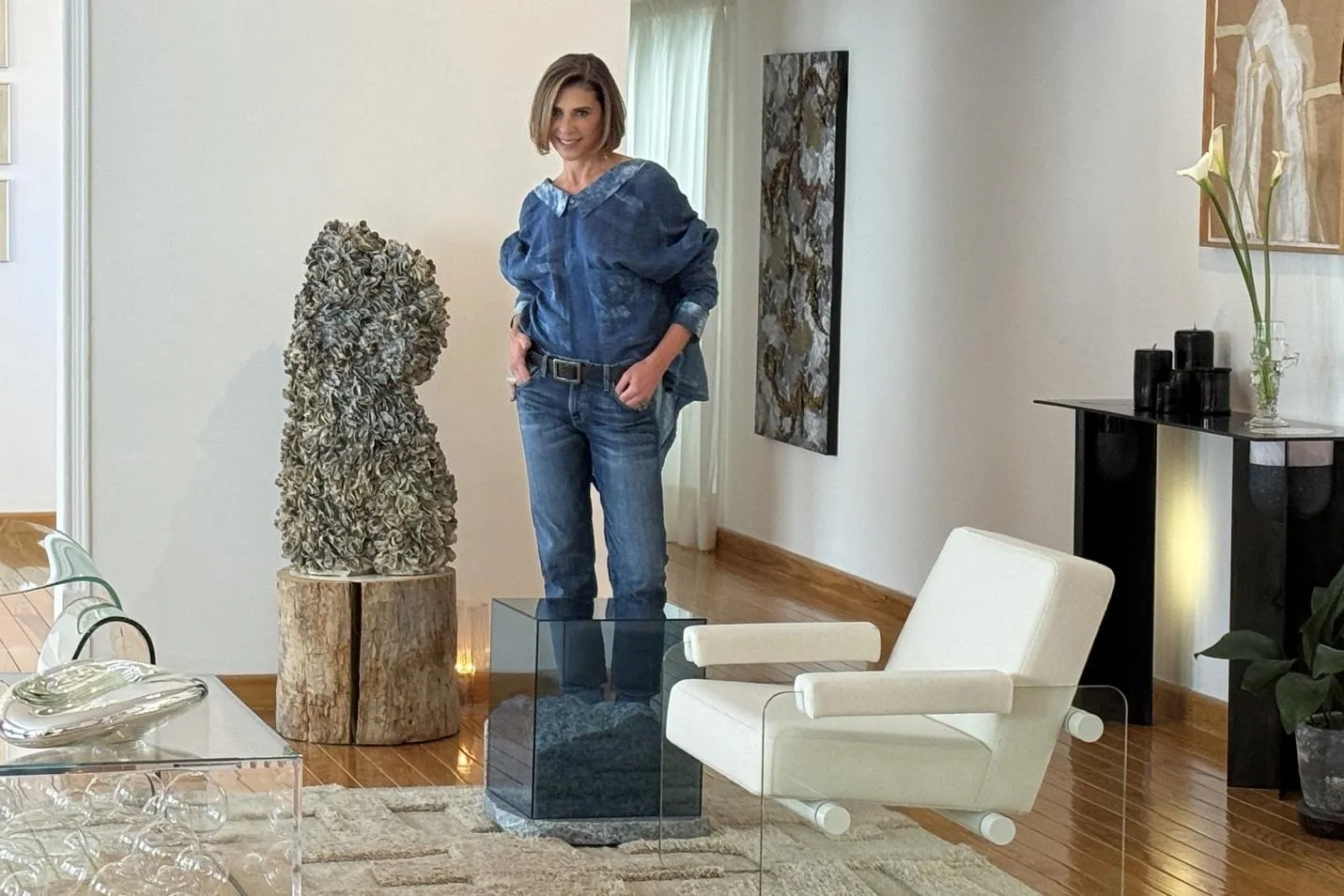
Out of this layered life, the studio has taken a quieter, more deliberate form. It represents both a return and a release, an embrace of youthful curiosity informed by decades of experience. Where her earlier works were intricate, complex, and obsessively precise, often requiring her to travel internationally to personally assemble pieces to exact specifications, her current practice reflects a profound shift.
“I’ve loosened my grip on perfection,” she says with a laugh. “The accidents are much more exciting.”
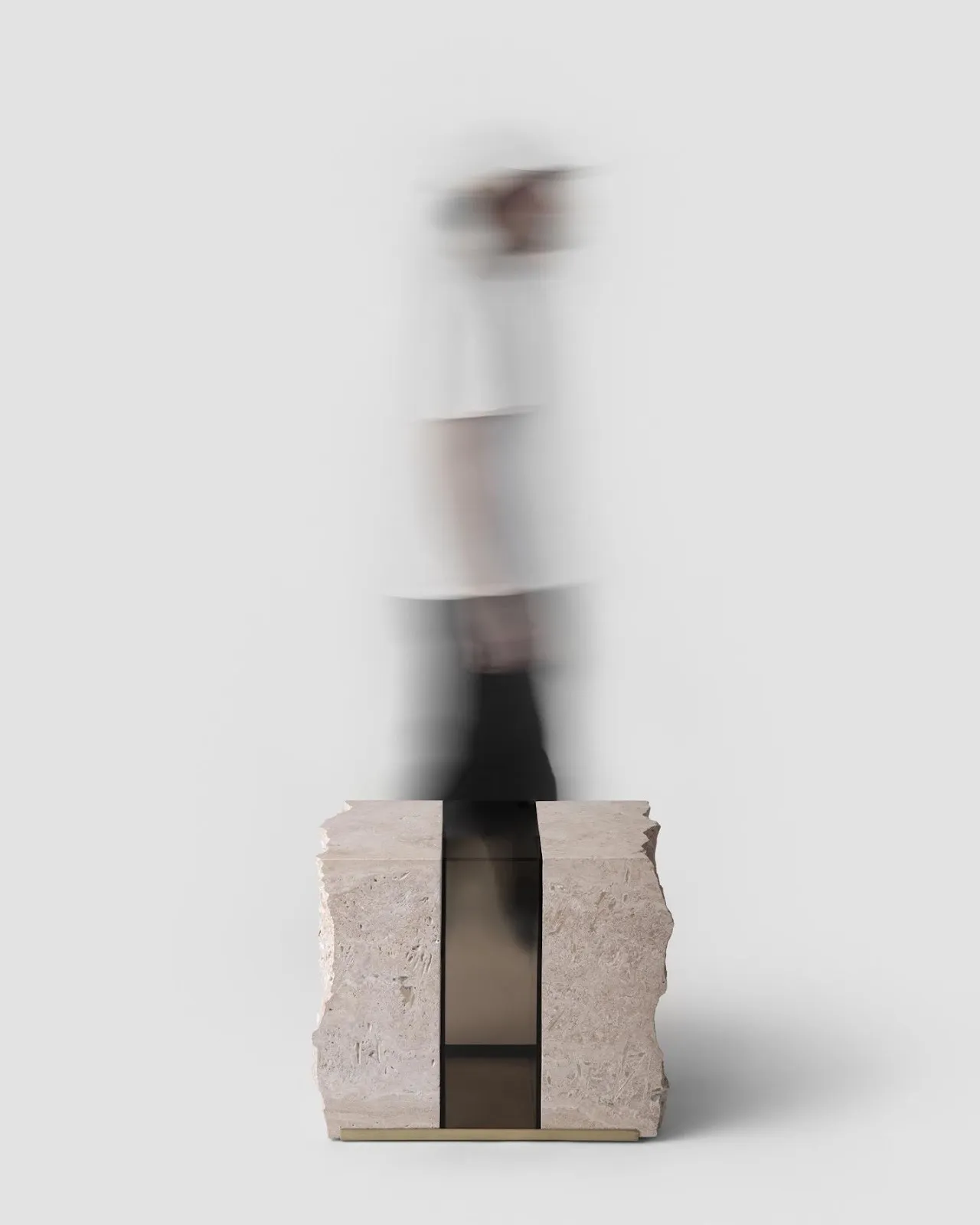
While her designs remain precise, Yaroslavsky now allows materials to assert themselves. A self-described recovering perfectionist, she leans into chaos when it appears, trusting that unexpected shifts can transform a piece into something new. Perfection, she insists, no longer holds the same interest. What excites her now is what cannot be predicted.
That openness has led to moments of quiet revelation. In one instance, she spent an entire night in the workshop chasing a reflective surface, observing it under changing light until dawn, only to realize it would never shine. The result was a matte finish she ultimately preferred. “That’s life,” she says. “All you need is time and patience. The materials tell you what they have to become.”
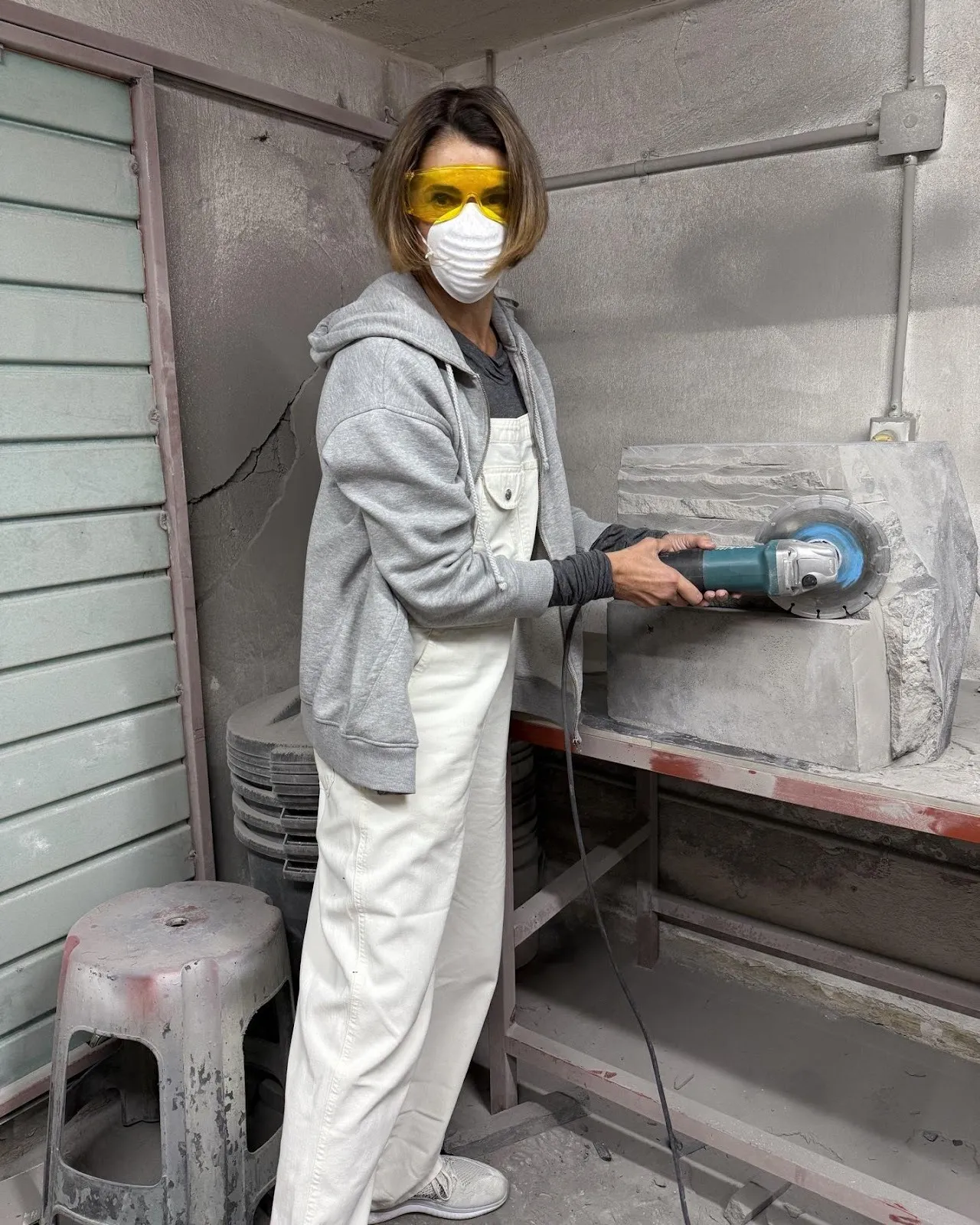
At the heart of her work is a fascination with fragility and mass, making the impossible appear possible, and creating tension where materials seem at odds. Though her work currently often centers on stone and glass, her palette continues to evolve, drawing directly from the earth of the place she inhabits.
Looking ahead, Yaroslavsky remains firmly forward-facing. Upcoming projects include an exhibition at Casa Alonso Rebaque, a 1958 architectural landmark opening to the public for the first time alongside Mexican designers, as well as a group show with Galería Errante presenting some of her earlier pieces. During Zona MACO 2026, she will also participate in the third edition of Unique Design X, presenting new works that trace her evolving practice.
Ultimately, Yaroslavsky hopes her work ignites a sense of wonder, that moment when viewers feel something unfolding before them. “Art is never finished,” she reflects, “only abandoned at precisely the right time.”
In the Tension Studies collection, balance is not fixed but held - unresolved, attentive, and alive.
Stay up-to-date with exclusive events and content.


