F L A U N T


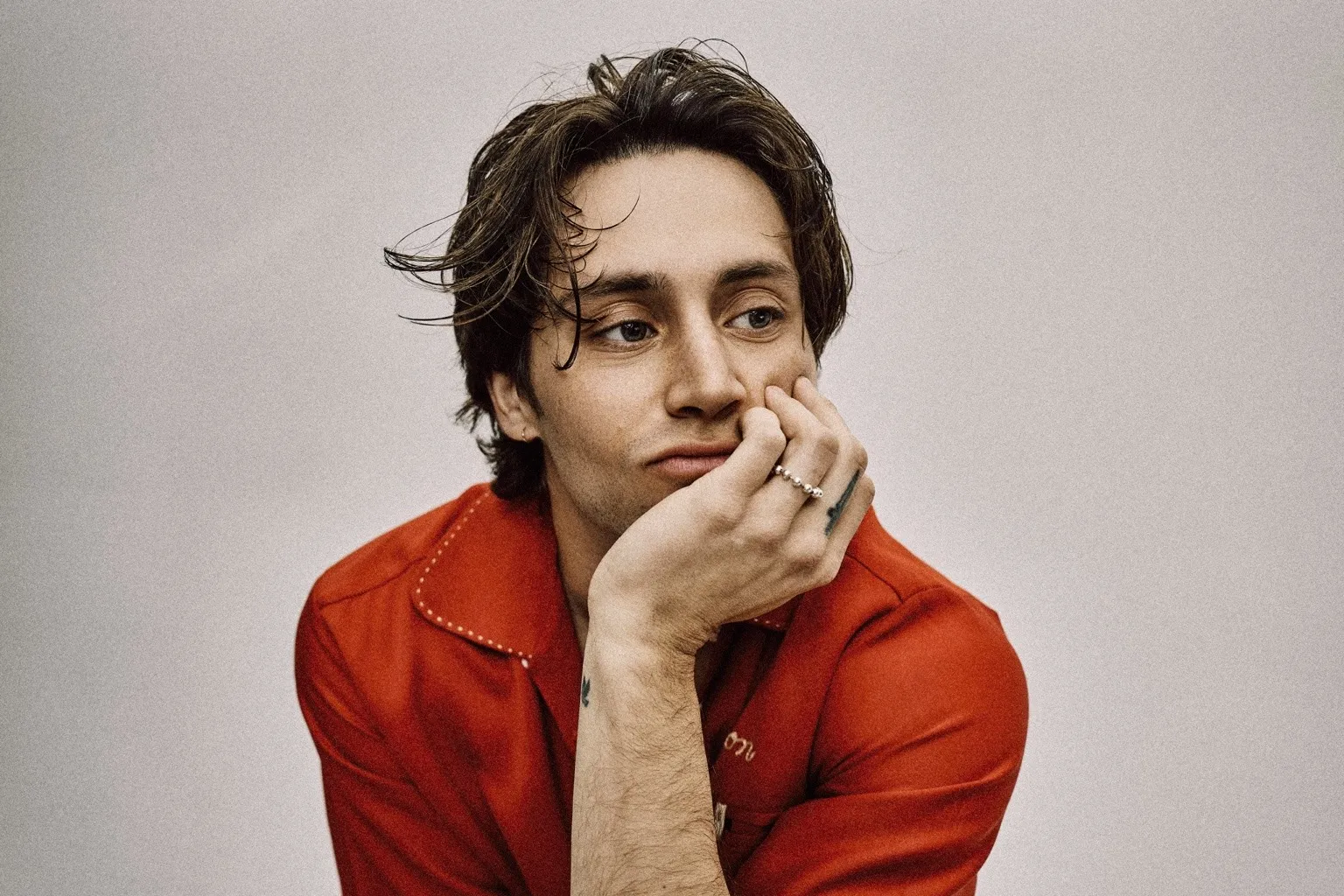
Spend enough time with Liam Obergfoll and the conversation inevitably moves away from television. The show is there, of course - Bravo's Next Gen NYC is the new, bright thing, the frame through which many viewers will first encounter him - but it does not stay at the center for long. What keeps surfacing instead is the slower question beneath it: what does it mean to build a life that feels authored rather than inherited?
Obergfoll is not allergic to the obvious. He knows the language that will surround him. He is a born-and-bred New Yorker, the son of a former network president and television executive, and he is now appearing on a series whose premise invites the kind of shorthand that culture loves to flatten into a label. He has even joked about being on the 'Nepo Baby' show. But there is a difference between entering a room and owning your place in it. That difference is where Obergfoll seems most awake.
“I’ve learned to be grateful to be in the room and have that foot in the door,” he offers. “But don’t let that fool you. You better bring it when the time comes.”
The idea resurfaces throughout our conversation. Although his work spans Monster, Law & Order, Younger, Talia in the Kitchen, and now Next Gen NYC, Obergfoll speaks less about where he’s been than where he’s headed. The conversation keeps drifting back to the art of making. To the challenge of writing, directing, and discovering what happens when the story is his to tell.
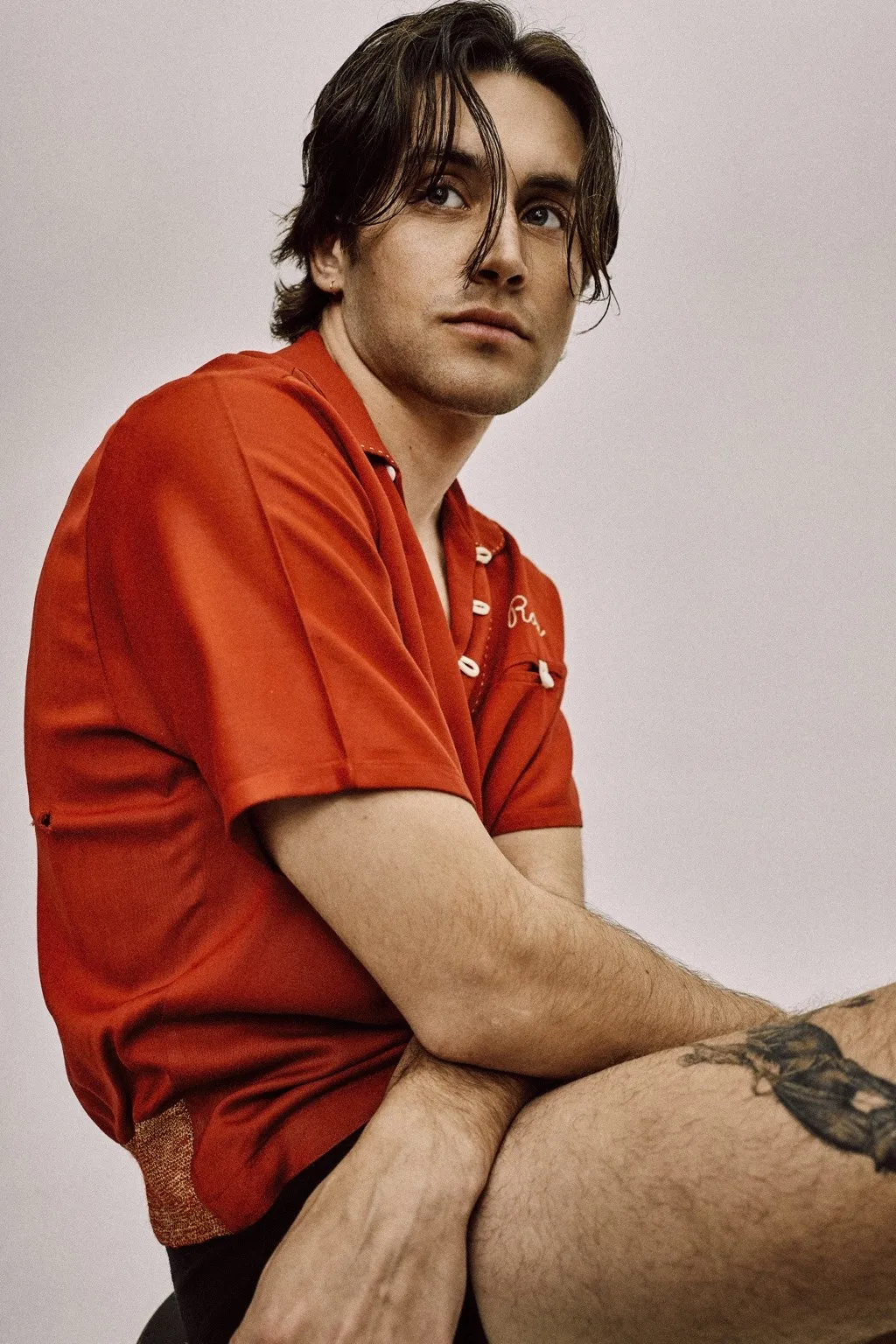
Acting remains his first language. 'I love being an actor,' he says, describing the pleasure of receiving a script and disappearing into someone close to him, or someone entirely different. But writing and directing have introduced a more complicated pleasure: the kind that does not arrive cleanly, because the thing in your head rarely makes its way to the page or the set unchanged.
'With writing, you're trying to bring a story to life that you can usually see very clearly in your head, but sometimes it doesn't translate to the page as easily. I feel similarly with directing. There are times you know how you want the shot to look, or you planned something in your head the night before, but day of, things shift. Maybe the set is different than you remember. Maybe the actor brings something you weren't expecting, and you love it. Well, now we have to shift. It's a new challenge. But it's part of why I love it.'
The word that repeats around Obergfoll is not fame. It is ownership. Ownership of a choice, a mistake, a story, a friendship, a piece of work that could have remained theoretical if no one had decided to make it real.
That instinct led to Carrera, the short film he wrote, directed, and appeared in, though he is quick to correct any version of the story that places him too neatly at the center. Carmen Salta, he insists, carried the film. The project began from a less polished place: a group of actors in a fog, uncertain about where their careers were going, not getting the auditions they wanted, and tired of waiting for permission.
'Me and my acting friends were in a place of confusion. We didn't really know what we were doing with our careers and we weren't getting many auditions at the time.'
So they made something. Not because the timing was perfect, but because it was not. For Obergfoll, the film became a test of belief as much as craft. Everyone involved, from the grips to the PAs, read the script before coming on board. The passion had to be shared before the machinery could begin moving.
'I really wanted to prove to myself that we could do it. I wanted to make a film that people could watch and feel that they were taken into someone's life for a brief moment. And I feel we really accomplished that.'
He talks about film less as a container for answers than as an invitation. The viewer does not need to be told everything. Sometimes the unseen parts are the point. 'I want people to feel that they are a part of my stories,' he says. 'If it's done right, the viewer can feel that they are either a fly on the wall or a full-blown character.'
Then, almost as if offering a thesis for the next decade of his creative life, he puts it plainly: 'I don't want to stick to one genre or one type of film because no one's life is one genre.'
No one's life is one genre. It is the kind of sentence that sounds casual until it begins to organize everything around it. It explains the jump from scripted sets to reality television, from independent film to Bravo, from motorcycles to horses, from wanting to be remembered for the work to wanting, just as much, a family and a life that feels whole.
Next Gen NYC did not arrive as some long-planned maneuver into the Bravoverse, but Obergfoll found himself with an opportunity. Suddenly, there were cameras, castmates, and the strange intimacy of being watched without a character to hide behind.
The adjustment was not technical. He knows cameras. The difference was emotional. 'Most of the time, for me, when cameras are up, I'm on a set and getting to play pretend,' he explains. 'But with this, it's just us. It was weird for a few days.'
Reality television collapses the distance that acting often protects. In a scripted role, privacy can stay off-screen. In this world, the off-screen and on-screen self are constantly negotiating. 'The scariest part is facing the fact that everyone is going to watch my life for the next few months and judge how they want. That being said, I'm not ashamed of anything. I'm just a bit more used to being someone else on camera and keeping more parts private.'
If there was a crash course, it came quickly. His first night with the group was at Emira's party, where the stakes of the social ecosystem announced themselves in miniature: someone was upset over an Instagram follow-back. It was, in his words, a big deal. The moment is funny because it is small; it matters because, in a group like this, small things rarely stay small for long.

Obergfoll enters that world with equal parts curiosity and good humor. He’s not pretending to have been raised fluent in Bravo’s grammar. Instead, he’s learning it in real time, often with the amused perspective of someone watching the rules reveal themselves as he goes. The hardest part, he found, was not the spectacle but the compression of what’s visible. Relationships don’t unfold neatly when cameras are rolling. A week of getting to know someone can be distilled into a few minutes of television, leaving everything in between to the audience’s imagination.
'It's a tricky balance, because you can spend more time off camera than on, and people don't really get to see that. You maybe see a few minutes rather than a week's worth of relationship building.'
There is, he allows, a relationship this season he is nervous to watch back. He will not say much more. That restraint may be strategic, but it also feels characteristic. Obergfoll is willing to be seen, just not over-explained.
Away from the show, his sense of self seems tied less to attention than motion. Motorcycles, skiing, teaching others to ski, time at the ranch with his horse, Chewy - these details could read like lifestyle decoration if they did not feel so connected to the way he thinks. Movement, for him, appears to be a form of recalibration. 'Motorcycles truly are a form of therapy. It's definitely not for everyone, but if you have the itch, you'll be stuck with it forever.'
That appetite for momentum does not make him reckless. If anything, Obergfoll speaks like someone trying to understand the difference between chasing and choosing. Asked what drives him, he returns to curiosity, conviction, and the quiet satisfaction of proving something inwardly rather than performing for applause.
'If you go in with 100 percent, then you can't say you didn't try. Motivation comes in many forms for me, though, and one I find often is proving to myself I can do it.'
There is a useful maturity in that distinction. Five years ago, he suggests, he may have been more interested in impression. Now the measure has changed. 'I definitely still enjoy acting like a kid and having some fun, but I feel that I have a better understanding of who I am. I'm not really trying to impress people anymore. I'm mainly just trying to impress myself.'
It may be the cleanest line through the conversation. Not because it announces confidence, but because it releases him from needing to. The younger version of Obergfoll once believed people could not change. He has softened that belief, with a caveat: change has to be chosen for the right reason, not the right person. The distinction matters. It is another version of ownership.

His own path has already required a few unsentimental choices. Early in his career, while working on a television show and approaching high school graduation, college appeared as the safer plan, the backup. He did not go. The working world became its own education. 'Not going, I feel, taught me how to think on my feet and grind in my own way.'
There are still fears. Creative ones especially. Acting and writing can ask for private material, for old emotions to be repurposed into something public. 'It can be really daunting putting those emotions or stories into the world for people to see.' Yet the fear does not seem to slow him as much as sharpen him. The work has already shown him that doubt and possibility can occupy the same room.
What he wants next is not easy to reduce to a category. Meaningful stories. A happy life. A family someday. Films that feel lived in. Friendships where loyalty is not negotiable. Viewers who understand, through Next Gen NYC, that beneath the noise is someone trying to make the dream real without pretending the process is effortless.
'I hope people see that if I am your friend, that means I've got your back. And I hope people see that I'm just out here trying to grind and make my dream come true, just like the rest of us.'
Toward the end of our exchange, Obergfoll mentions Matthew McConaughey's idea of diving in, and another phrase he likes: the owner's mentality. The metaphor is simple. A renter sees impermanence and waits for the next place. An owner commits to what called him in, then learns to live with the complications or work through them.
It is easy to understand why the idea stays with him. Obergfoll is in a season of being watched, but the more interesting story is what he is choosing to keep building when no one is handing him the blueprint. A film. A body of work. A public self that still belongs to him. A life that is not merely passed through, but inhabited.
Maybe that is the art of becoming: not the reinvention, not the spotlight, not the sudden arrival, but the quieter decision to stay with what you have chosen long enough to make it honest. Liam Obergfoll is not trying to become famous so much as he is trying to become himself. The rest is just the work.
Photographer: Leigh Keily @leighkeily
Stylist Mercedes Natalia @mercedesnatalia
GROOMING BY Mara Capozzi @glam_mara
Talent: Liam Obergfoll @liamobergfoll
Stay up-to-date with exclusive events and content.


