F L A U N T


There is a point in an artist’s development when the conversation begins to expand.
The music remains central, but other details start carrying weight. The photographs matter differently. Clothing begins to communicate something specific. The choice of collaborators becomes more revealing. An artist starts to build a world rather than simply release work into one.
Lavaud appears to be approaching that point.
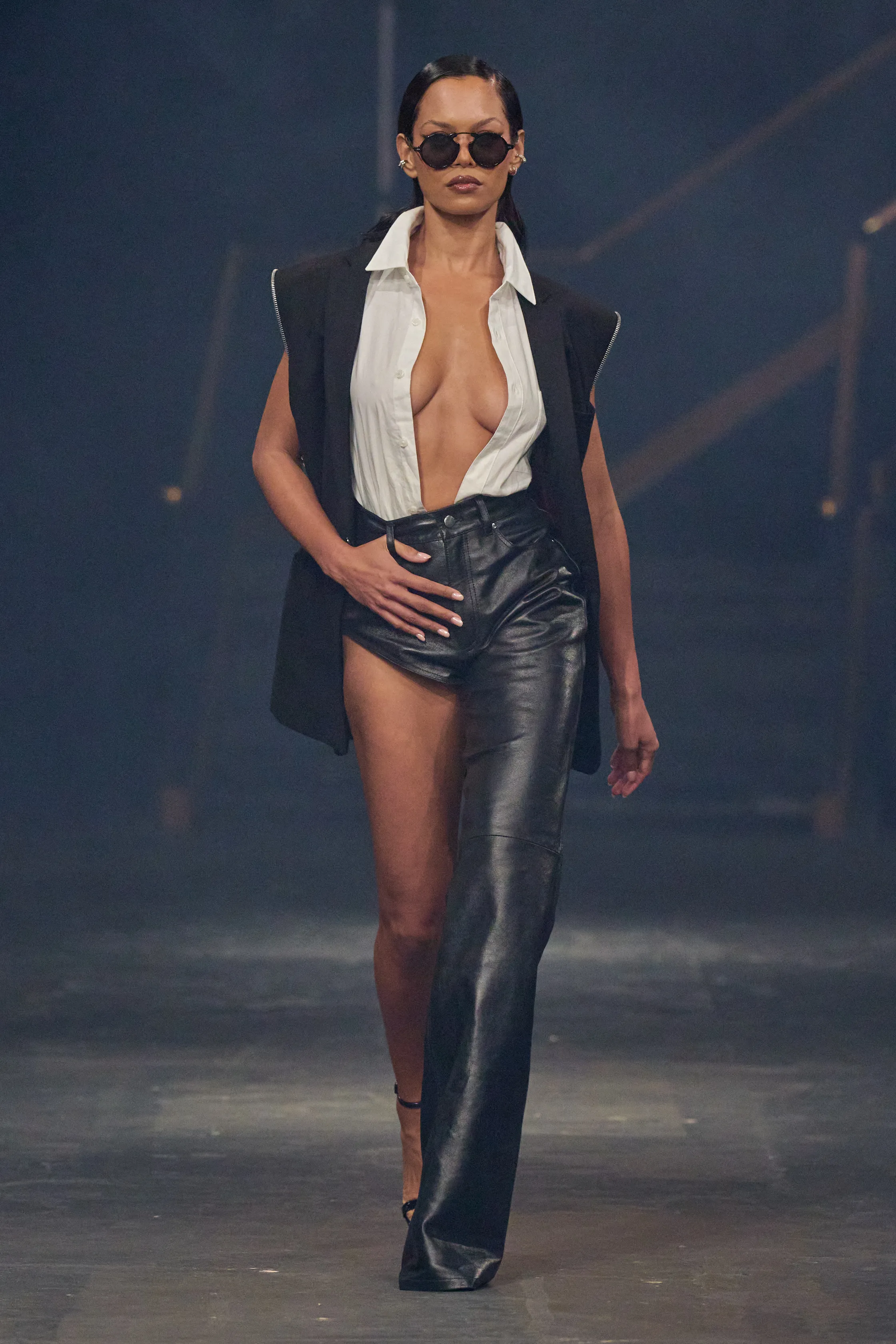
Recently in New York, the singer walked Romeo Hunte’s Ivy Noir fashion show during New York Fashion Week presented by Saint & Citizen. A photograph of her from the presentation later appeared in Vogue.
It was a simple image, but an instructive one.
Seen outside the context of a music video or performance, Lavaud still registered immediately as an artist. There was no dramatic transformation required.
That quality may prove important as her career develops.
Lavaud’s music has always carried a strong sense of identity. Her voice is warm and controlled, often intimate without becoming fragile. The visual language developing around her seems to follow a similar instinct.
There is femininity, but little excess.
There is glamour, but it does not overwhelm the person wearing it.
And increasingly, there is an awareness that image can deepen the music rather than simply decorate it.
Her appearance in Ivy Noir gave that idea a new context.
Romeo Hunte’s show was the occasion, but the more interesting question concerns what the appearance says about Lavaud herself.
She is becoming easier to imagine across different creative spaces.
Music remains the foundation, but fashion gives her another language through which to communicate taste, mood and perspective. That does not require her to become a fashion personality. It requires something more useful: consistency.
The artists who build lasting visual identities rarely do so through one dramatic moment. Instead, the identity accumulates slowly.
A photograph.
A silhouette.
A video.
A performance.
A designer relationship.
Eventually, an audience begins to recognize the sensibility before it recognizes the credits.
Lavaud is still early in that process, which makes the current moment interesting.
The Vogue image circulated without much explanation attached to the woman in it. In one sense, that is simply how fashion-week imagery moves. Faces travel quickly. Context often arrives later.
But for Lavaud, it also creates a useful inversion.
People may encounter the image before discovering the artist.
Then the music fills in the picture.
That relationship between sound and image feels particularly relevant to where she is headed. Contemporary artists are increasingly expected to exist across several visual and cultural spaces at once, but the ones worth following tend to resist making those spaces feel disconnected.
Lavaud’s challenge is not to appear everywhere.
It is to make each appearance intention and feel as though it belongs to the same person.
New York Fashion Week offered an early example of what that can look like.
She stepped briefly into another creative world without losing the identity she has been establishing through music.
That is a more meaningful development than simply being photographed at a fashion show.
It suggests an artist beginning to understand how she wants to be seen.
And as Lavaud’s profile grows, that sense of authorship may become just as important as visibility itself.
Stay up-to-date with exclusive events and content.


