F L A U N T


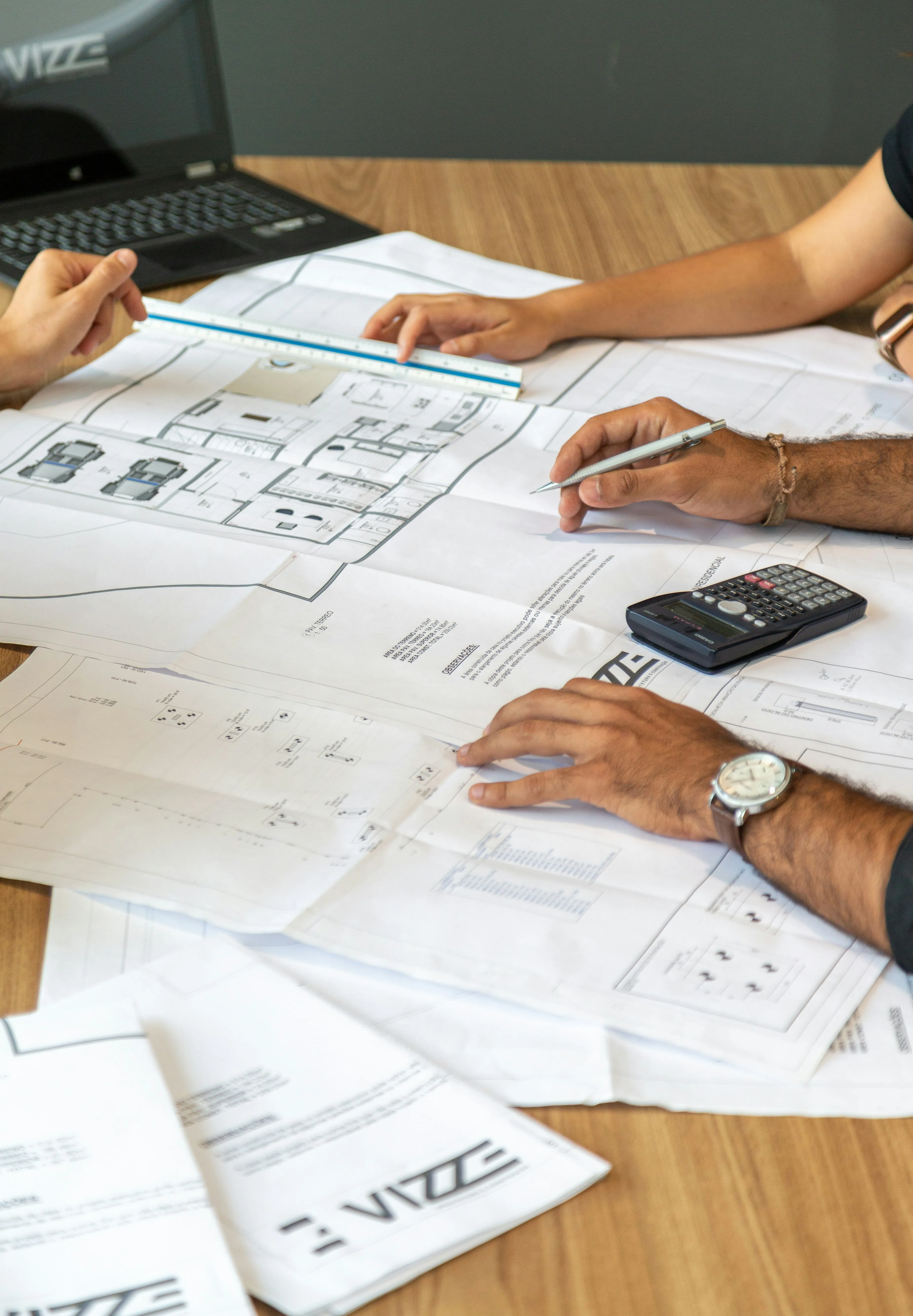
With the current housing shortage, architects and urban planners are being pushed to work with limited resources, time, and strict budgets in order to supply quickly and profitably. It's clear that this shift toward profitability has come at the cost of aesthetics, and it begs the question: what legacy are today's architects leaving for future generations?
Laura Caicedo, an architect-turned-urban planner, graduated from Colombia's Universidad de Los Andes before earning a Master of Architecture in Housing & Urbanism, with distinction, from the Architectural Association in London. She later added an MBA with a STEM designation from Georgetown's McDonough School of Business — a combination that gives her rare fluency in both design and the financial logic that actually shapes cities. She now serves as Real Estate Manager and Urban Planner at Hayat Brown, and her project history spans a $200 million, 1,000-home master plan in London, a 50-hectare residential development in Bogotá, and an internationally award-winning chapel. Throughout her career, she's operated on both sides of that equation — as designer and as dealmaker.
Caicedo is a firm believer that architecture has the power to improve people's lives, and that cities should serve the people who live in them first. In that sense, building efficiently is necessary to meet demands.
"The 5-over-1 apartment building is a cost-effective way to deliver housing under current conditions. And given the housing shortage that most of our cities face, this is a reasonable approach. Delivering homes people can afford matters more than novelty."
Still, she draws a hard line between structure and experience, and doesn't let developers hide behind the cost argument. "Buildings may share a structure, but the experience of them is decided at a different level" — how the ground floor meets the street, how a building relates to public space. "There is a universe of decisions that don't have to break a pro forma." Efficiency and character, she insists, aren't mutually exclusive; the constraint is real, but it's no excuse.
Caicedo takes a holistic view of the trade-off. Emphasizing speed and cost alone, she argues, is shortsighted: "It is shortsighted when speed and cost become the only measures of success, because buildings outlast their budgets, and whatever we save today gets paid by whoever lives with that building for the next 50 years." But she's just as convinced that efficiency isn't the enemy: "Projects that aren't delivered help no one, and given the housing shortages we are facing, producing efficiently matters."
Looking ahead, Caicedo believes the next era of urban design will be defined less by singular buildings than by aligning capital, public priorities, and design quality across entire districts — "where the whole is more than the sum of the parts." She believes design and finance need to be in the same room from the start, with designers brought to the table when a deal is structured, not after. "If both sides could speak each other's language, we'd make better trade-offs, deliver better projects, and build better cities."
Stay up-to-date with exclusive events and content.


