F L A U N T


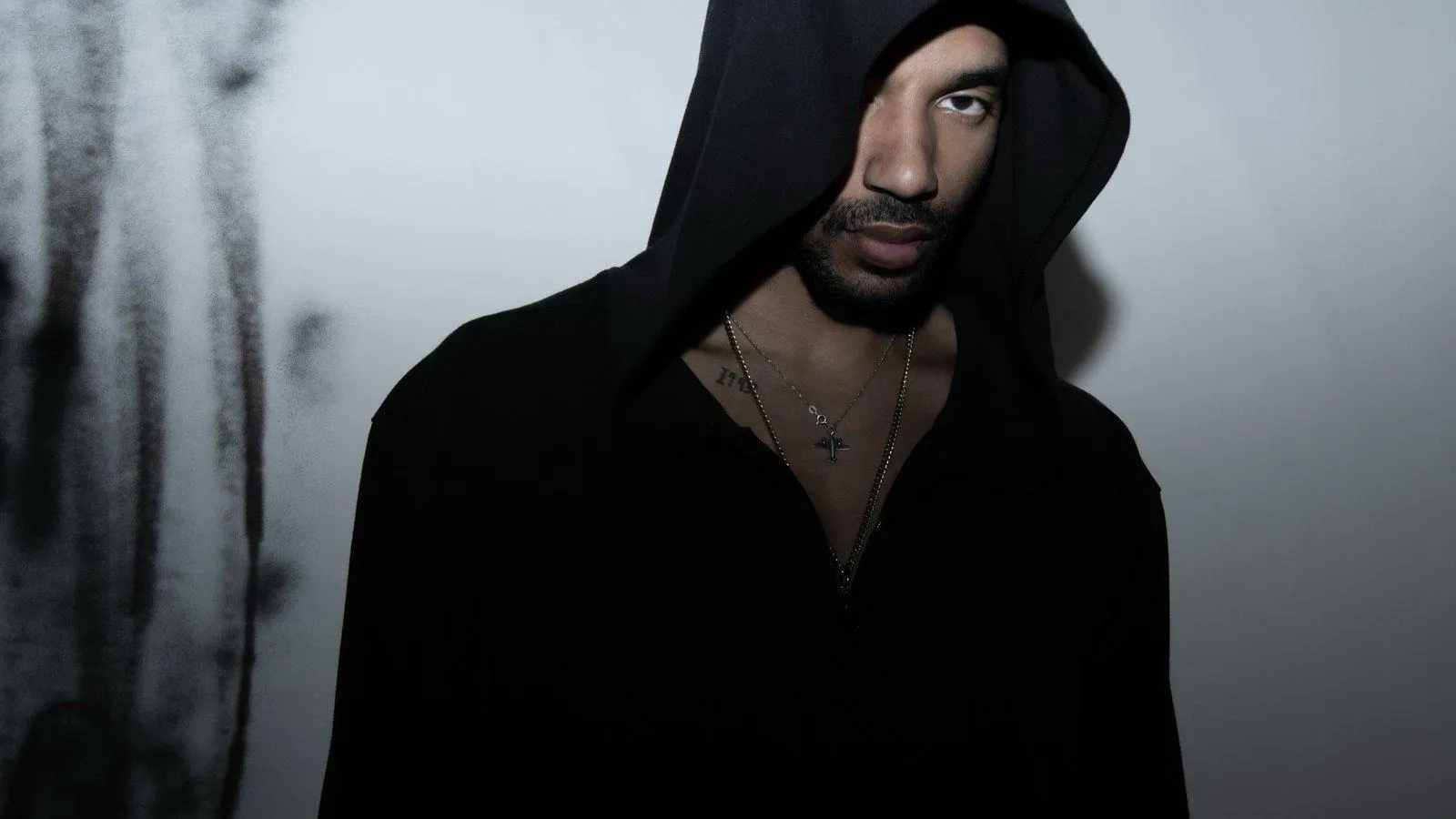
Jet Le Parti exists along a fragmented trail of press clippings—Hypebeast, Forbes, The Village Voice—a public outline mapped out long before any actual encounter. To track him is to meet a subject defined by a shifting range of titles: painter, poet, composer, DJ, and gambler, all moving over the same worn shoes across a dozen distinct subcultures. Critical focus inevitably lands on the milestone of his practice: To Be Hung, a canvas that has traveled as extensively as its creator.
Executed between 2021 and 2022, the painting anticipated the exact reality subsequent years would demand. Its mixed media bypasses conventional pigment: crushed Adderall is ground directly into the central figure’s face, layering a pale blue stimulant over deep blue dye. This choice points directly away from standard artistic romance toward a raw, late-night prescription culture—the substance of hyper-professional environments and paranoiac keeping-up.
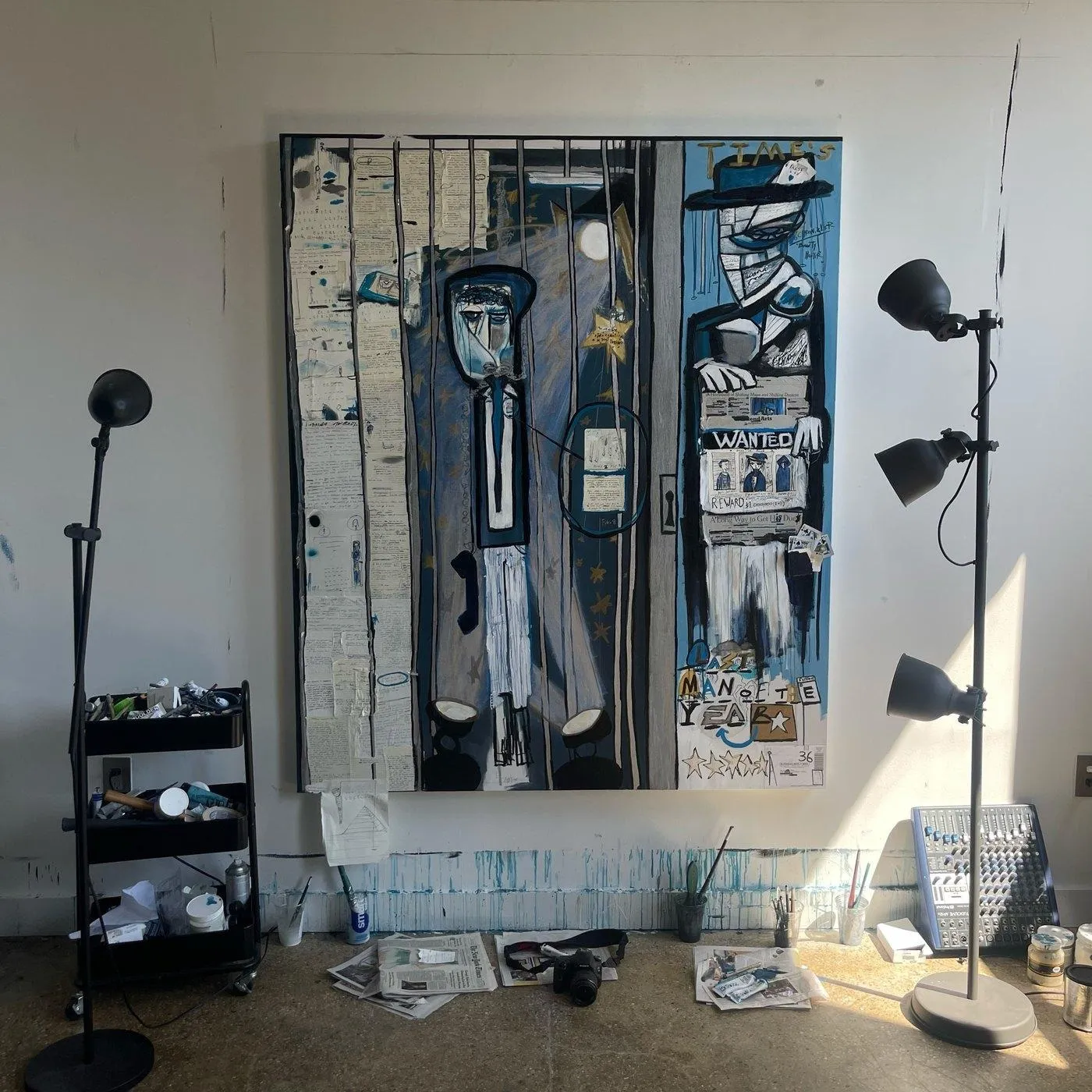
The canvas holds two distinct figures. The first is hung up—not hanged—by a domestic telephone cord coiled tightly around the neck, the receiver dangling uselessly below outside a prison wall. Clad in a sharp New Yorker-look suit and tie, he appears under active pursuit, caught in a harsh fluorescent spotlight while reading Time magazine with a deck of cards tucked into his coat pocket.
The second figure is the press itself: a mummified reporter edging in from the margin, holding up repurposed news. The clotted headlines feature the text “A Long Way to Get His Dues” alongside a wanted poster bearing the hung figure’s own face: REWARD $1,000,000 (1+1). The background is a collage of repurposed newspapers, extending a wall of frantic white noise for which the reporter acts as the on-the-record source.
The piece acts as bait, hook, and capture — reading almost as a suicide note on the condition of being turned into news. The figure on the linen is both cage and product of his environment, entirely media-aware in the moment of his capture.
The iconography surfaced from years of private notation in his Penn notebooks. Hangman games sat in the margins alongside fragments on depression, genius, melancholia, and art; his philosophy and cognitive neuroscience coursework absorbed directly into the record. The hangman, the press, and the cards climbed out of those notebooks and onto the canvas years later. While the broader daily toolkit relies on house paint, graphite, ink, aerosol, oil, and wax, the Adderall, newsprint, and fluorescence are hyper-specific to this trap.
The soil behind this imagery is a map of constant transit. The trajectory originates in a small Georgia town, where the American South enters as inherited structure and cross-state bus route. Division I baseball offered an early escape hatch — a discipline he played and then abandoned, establishing a baseline for variance long after the game itself ended.
From there, the pavement shifts to Philadelphia and the University of Pennsylvania. The psychological condition maps bred in academia served as a natural launchpad into the city’s underground nightlife. His weekends unreeled through Strawberry Mansion and Kensington—the latter an infamous open-air drug market that claimed over fourteen hundred lives in 2022 alone.
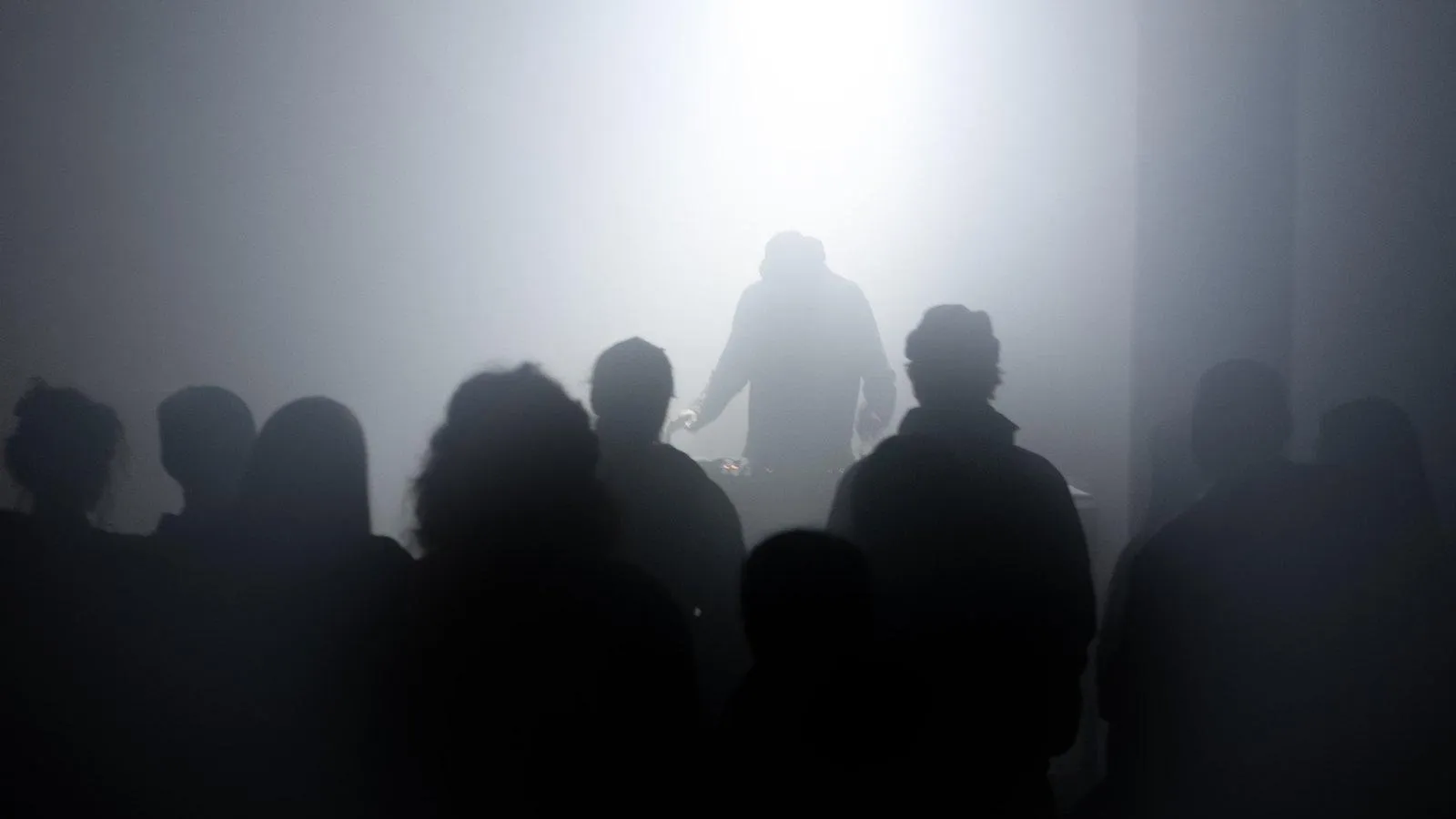
Moving north to New York, Le Parti colonized vacant warehouses across Bushwick and Maspeth, hosting the underground studio parties out of which 121.radio emerged. The loop later traced through Hollywood and dropped into Skid Row, where the after-hours sanctuary Play operates under his Base 36 banner, alongside international anchors established in London and Berlin.
The disposition is post-rupture: the break with the conventional dream happened privately years ago; what remains is navigating the aftermath without performing conversion or protest. Beneath the canvas lies a framework of survival — the attempted murder of his brother, the incarceration of close friends, and an impatience with how slowly others reach conclusions he has already outpaced.
The shift from the warehouse floor to the card table wasn’t a pivot from art to vice; it was a side-effect of navigating the underground. Without representation, without a dealer, without a gallery on standing call, an artist self-funds through whatever the geography offers. The geography offered nightlife. DJ sets, warehouse parties, after-hours rooms — the same Bushwick / Maspeth / Skid Row circuit that ran the broadcasts (later organized under the RP.1 label) and the studio shows also ran the games. The card rooms sat one door over from the booths he was playing, run by the same people who came to the openings. Cards entered the rotation the way DJing had: as another unconventional means of getting a dollar with the upside of an immediate payout, sized to a life that couldn’t wait for the next institutional cycle to clear.
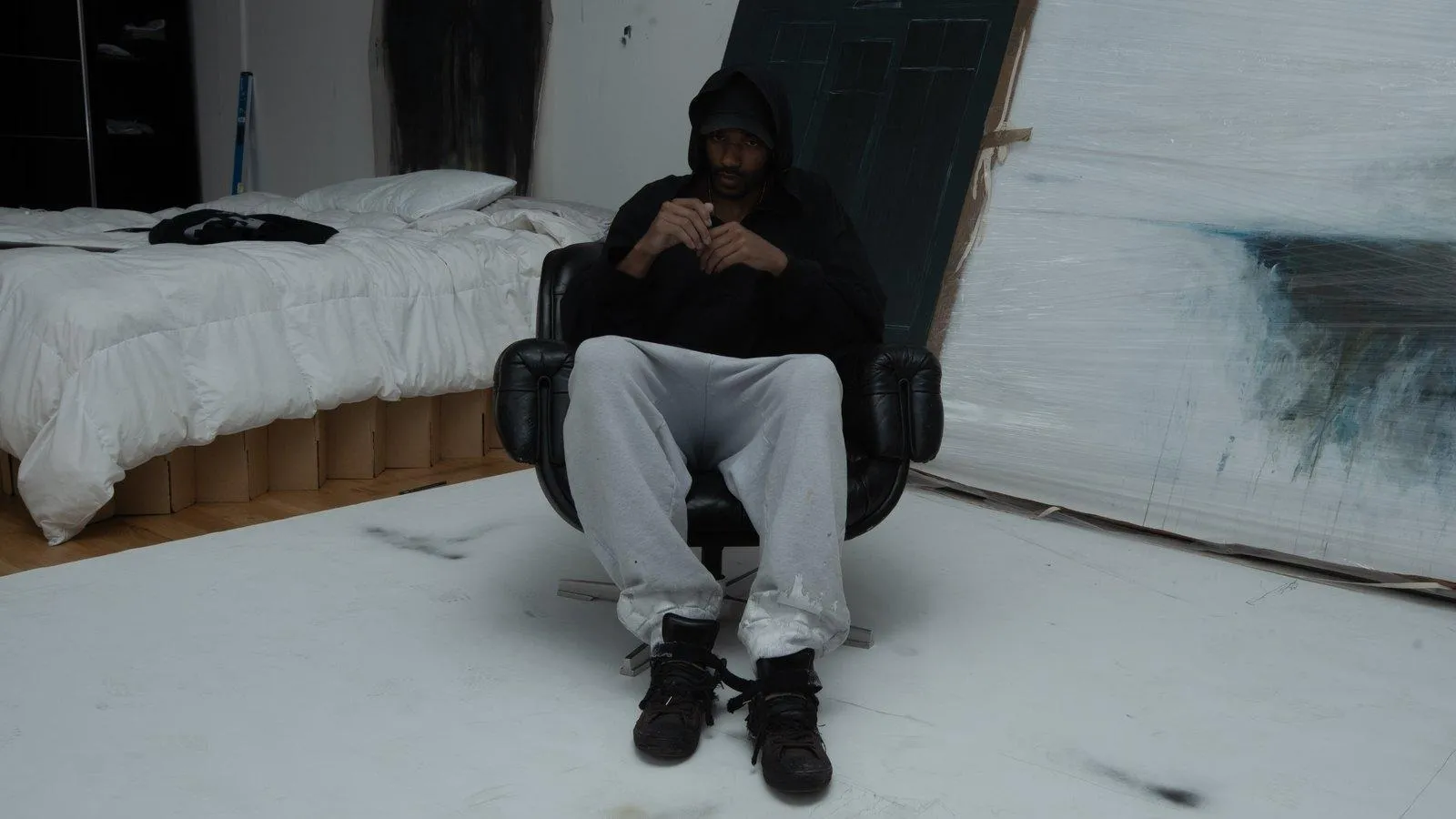
When we meet, it is in a utilitarian back room above a familiar venue — water bottles on the floor, a mattress on a cardboard base, an Italian leather chair pulled into the center of the room, a half-wrapped canvas leaning against the wall. The space is configured for work, not exhibition. He arrives in the uniform: black hood pulled up, paint-stained sweats, worn Margiela high-tops on the white floor. He sits forward with sleeves pushed up, the conversation already underway before the door fully closes. He speaks as he paints: economically, expecting the listener to keep pace. When you hear him clarify the reality behind the lifestyle, any romanticized theory about his choices quickly evaporates:
“You don’t always have time to wait for your next check.”
This is the line that does the work. In stretches of art-market downturn, between exhibitions, during the long flat periods every independent artist hits before equity catches up to practice, the table was the parallel income. Not stint, not phase. The cards followed him through Los Angeles, Las Vegas, and Atlantic City, and they followed him forward — the engine keeping the lights on while the longer-term value of the canvases was still being recognized. He was professional in the only sense the rooms recognize: he was surviving on it.
“When you’re professionally unemployed, you have time to find hobbies.”
The takeaway isn’t a formula; it’s a capacity for exposure. Chance, fate, risk, reward — the daily vocabulary of the life on the road, transposed from the booth and the canvas to the felt.
“You can’t create anything worthwhile in life if you can’t tolerate risk.”
A photograph from his feed posted in June 2024 captures one of these weekends: a Borgata table stacked with $1,000 and $5,000 chips alongside a loose hundred-dollar bill. The stakes expose the room, sitting tiers above standard play. He jumped stakes the way he crossed borders — not from a carefully insulated bankroll, but from a comfort with being out of his depth.
Pushed on whether he rates his own game, his denial reads less as modesty than as craft. In these circles, looking too sharp is the fastest way to get frozen out of the most lucrative rooms:
“Honestly, I’m just a fish haha.”
The rooms don’t keep public records, and the figure is not the kind who shows his cards to the press. What makes the claim real is the work and the words — the deck of cards in the painting’s pocket, the Borgata photograph, and the lines about risk, tolerance, and waiting for the next check. The gambling didn’t stop when the art equity began to compound. It came up alongside him, and it stayed.
The silver line materialized later, from what the canvases had already processed. Reign 925, a collaborative body produced with artist L.S. Toy, re-contextualizes the disposition in a different material register. Where To Be Hung relied on chromatic aggression — toxic Adderall blue, fluorescent spotlight, deep dye — Reign 925 distills what remains after the color burns out. The number marks the silver standard; the title carries the rest. The series spans graffiti, stencil, silkscreen, plaster, acrylic transfers, and photography alongside painting — serial and tactile where the canvases are singular. Same frequency, the heat of the human figure removed.
His writing extends the posture. Originally featured in Converting Culture before publishing in full via Base 36 under the abbreviation J.L. Parti, the twenty-two poems of Every Day Is a Countdown received a comprehensive analysis in The Village Voice in April 2026. What lingers is a shared refusal across verse, paintings, and silver to perform conversions or protests. He remains too uncompromising for the celebrity machine, too organized for the solitary-genius trope, and too anchored to be reduced to a standard industry box.
He navigates spaces alongside young Hollywood’s most visible icons while remaining a fixture in underground rooms that culture collectively agrees never to photograph — the exact same disposition under different lighting. It aligns precisely with what market advisors term the “grey chip” market — a designation for artists decoupled from the traditional art ecosystem whose works circulate temporally, intentionally bypassing public visibility. The result is a body of work that has moved largely through private channels, climate-controlled storage, and the kind of secondary infrastructure the public never sees:
“I’ve probably shown in freeports more than galleries at this point haha.”
The joke lands because it’s accurate. The canvases have spent more time in the discreet international storage infrastructure where blue and grey chip work waits between transactions than in public-facing rooms with a guestbook. The rare exception breaks through only when the secondary market reaches for it directly.
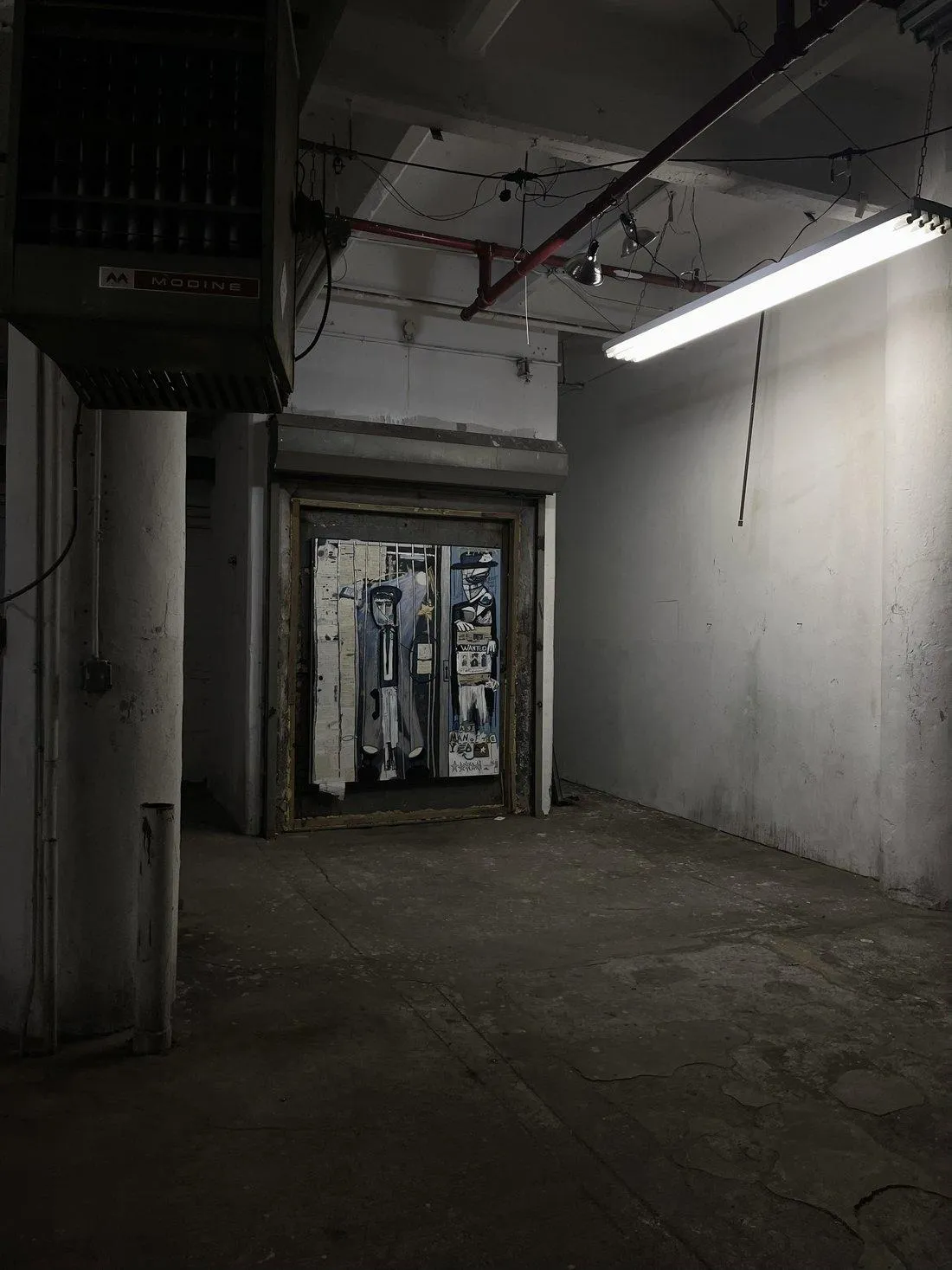
During a rare institutional appearance in October 2023, To Be Hung surfaced as Lot 218 at Sotheby’s Contemporary Discoveries in New York. Bidding climbed rapidly toward $420,000 before the work was abruptly withdrawn prior to the final gavel. The resulting market noise offered a fleeting glimpse into a valuation left unrealized—a financial numbers game tied to a face, while the artist himself remained elsewhere, unmoored from the transaction.
The physical object quietly holds whatever structural turmoil was poured into its fabric, utterly indifferent to who shows up to claim it. On the linen, the figure remains permanently anchored: bound by his own telephone cord, studying the news of an era he has already outrun, the Adderall still embedded in his skin, the cards still in his pocket, illuminated by a spotlight directed squarely at his own chest. The painting is no longer the event itself. It is the clinical record of what was already set in motion when it was painted, and what continues to unfold now—the long way home.
Stay up-to-date with exclusive events and content.


