F L A U N T


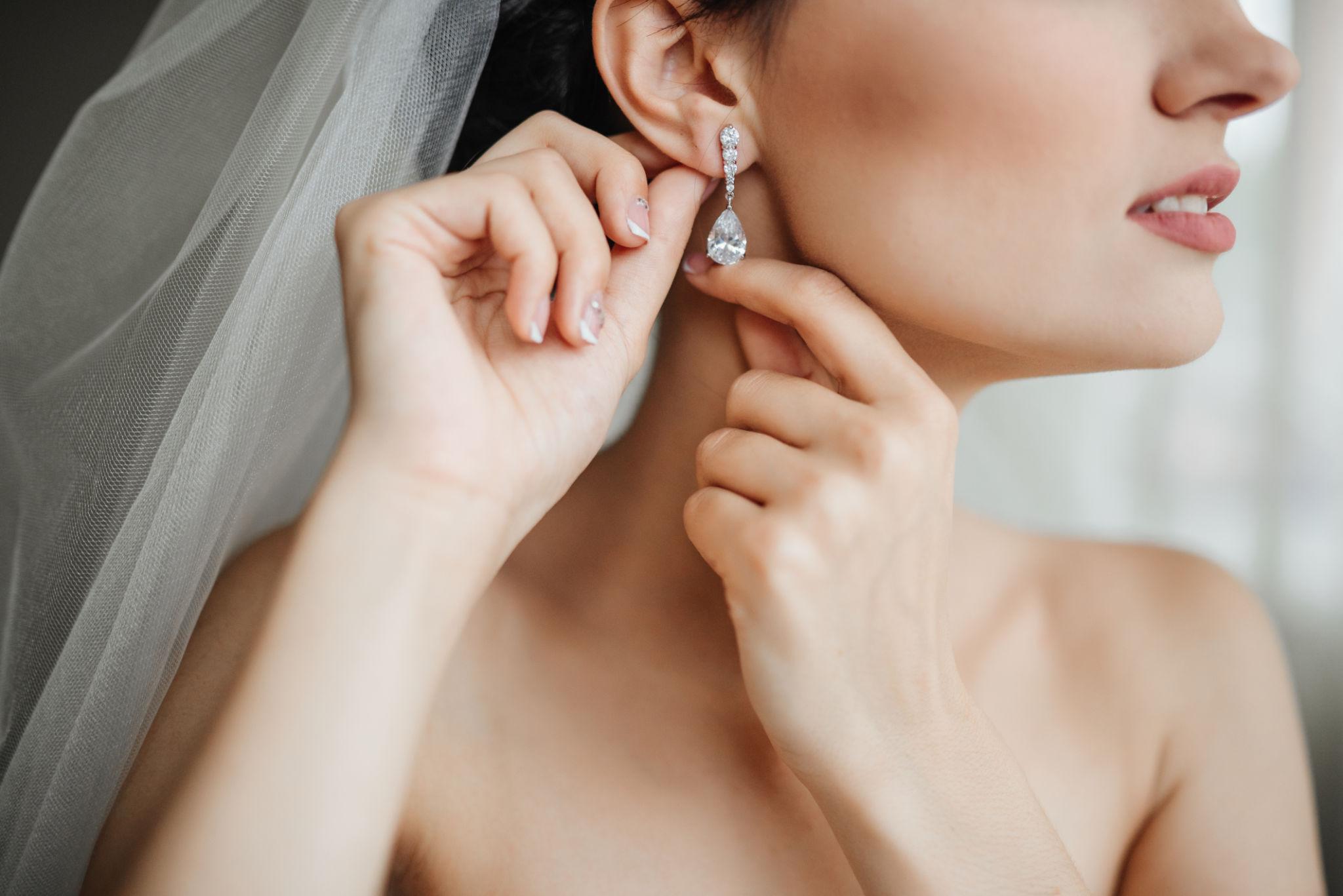
Choosing jewelry for a wedding takes more than personal taste. The right pieces strike a balance between appearance, comfort, and practicality, all while working in harmony with the outfit as a whole. Details like neckline shape, hairstyle, dress embellishment, metal tone, and the sheer number of hours the jewelry will stay on all shape what actually works on the day. Earrings make a good case study here: a single pair of bridal earrings can shift the entire visual weight of an outfit, either drawing the eye upward toward the face or clashing with an elaborate neckline. Thinking through these interactions—rather than simply picking favorite pieces—leads to choices that look intentional and feel comfortable from the morning's preparations all the way through the final dance.
Before settling on any single piece, think about whether the clothing itself is minimalist, heavily embellished, structured, romantic, vintage-inspired, or modern. Detailed fabrics—lace, beadwork, sequins, appliqué—already carry plenty of visual weight, so simpler jewelry tends to complement them better than piling on more ornamentation. A clean, unadorned silhouette, on the other hand, can comfortably carry a stronger accessory, such as a statement necklace or bold earrings.
Choose a focal point before choosing individual pieces. Instead of giving a necklace, earrings, bracelet, and hairpiece equal billing, decide which one feature should draw the eye, then let the rest play a supporting role. This idea of proportion and visual hierarchy keeps an outfit from feeling cluttered or like its pieces are competing with one another.
Certain neckline shapes naturally pair with particular jewelry styles, though these are flexible guidelines rather than hard rules. Strapless and sweetheart necklines often work well with necklaces, pendants, or statement earrings, depending on where the focal point needs to land. V-necks generally suit pendant shapes that echo the neckline's angle. High necklines or heavily decorated bodices often look best with minimal jewelry—or none at all—so the garment's detail can stand on its own. Off-the-shoulder styles benefit from pieces that frame the exposed neckline without crowding it.
Hairstyle has a big effect on how earrings and other face-framing jewelry actually read. An updo exposes the ears and neck fully, making even delicate earrings more prominent, while loose or braided hair may partially cover the same pieces, changing their impact entirely. Veils, headpieces, and fastenings can also snag on dangling earrings or hairpins if they haven't been tested together beforehand. A practical approach is to try the full hairstyle, veil, and jewelry combination ahead of time—ideally at a hair trial—to confirm nothing overlaps awkwardly or catches where it shouldn't.
Yellow gold, white gold, rose gold, silver, platinum, and mixed-metal combinations each read differently against skin and fabric. Coordinating jewelry with clothing details, wedding rings, shoes, or hair accessories can create a sense of cohesion, though not every metal element needs to match exactly. Colored stones can add meaningful contrast or personal significance, but stacking several competing colors can quickly become distracting.
Lighting and photography matter too: highly reflective metals and faceted stones can create glare or hotspots in photos, while matte or brushed finishes tend to photograph more evenly. As one jeweler specializing in bridal accessories has pointed out, styling guidelines exist to simplify decisions, not replace personal preference—sentimental value or a treasured heirloom can reasonably outweigh a strict color-matching rule.
Comfort and material safety matter just as much as appearance. Before committing to jewelry that will be worn for hours on end, check what it's actually made of. Earrings and earring backs are a common trigger for reactions in people sensitive to nickel; dermatology guidance typically recommends nickel-free materials or alternatives such as surgical-grade stainless steel, platinum, sterling silver, or suitable solid gold [1][2]. Labels like "hypoallergenic" aren't strictly regulated and can mean different things depending on the brand, so looking into the specific materials is more reliable than trusting the label alone.
Test any unfamiliar jewelry well before the event rather than wearing it for the first time on the big day itself. If irritation, swelling, blistering, or ongoing discomfort shows up, remove the jewelry and consult a dermatologist or other qualified healthcare professional rather than trying to self-diagnose.
Weight, length, fastener security, and the likelihood of snagging all affect how jewelry holds up during a long event filled with sitting, dancing, travel, and endless photographs. Secure closures reduce the risk of losing an earring or bracelet, and a small emergency kit—spare earring backs, a soft cloth, a safe storage pouch—can keep minor mishaps from turning into something stressful.
Before the event:
- Wear-test each piece for several hours.
- Check that fasteners close securely.
- Photograph the full outfit under different lighting.
- Pack backup components.
- Confirm jewelry doesn't interfere with clothing or hair.
It's worth asking whether a piece will still be wearable after the ceremony ends. Heirlooms, meaningful gifts, birthstones, or versatile designs that pair easily with everyday clothing tend to offer more lasting satisfaction than something trend-driven and suited to only one outfit. Choosing a simple, adaptable necklace that works for the ceremony and future anniversaries alike, for instance, can feel more rewarding in the long run than a dramatic piece with limited use beyond the wedding day. That lasting value might come from emotional significance, craftsmanship, versatility, or simple affordability—there's no single standard that defines the right choice.
Proper care depends on the metal, stones, plating, and construction of each piece, so following the maker's specific instructions is a safer bet than assuming one cleaning method fits everything. General precautions include taking jewelry off before swimming, showering, exercising, or handling household cleaners, making sure pieces are fully dry before storage, and keeping items separate in a clean, fabric-lined container to avoid scratching or tangling [10]. Abrasive cleaners or home remedies can damage delicate stones or plated surfaces, so it's worth having valuable, antique, or structurally fragile pieces inspected professionally.
Key takeaway: Identify the outfit's focal point, factor in neckline and hairstyle, settle on a compatible metal and color palette, confirm comfort and material safety, wear-test the full combination, and have storage and backup supplies ready to go. Following this sequence cuts down on impulsive purchases and keeps decisions grounded in the realities of the actual event.
Successful wedding jewelry doesn't demand strict matching or expensive materials—it calls for thoughtful coordination between visual balance, comfort, safety, and personal meaning. Once the complete outfit has been tested under realistic conditions, the best choice is usually the one that supports the wearer instead of competing for attention.
Stay up-to-date with exclusive events and content.


