F L A U N T


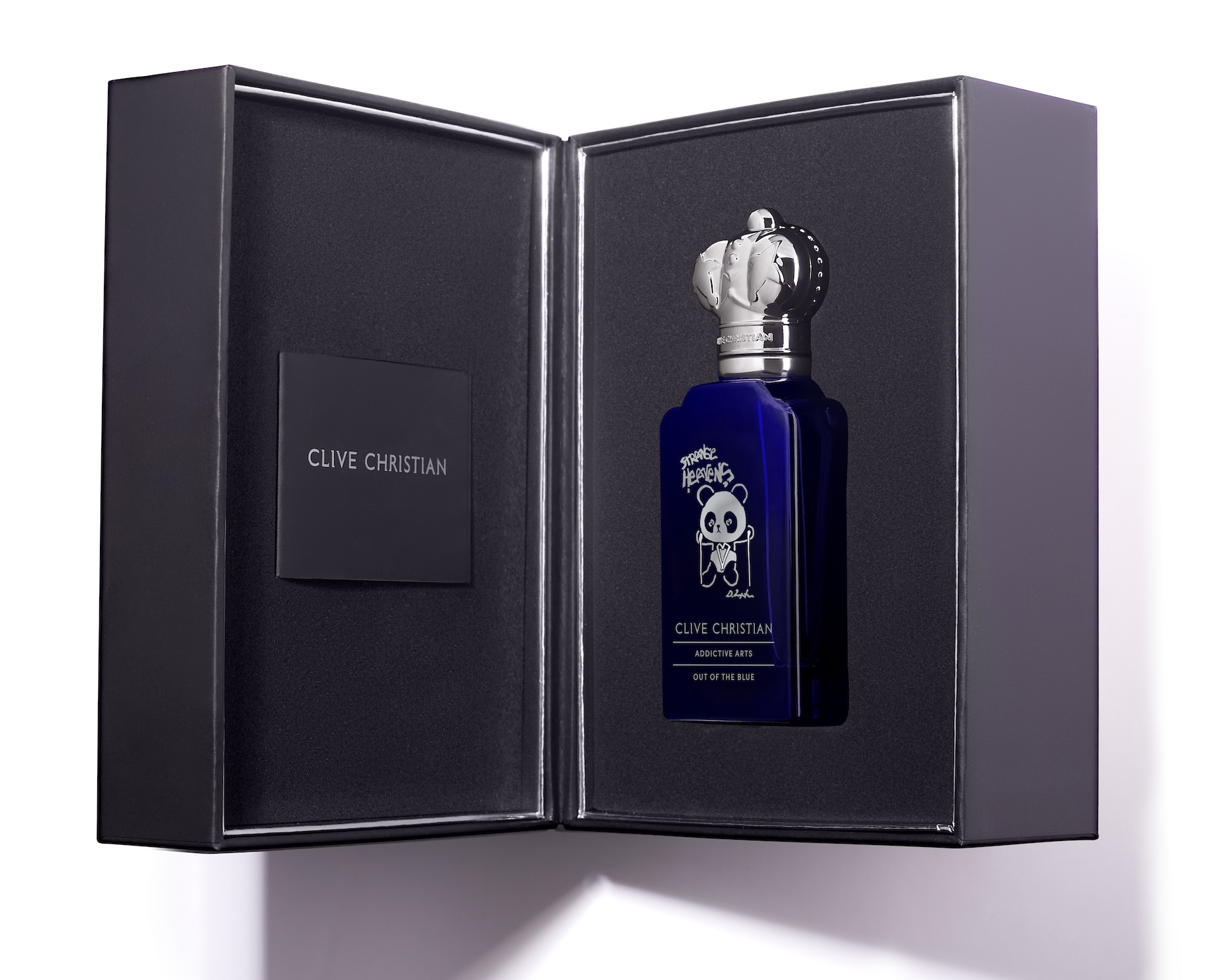
The first time I sprayed Clive Christian's Strange Heavens - Out of the Blue on the back of my hand absentmindedly, it was a Tuesday afternoon, the bottle was sitting on my desk and I was meant to be doing something else. An hour later, I was still turning my wrist toward my face like I was trying to identify a sound.
It begins with coffee, rich and freshly ground, the smell of a morning you actually looked forward to. Aniseed runs cool beneath it, pink pepper flickers across the surface, and for the first minute or so, the whole thing is beautifully, unapologetically bold. Then jasmine blooms straight through the middle of it, lush and unhurried, and everything softens into something warmer and considerably more seductive.
Orange flower comes in just behind, and by that point, I had given up on working out what family any of it belonged to. Gourmand is the easy word. It is not quite right. The sweetness is there for a moment, genuinely lovely and thankfully fleeting, before the fragrance moves on to what it really came to do.
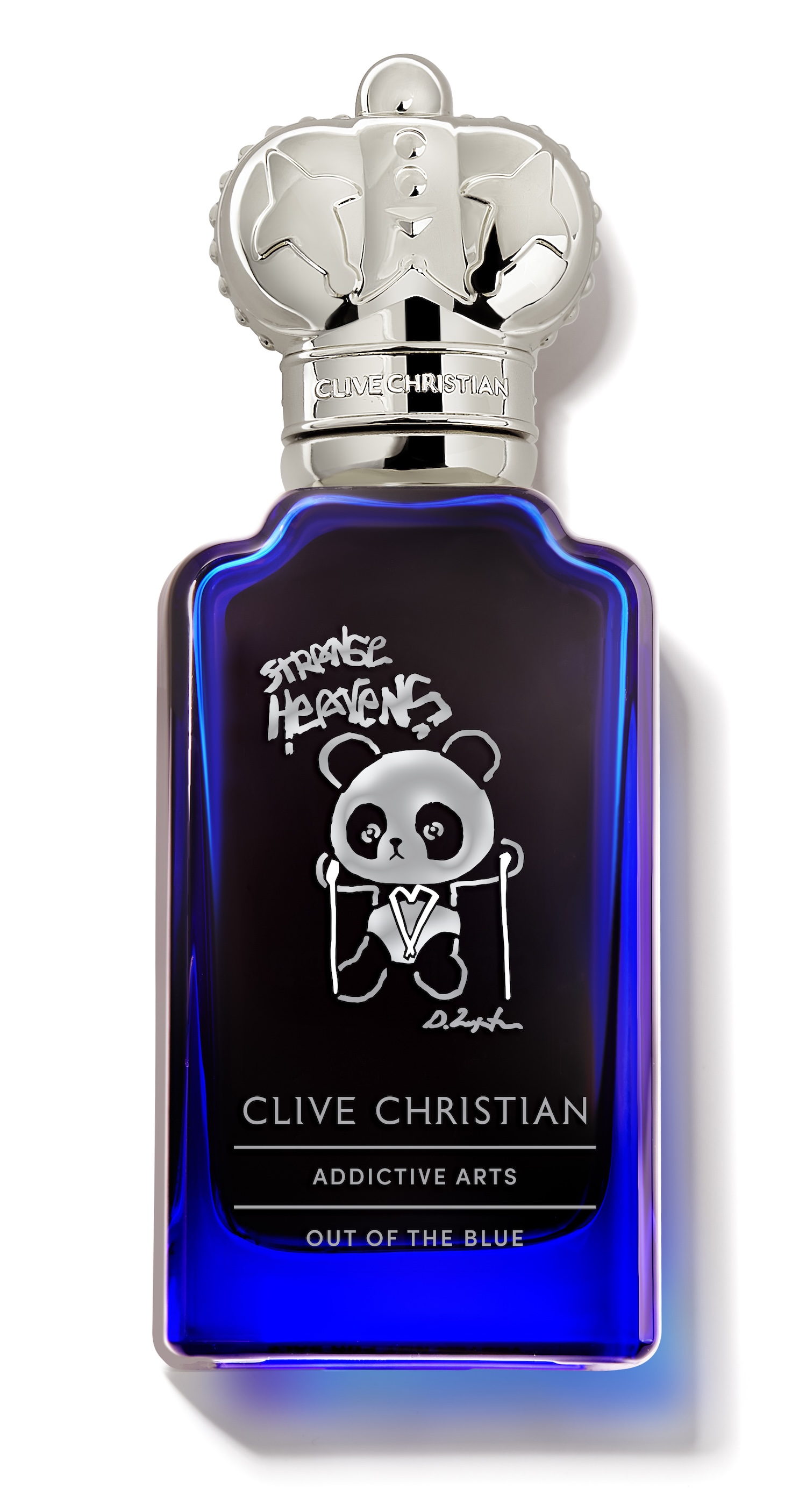
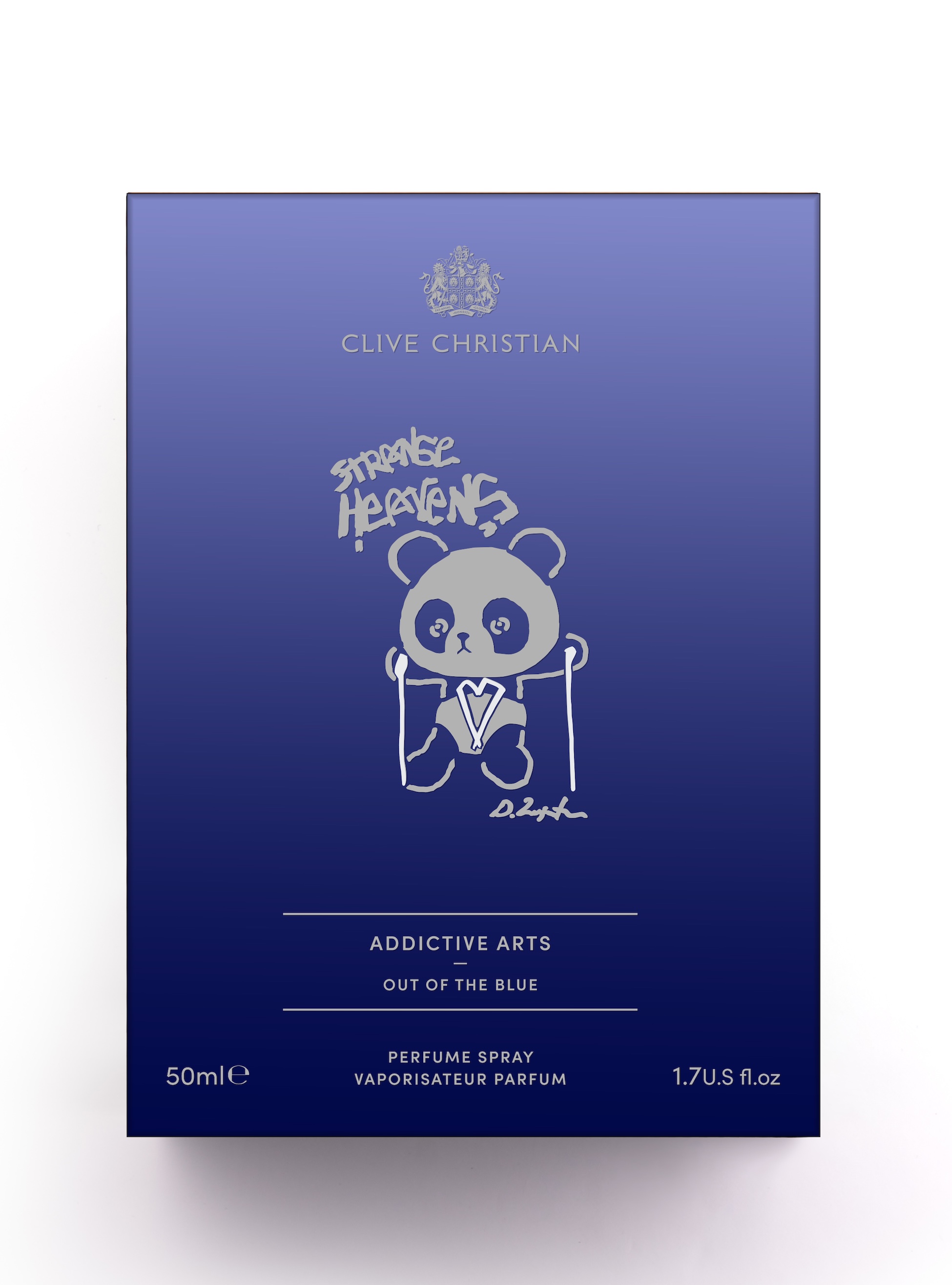
The bottle tells you this is coming, if you are paying attention. Clive Christian’s flacon is one of the most recognizable objects in perfumery, a heavy faceted decanter capped with the emblem Queen Victoria permitted the original Crown Perfumery Company to use. For Strange Heavens, it has been sunk in cobalt, deep and saturated, the exact blue that Victorian chemists used from the 1860s onward to warn people who could not read the label of poison. And sitting on that cobalt, small and white and completely unbothered, is a hand-drawn panda by Domingo Zapata, whose signature runs across the flacon and the packaging as well.
Written down, it sounds ridiculous. A royal crown, a lineage that reaches back to Victorian London, and a cartoon bear. In reality, it brings a sense of humor, which is a quality luxury fragrance is often too nervous to attempt.
Zapata, a Mallorcan painter who left a finance career for a studio and sold his first serious canvas to George Soros in 2005, has talked about the collaboration in terms of panda heaven, a dream state where strange things are allowed to happen. It sounds like a throwaway line until you wear the fragrance for six hours and realize he was describing the drydown.
Which brings up the number everyone mentions and few people explain: Twenty-five percent perfume oil concentration.
Most of what gets sold as eau de parfum sits somewhere between twelve and eighteen. Twenty-five is a different animal. It does not launch off the skin and evaporate in a blaze of top notes. It settles slowly, the way heat settles into stone, and it keeps releasing new detail for hours. What I wore out of the house in the evening was not what I could still smell on my collar the following morning, and both versions were good.
The heart is where the house shows its hand. Jasmine grandiflorum and orange flower are wrapped around the proprietary Addictive Fusion accord of wormwood, cocoa leaf, and poppy that gives the Addictive Arts collection its signature. That accord is built through headspace capture, the perfumer’s art of reading the air around a living thing and using it as the blueprint to build that scent again.
By the base, whatever sweetness you thought you detected at the start has gone somewhere else. Cocoa absolute is earthy and bitter long before it is sweet. Vanilla caramel warms it. Smoke keeps it from tipping into confection. What is left is dense, dark, and quietly sensual, though not in the syrupy way that word usually gets deployed in fragrance reviews. It reads as private. It reads as adult.
That tension between excess and restraint is the house’s whole inheritance. The lineage starts in Victorian London with William Sparks Thomson, a corsetier whose garments were tight enough to make his clients faint, which led him to lavender-smelling salts, which led to his first perfume, Crab Apple Blossom, in 1865, and from there to The Crown Perfumery Company.
It was reimagined under Clive Christian OBE, and the Original Collection arrived in 1999. Since then, the name has occupied a corner of perfumery where rarity and concentration are not selling points so much as a baseline condition.
Out of the Blue is the third chapter in the Addictive Arts collection, following the two Jump Up and Kiss Me compositions. Fifty milliliters, $610, and currently sold out in the United States. None of which is really the reason to care about it.
The reason to care about Out of the Blue is that it is a genuine pleasure to wear. Coffee gives way to jasmine. Cocoa meets smoke. Something sweet appears, changes its mind, and leaves. Two people asked me what it was within a week, which almost never happens anymore, and neither of them guessed anything close.
And underneath all of that seriousness, on the front of one of the most solemn bottles in the business, sits a small white panda with nothing to prove.
Stay up-to-date with exclusive events and content.


