F L A U N T


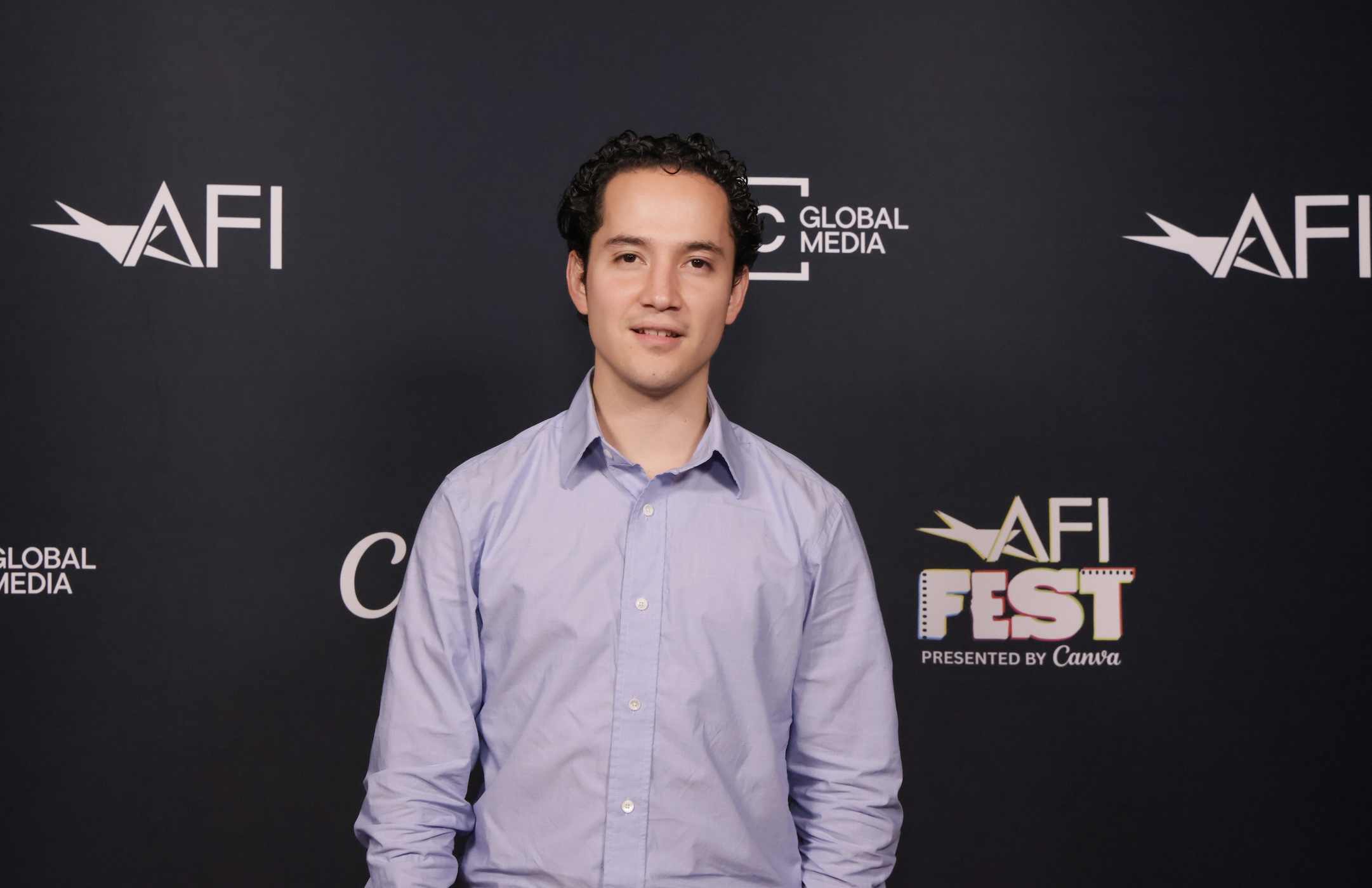
For Claudio Del Pino Mercado, filmmaking begins with connection.
Long before he found his way onto sets in Los Angeles, the Guadalajara-born producer and writer was fascinated by stories. As a child, he was a voracious reader, drawn to the evocative worlds of Charles Dickens and the elaborate adventures of Jules Verne. Those books prompted him to begin writing stories of his own, but it wasn't until high school that he discovered the medium that would ultimately reshape his ambitions: film.
“I’m here for the connection I want to have with audiences through the stories I get to tell,” Del Pino Mercado says.
That desire eventually brought him from Mexico to Los Angeles, where he studied screenwriting at Loyola Marymount University before earning a Master's degree in Producing at the American Film Institute.
The combination proved consequential. Del Pino Mercado developed not only an understanding of how stories are constructed on the page, but also the practical and creative instincts required to bring them to the screen. It is this ability to move between storytelling and production—between the creative idea and the complicated machinery required to realize it—that has increasingly set him apart within the contemporary production landscape.
Over the past eight years, Del Pino Mercado has written two feature-length screenplays and a television pilot, produced or line produced more than twenty projects, and provided production support to more than fifty productions across entertainment and media.
His work spans narrative films, commercials, music videos, micro-dramas and digital productions—an unusually broad range that reflects his versatility across contemporary film, television and digital media.
Few contemporary producers move as comfortably between traditional narrative filmmaking and the rapidly evolving formats reshaping contemporary entertainment. For Del Pino Mercado, however, the format has never been the defining consideration. The story—and the audience's relationship with it—comes first.
What emerges from his substantial and diverse body of work is a distinctive interest in projects willing to challenge familiar forms, whether through cultural specificity, unconventional filmmaking techniques or formats designed for an increasingly fragmented digital audience.
Among those projects is El Frío Que Guía Luz, a narrative short rooted in cultural specificity that has screened at multiple international film festivals, including Oscar-qualifying HollyShorts.
Another, All The Way Gone, was constructed as a sequence shot, deliberately challenging traditional editing structures. The film was selected at the Oscar-qualifying LA Shorts International Film Festival.
Then there is Consume, Consume, Consume, an experimental narrative short that plays with genre conventions and has screened internationally, including at the Brooklyn SciFi Film Festival and Bay of Blood International Film Festival.
Taken together, the projects reveal something increasingly characteristic of Del Pino Mercado's work: an appetite for creative risk paired with the organizational discipline necessary to turn unconventional ideas into finished productions. That combination is not always common. Producing demands pragmatism; storytelling demands imagination. Del Pino Mercado has built his career at the intersection of both.
His work has also moved beyond the traditional festival circuit and into newer models of screen entertainment. Skating to Him, a micro-drama series he worked on, has remained among the three most-viewed shows on Gammatime's streaming platform.
The success of the project is particularly relevant to Del Pino Mercado's broader professional trajectory. While many filmmakers remain attached to conventional distinctions between film, television and digital content, he has demonstrated an unusual willingness to work across formats and adapt his producing instincts to the ways contemporary audiences actually consume stories.
That versatility is one of his defining professional qualities.
His body of work has generated millions of views across YouTube and other streaming platforms, while projects with which he has been involved have earned recognition through international festivals. Yet Del Pino Mercado approaches those accomplishments less as endpoints than as evidence that audiences remain receptive to ambitious storytelling, regardless of where they encounter it.
For him, producing isn't simply logistical. It is fundamentally collaborative.
“Producing entertainment is arduous to an extenuating point, but it’s the collaboration with other artists and filmmakers that makes the journey all worth it,” he says. “Bringing people’s talent together to create a product is such a gratifying experience. It teaches you collaboration, forcing you to rely on others and trust in their abilities.”
That ability to bring creative people together may ultimately be as important as any technical skill a producer possesses.
What distinguishes Del Pino Mercado is not simply the number of productions he has worked on, but the range of creative environments in which he has demonstrated his expertise. From culturally specific independent cinema and technically unconventional shorts to streaming micro-dramas and commercial productions, his career reflects a producer capable of adapting without losing sight of the creative purpose behind the work.
His upcoming slate pushes that versatility further.
Inversion, an ambitious narrative short centered on immigration and marine conservation, will incorporate underwater sequences and professional diving equipment. Beyond its subject matter, the project introduces an unusually demanding production environment requiring the coordination of narrative filmmaking with specialized technical elements.
He's also involved with the second season of Dinner Party, a feel-good web series centered around friends and food and executive produced by Danny DeVito's Jersey Films 2nd Avenue.
And somewhere further behind the curtain is a project Del Pino Mercado isn't quite ready to fully reveal.
Together with several colleagues, he is developing and pitching a reality concept to networks that he describes as “White Lotus meets Survivor meets Below Deck.”
The project remains in its early stages, but its scale has him particularly energized.
“We believe in its potential, and we hope we can take it off the ground in the coming year,” he says.
For someone whose professional work now extends across so many forms of screen entertainment, Del Pino Mercado's earliest inspirations remain remarkably traditional.
He points to Italian filmmaker Giuseppe Tornatore and Cinema Paradiso as pivotal to his decision to pursue filmmaking.
“It was the film that made me want to make movies,” he says. “I didn’t know the way movies could affect you emotionally until I watched this movie.”
Another influence arrived through an entirely different kind of world: George R.R. Martin.
Watching Game of Thrones first showed Del Pino Mercado the scale television storytelling could achieve. Reading Martin's novels afterward only expanded that impression, revealing an even denser universe beneath the screen adaptation.
“The world in the books is even more enveloping, fuller with details,” he says of Martin's work.
For Del Pino Mercado, Martin's trajectory also carries a broader lesson: ambitious ideas are worth pursuing, even when bringing them to life takes years.
That sensibility can be traced throughout Del Pino Mercado's own career. From Guadalajara to Los Angeles, from screenwriting classrooms to professional sets, from internationally recognized festival shorts to digital micro-dramas and prospective television projects, his path has been shaped less by allegiance to one format than by an interest in what storytelling can become.
In an industry that increasingly demands both specialization and adaptability, Del Pino Mercado has developed a rare combination of the two. His understanding of story gives him a writer's sensitivity to character and narrative, while his experience across dozens of productions has given him the practical instincts of a producer. It is precisely this intersection of creative vision, technical versatility and collaborative leadership that distinguishes his work.
The technology, formats and platforms may continue to change. For Del Pino Mercado, the reason for making something in the first place hasn't.
It is still about connection.
Stay up-to-date with exclusive events and content.


