F L A U N T


04/16/2026
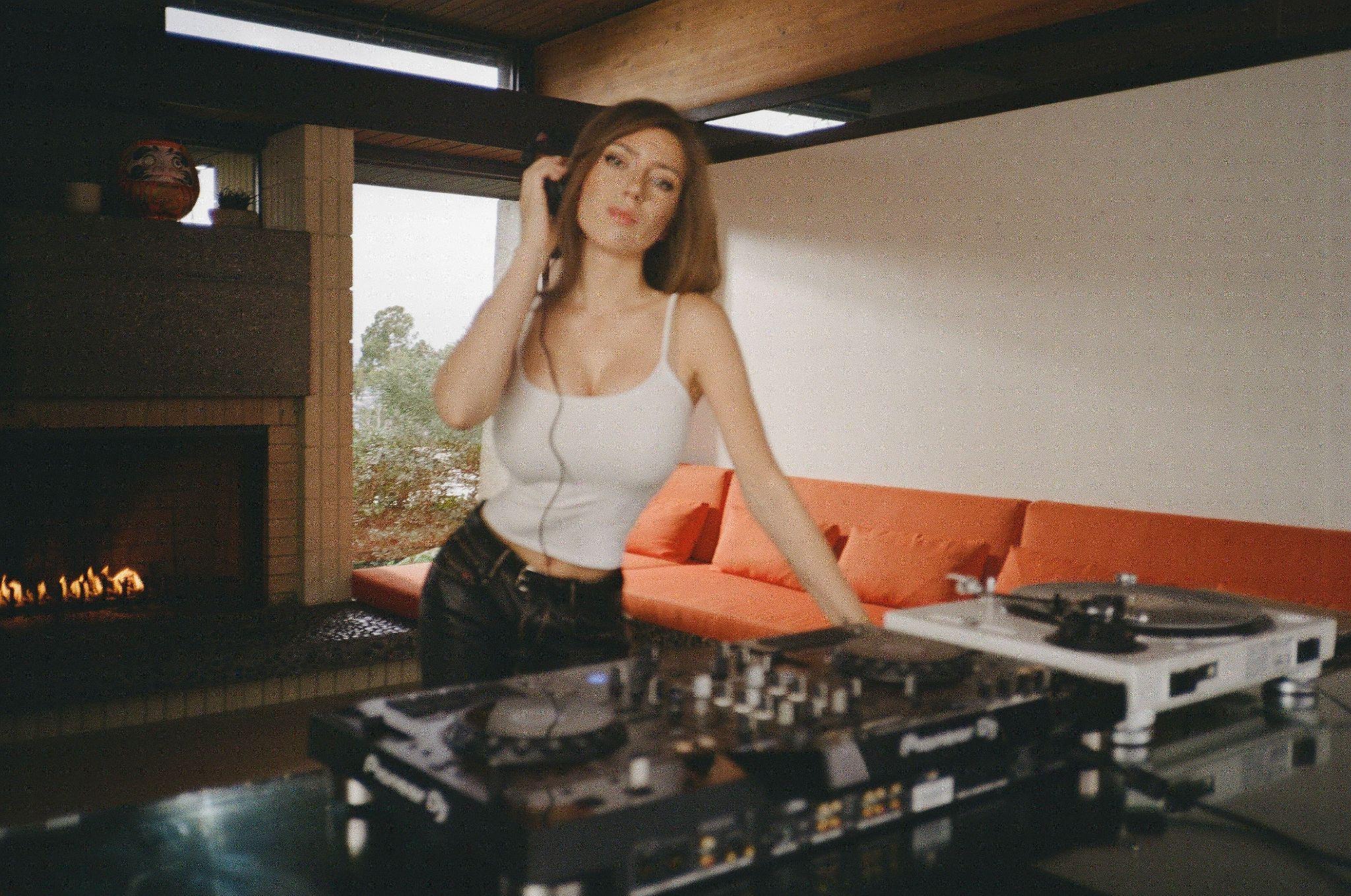
On a rooftop at sunset or in a warehouse bathed in sodium light, the first thing you notice is not a drop. It is the air. The sound arrives slowly—swells of ambient texture, flickers of IDM, hints of early trance, broken rhythms, and deep dub basslines folding into each other with patient precision. The energy does not spike and crash; it rises, arcs, and settles like a carefully plotted scene. This is the terrain of DJ and producer Anna Dubowick, who has built a practice around treating every set as an authored work of architecture and cinema.
In a crowded scene where DJs are often booked to keep things moving, the idea of a “set as statement” can feel almost radical. Yet that is precisely how Dubowick approaches her performances. For her, the task is not to fill a time slot, but to create a coherent experience with a beginning, middle, and end.
The process starts long before she enters the booth. She studies the setting—physical, social, and emotional. Is it open air or enclosed? Intimate or expansive? Who will be there, and why? From these questions, she builds a loose narrative framework. Ambient passages might serve as prologue, a way of inviting listeners into a shared space. Gradual shifts into more rhythmic territories become acts of development and tension, while carefully chosen climaxes function as scenes of release rather than blunt impact.
This approach demands restraint. It would be easy to rely on familiar crowd-pleasers, to program drops at predictable intervals. Dubowick instead leans on subtlety: slow crossfades, evolving loops, and echoes that bridge tracks so seamlessly that the listener feels guided rather than pushed.
Her sensitivity to structure is rooted in architectural training. Studying architecture teaches you to think about how people move through built environments, how light and shadow interplay, and how volumes of space can evoke different emotional states. Dubowick has simply translated that way of thinking into sound.
In her sets, rhythm becomes circulation. Dense, percussive sections can feel like corridors—narrow, propulsive, designed to carry you forward. Moments of harmonic openness function as plazas or courtyards, where the listener can pause, breathe, and take in the view. Silence and near-silence are treated as negative space; they matter as much as the sounds themselves.
This architectural logic is most evident in her transitions. Rather than abrupt cuts, she favors long, carefully modulated blends where one atmosphere dissolves into another. The shifts are sometimes so gradual that only in retrospect do you realize how far the landscape has moved. In a culture addicted to instant payoff, this patience stands out.
If architecture shapes the skeleton of Dubowick’s sets, cinema informs their emotional tone. She gravitates toward textures and motifs that feel cinematic: foggy pads, distant vocal snippets, rhythm patterns that suggest motion more than spectacle. The aim is immersion, not overwhelm.
Anna Dubowick’s YouTube channel pushes this cinematic impulse into the visual realm, translating her musical language into carefully constructed audiovisual narratives that set a new standard for how DJ mixes are perceived—not as functional recordings, but as immersive journeys where sound and image operate as a single, cohesive experience.
Each published set is framed as a complete audio-visual work, shot on location with careful attention to composition. A concrete rooftop with a skyline at dusk, an industrial corner drenched in neon, a minimal interior with sharp angles—these are not incidental backdrops, but extensions of the music’s logic.
Camera movement is restrained, editing deliberate. The focus is on atmosphere rather than virtuosity. Viewers are invited into a world where the DJ is part of the environment rather than its loudest element. In a platform dominated by short-form clips and spectacle-driven content, this long-form, immersive format feels almost like a counter-gesture.
By insisting on this author-driven approach, Dubowick implicitly questions the functional, service-oriented model of DJing that has dominated many corners of electronic music. She does not deny the importance of reading a room or keeping people engaged. Instead, she adds another layer: the idea that a set can carry a signature as recognizable as that of a producer or filmmaker.
Listeners who follow her across different contexts—live performances, online mixes, and studio releases—begin to notice recurring traits: a certain patience in build-ups, a preference for emotionally ambiguous harmonies, and a continuous dialogue between warmth and distance. These elements combine into a style that is difficult to confuse with anyone else’s, even when individual tracks are not her own.
Her production work reinforces this identity. The records she releases like “As Within So Without” and “Elsewhere”—most notably on Clipp.art, the Australian electronic label under the ONELOVE Music Group—share the same focus on atmosphere, structure, and boundary-pushing electronic sound. They are not designed as disposable “DJ tools,” but as self-contained pieces that can be experienced in headphones as well as on a sound system.
Recognition from specialist platforms and chart placements—including top positions on Beatport, features in official Spotify playlists, and appearances in DJ mixes and broadcasts on Rinse FM and NTS Radio—further validates this approach within the industry, but what stands out most is how unified the body of work feels.
Whether she is constructing a two-hour set or a six-minute track, the underlying question remains the same: what kind of world does this sound build, and how does it invite the listener to inhabit it?
In answering that question, again and again, Anna Dubowick has quietly carved out a distinct position in contemporary electronic music—one in which architecting atmosphere is not a metaphor, but a method.
Stay up-to-date with exclusive events and content.


