F L A U N T



Grief is rarely as clean as people want it to be. When the person you lose is also the person who hurt you—or who turned away when you needed them most—mourning becomes something stranger than sadness. It becomes a reckoning.
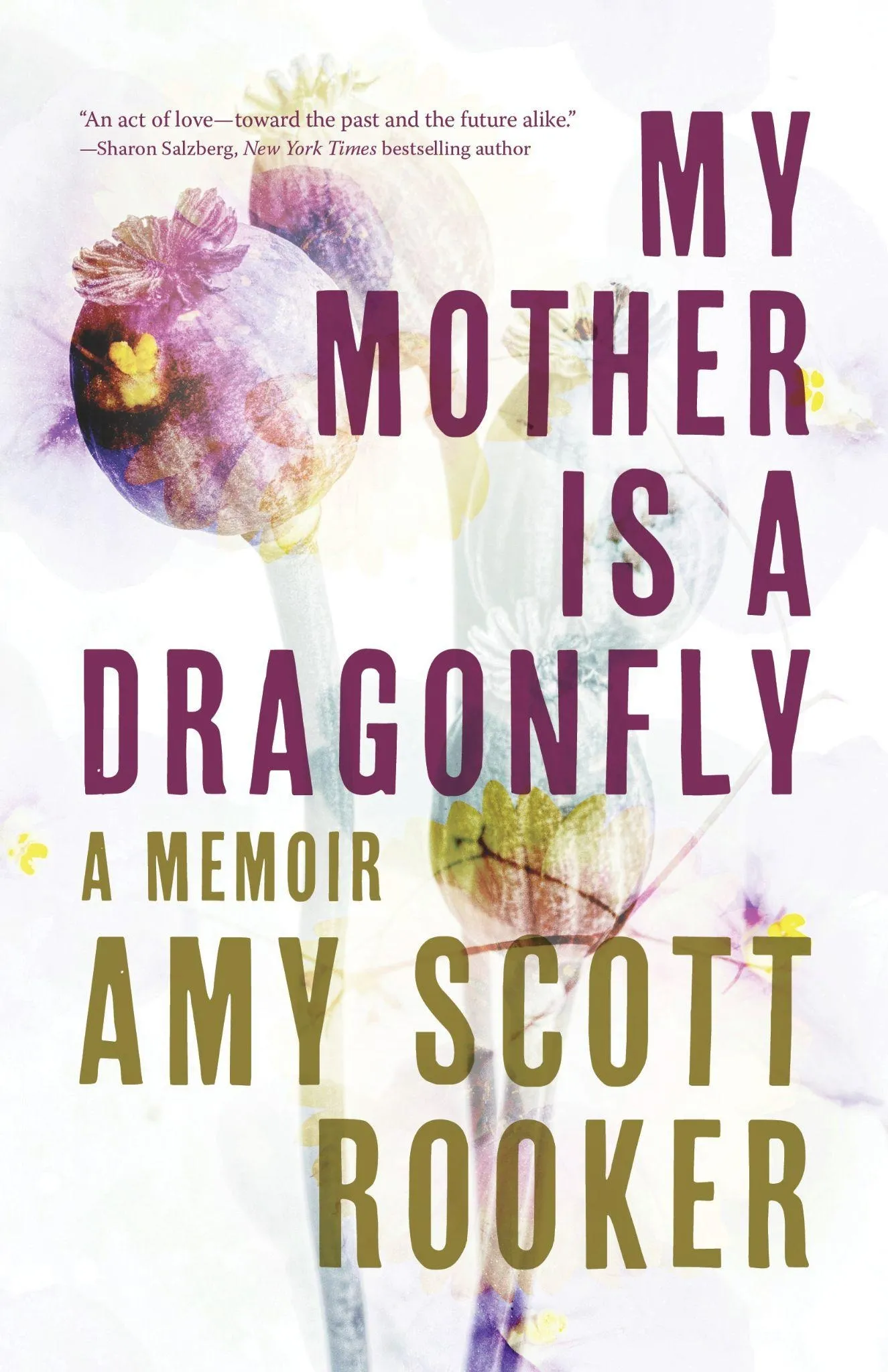
For Amy Scott Rooker, that reckoning sits at the heart of her debut memoir, My Mother Is a Dragonfly. The book is not only about losing her mother. It is about grieving a woman who had been many things at once: loving and unavailable, joyful and depressed, supportive and devastatingly silent.
Rooker’s grief did not arrive in stages. It arrived all at once. Rage, love, sorrow, longing, confusion—every feeling she had ever carried about her mother collapsing over every other.
As she writes in the book, “I mourned two mothers. The one I never had. And the one who broke me.”
Long before the loss, before the dragonflies, before the unraveling, there was a girl learning how to survive inside a family that could not fully protect her.
When Rooker was fourteen, she experienced sexual abuse by a family member. When she told her mother what had happened, the response she received left her without protection, language, or repair. The abuse was not meaningfully addressed. The silence that followed became part of the wound.
“One version of me stayed frozen at fourteen. Another learned how to keep going,” Rooker says.
That second version became highly capable. She earned a law degree, built a career in corporate law and technology, and constructed a life that looked successful from the outside. Achievement became a way to move forward without fully feeling what had happened.
“Achievement could quiet the question,” Rooker says, “but it could not answer it.”
Beneath the composure was a different reality: a daughter still carrying the weight of what had gone unnamed.
The relationship between Rooker and her mother did not stay frozen in rupture.
In later years, her mother became happier again. She showed up for Rooker during pregnancy and miscarriage. She eventually moved to Austin, where Rooker lived. They talked daily. They got their nails done together. From the outside, the relationship looked close.
But there were terms.
The past remained largely untouched. The closeness existed as long as Rooker did not ask her mother to face the places where she had failed. They could have tenderness. They could have routine. They could have conversation. What they could not have was the full truth.
That is part of what makes the grief in My Mother Is a Dragonfly so complicated. Rooker did not lose a mother who was simply cruel. She lost a mother she had loved, needed, resented, protected, and never fully reached.
Her mother was not a villain. She was not a saint. She was a person. For Rooker, accepting that became its own kind of grief.
When her mother died, the stages of mourning never arrived.
Instead, Rooker found herself reliving her life all at once. Childhood memories resurfaced. Old anger returned. Questions she had learned to live around began demanding answers. The possibility of the conversation she had longed for and feared was gone.
Loss, she discovered, does not only take the person. It also takes the carefully shaped narrative that made it possible to keep going.
For years, Rooker had been able to live inside a partial story: that the past was past, that the relationship had become close enough, that what had gone unsaid could remain there. Her mother’s death shattered that arrangement.
The grief was not only for who her mother had been. It was for who she might have been. For the mother who had loved her. For the mother who had failed her. For the daughter who had needed something she never received.
It was inside that collapse that the dragonflies began to appear.
Not as metaphor, but as a presence in moments Rooker could not explain. For Rooker, the dragonflies became evidence that the relationship with her mother had not ended in the way she thought it had. Something was still reaching. Something was still possible.
That opening eventually led her toward plant medicine and psychedelic healing experiences, which she describes not as a cure, but as a catalyst. She knew that if she did not do something radical, she risked becoming like her mother: a woman who died with too much pain still trapped inside.
“For me, the medicine did not erase the past,” Rooker says. “It opened a door. The work was walking through it.”
One of the most powerful threads in My Mother Is a Dragonfly is Rooker’s refusal to simplify forgiveness.
Forgiveness, in her telling, is not pretending the harm did not happen. It is not excusing her mother. It is not making the past acceptable. It does not require forgetting, reconciliation, or denial.
Instead, forgiveness becomes something more difficult and more liberating: the decision to stop building a life around what cannot be undone.
Rooker had to face the full truth first. The love. The harm. The silence. The tenderness. The failure.
“Only when I faced all of it could forgiveness become possible—not as absolution, but as freedom,” she writes. “My mother was loved. My mother caused harm. Both are true. And neither cancels the other out.”

For readers who have grieved an imperfect parent, Rooker’s memoir offers rare company.
There is a particular kind of loneliness in mourning someone who cannot be easily explained. A parent who loved you and hurt you. A parent you miss and still feel angry at. A parent whose death brings grief, but also unfinished business crashing to the surface.
My Mother Is a Dragonfly does not offer a clean ending to that kind of grief. It offers something more honest: the possibility of holding the contradiction without being consumed by it.
In the end, Rooker’s story is not about deciding whether her mother was good or bad. It is about telling the truth completely enough that love no longer has to depend on silence.
That is the harder inheritance.
And maybe the freer one.
Stay up-to-date with exclusive events and content.


